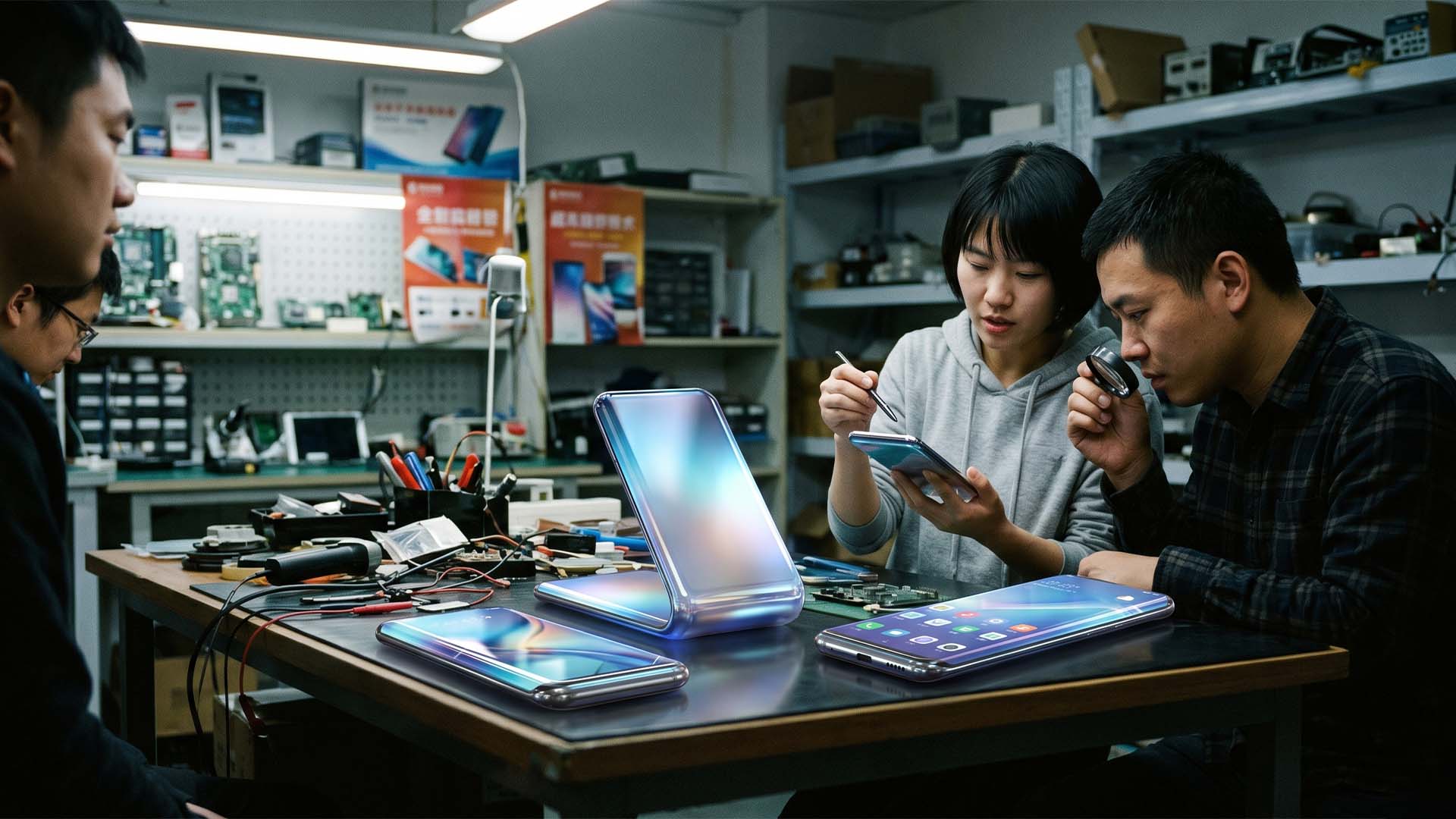
Chinese smartphone brands aren’t wasting any time chasing Apple’s next big design shift. Not long after Apple unveiled its Liquid Glass-style interface approach, competitors in China began rolling out similar visual effects inside their customized Android skins. Now, a new rumor suggests the race is moving beyond software, with OPPO reportedly preparing a dramatic display design that could arrive before Apple brings it to the iPhone.
According to the latest chatter, OPPO is working on a quad-curved screen concept that aims to create a near bezel-less illusion. The idea is closely tied to what’s expected from Apple’s 20th anniversary iPhone, often rumored to feature an immersive, edge-to-edge look that feels like the screen is floating in your hand. If OPPO moves quickly, it could be one of the first major brands to ship this style of hardware before Apple’s own version reaches consumers.
The rumored OPPO flagship design is described as having a mostly flat display surface, but with a subtle curve on all four sides. That slight curvature is the key to the “floating” effect, making borders appear slimmer and giving the front of the phone a more seamless, all-screen appearance. It’s a premium aesthetic that manufacturers have chased for years, and a quad-curved implementation could be a major step toward making bezels feel almost invisible during everyday use.
Software is also part of the push. Chinese smartphone makers have reportedly been able to replicate Liquid Glass-like visuals through their Android skins, sometimes enabled through a simple settings toggle. If OPPO pairs that glossy, glassy interface style with the quad-curved hardware illusion, it could deliver the same kind of futuristic full-screen vibe that many expect Apple to market heavily with its anniversary iPhone.
There’s a catch, though: this won’t be cheap. Advanced display engineering, tight manufacturing tolerances, and complex panel production typically raise costs quickly. And with ongoing memory market pressures—such as a global DRAM supply crunch that hasn’t fully eased—pricing could climb even further. Apple’s advantage, as always, is scale and supply chain control, which can help it hold pricing steadier than rivals even when components get more expensive.
That cost imbalance could shape how this plays out. OPPO may succeed in bringing a cutting-edge, futuristic-looking flagship to market first, but it may not land at a price that feels broadly accessible. Meanwhile, if Apple later introduces a more competitively priced model with a similar display concept and stronger overall specifications, demand could surge—especially among buyers who prefer the Apple ecosystem and long-term software support.
For now, OPPO is the main name tied to this quad-curved, bezel-less illusion rumor, but it wouldn’t be surprising if other Chinese smartphone manufacturers follow quickly once a workable design hits mass production. As the competition heats up, the next wave of flagship phones may be defined less by raw specs and more by who can deliver the most convincing “all-screen” experience first.