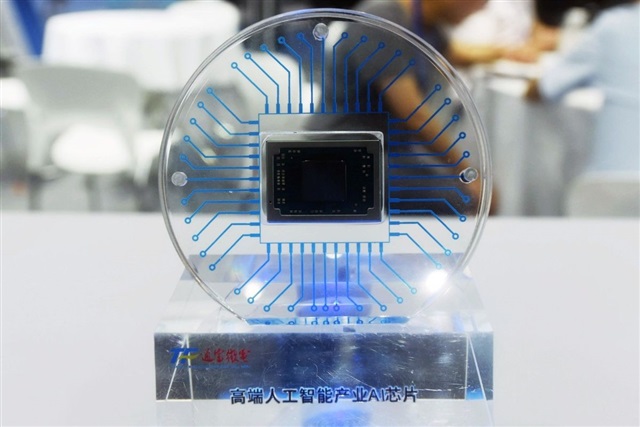
China’s AI chip industry is entering a new phase, and it’s being shaped by one major reality: access to the most advanced high-end computing products is no longer guaranteed. With tighter U.S. restrictions affecting the supply of cutting-edge accelerators and related technology, China is speeding up a major strategic shift—building an AI hardware future that doesn’t depend on a single architecture or one dominant supplier.
Instead of putting all its bets on one kind of processor, China is now pushing a multi-accelerator strategy. That means accelerating development across GPUs, TPUs, and NPUs at the same time. The goal is straightforward: keep AI progress moving even when certain chips, tools, or performance tiers become harder to obtain from abroad. For businesses, researchers, and government-backed initiatives, this approach also reduces risk—if one pathway hits a roadblock, another can still move forward.
GPUs remain central to AI training and large-scale inference, largely because they’ve become the default standard in modern machine learning workflows. They’re widely used for everything from large language models to computer vision, and they’re familiar to developers. But matching the current market leader isn’t just a hardware problem—it’s a software problem too. Many domestic firms can design capable chips, yet they still face a tough hurdle: competing with the mature software ecosystem that developers rely on for performance, stability, and ease of adoption.
That’s where the broader strategy comes in. Alongside GPU progress, China is also investing heavily in TPU-like and NPU solutions. These accelerators can be designed for specific AI workloads, potentially delivering strong performance-per-watt and better efficiency for targeted tasks. TPUs, in particular, represent an attempt to find breakthroughs through specialization—optimizing compute for AI model training and inference rather than general-purpose graphics-style processing. NPUs, meanwhile, are often positioned for edge AI, smartphones, embedded systems, and other scenarios where power efficiency and tight integration matter as much as raw speed.
The reasoning behind developing all three categories at once is practical. AI workloads are diversifying rapidly. Training giant models in data centers is not the same problem as running real-time inference on devices, and not every organization needs the same kind of accelerator. A broader chip portfolio gives China more flexibility to support different AI use cases, from cloud computing to industrial automation and consumer electronics.
At the same time, the industry is very aware that software compatibility and developer adoption can decide winners and losers. Even the most impressive chip architecture struggles if developers can’t easily migrate models, optimize performance, and deploy at scale. That’s why China’s domestic players are not only working on silicon—but also trying to close the ecosystem gap with toolchains, frameworks, compilers, and platform support that can bring their hardware closer to mainstream AI development workflows.
In the bigger picture, this multi-accelerator approach signals a clear direction: China is reorganizing its AI chip development to be more resilient, more diversified, and less vulnerable to supply chain shocks. It may not produce an overnight replacement for the current global standard, but it increases the odds of steady progress—especially if breakthroughs emerge from TPU and NPU specialization while domestic GPU efforts continue to mature.
For anyone tracking AI hardware trends, this is a story worth watching. China’s push into GPUs, TPUs, and NPUs simultaneously highlights how geopolitical pressure can reshape technology roadmaps—and how the next era of AI computing may be defined not by a single chip type, but by a mix of accelerators built for different workloads and different constraints.