The landscape of semiconductor technology is witnessing significant changes, particularly in China, where the largest semiconductor firm, SMIC, is striving to advance its technology. Despite previous claims of producing 5nm wafers, SMIC is still grappling with challenges such as high costs and low yields in mass production. These difficulties also affect Huawei, which has been unable to progress beyond the 7nm process.
With U.S. trade sanctions preventing ASML from supplying advanced EUV machinery to Chinese companies, there seems to be a strong push for China to develop its homegrown solutions. A recent report indicates that China is gearing up for trial production of its own EUV equipment by the third quarter of 2025. This ambitious plan includes the development of custom EUV machines using laser-induced discharge plasma (LDP), a method somewhat distinct from ASML’s laser-produced plasma (LPP).
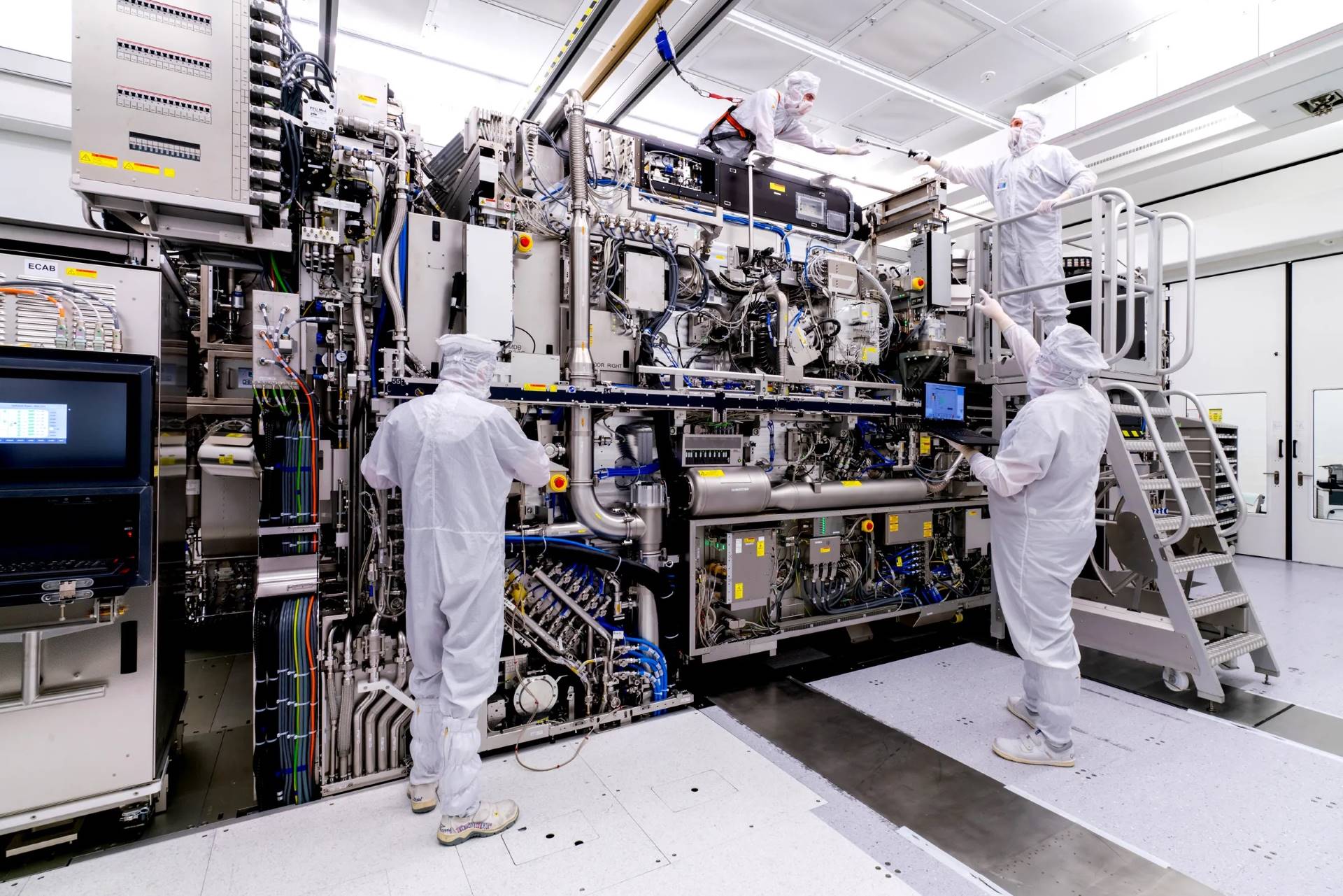
In 2026, mass production of China’s EUV machines could potentially begin, boasting a design that is more streamlined and energy-efficient. This change could grant China both autonomy from American-influenced companies and a new competitive edge. Photos shared on social media platforms suggest that Huawei’s Dongguan facility is currently testing a new EUV system, developed in collaboration with Harbin Provincial Innovation. This system can generate the necessary 13.5nm wavelength EUV light suitable for advanced photolithography.
Unlike ASML’s intricate LPP systems, which require high-energy lasers and complex controls, the Chinese prototype at Huawei employs LDP technology. This method involves vaporizing tin, converting it into plasma with high-voltage discharges, and producing the needed wavelength through electron-ion collisions. This approach promises a simpler and more cost-effective system, also demanding less power. Previously, SMIC and China relied on older DUV machinery with much longer wavelengths of 248nm and 193nm, which fall short compared to EUV’s 13.5nm.
The older systems required multiple patterning steps to reach advanced nodes, escalating production costs and extending production times, making SMIC’s 5nm chips around 50% more expensive compared to TSMC’s equivalent. This cost disparity explains why such technology hasn’t been fully utilized in applications.
Currently, Huawei’s Kirin chipsets remain stuck at the 7nm process. The company is limited to making minor improvements with each successive chipset. However, with the development of these new EUV technologies, Huawei could close the performance gap with industry leaders like Qualcomm and Apple. Nonetheless, firms like Huawei often face numerous roadblocks instead of enjoying smooth progression, but there is hope that both Huawei and China’s semiconductor industry can overcome these challenges, ushering in a new era of competition and innovation.


