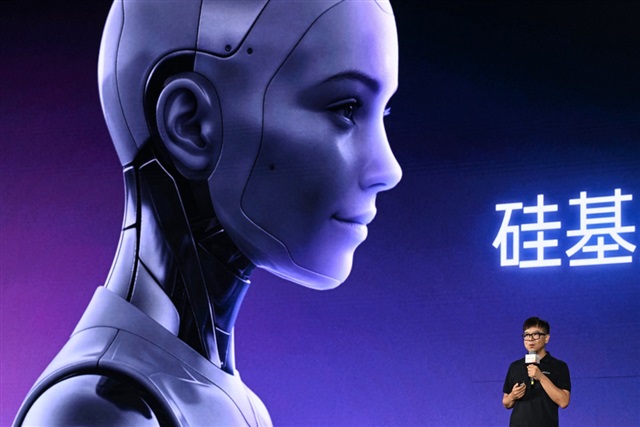
China’s humanoid robot industry is accelerating at a remarkable pace, moving from experimental prototypes to real-world applications faster than many expected. What was once viewed as a futuristic concept is now becoming a serious part of the country’s advanced manufacturing and artificial intelligence strategy.
The surge is being driven by a powerful mix of factors: rising investment, strong government support, fast-improving AI models, and a rapidly maturing robotics supply chain. Together, these forces are helping transform “physical AI” from a research lab idea into machines that can walk, lift, sort, inspect, assist, and potentially work alongside humans in factories, warehouses, service environments, and public spaces.
China’s humanoid robot boom is also producing a growing number of high-value robotics startups. Several companies in the sector are attracting major funding as investors bet on humanoid robots becoming the next major wave after electric vehicles, drones, and industrial automation. These startups are racing to improve mobility, balance, perception, dexterity, and human-machine interaction, all of which are essential for robots designed to operate in complex real-world environments.
Policy support is another major reason the industry is advancing so quickly. Chinese authorities have identified humanoid robots as a strategic technology, with local governments encouraging development through funding programs, industrial parks, pilot projects, and partnerships with manufacturers. This support is helping companies test robots in practical settings rather than keeping them limited to controlled demonstrations.
At the same time, China’s deep manufacturing ecosystem gives its robotics companies a major advantage. The country already has strong supply chains for motors, sensors, batteries, cameras, control systems, machine vision, and precision components. As these parts become more affordable and reliable, humanoid robot makers can build faster, iterate more often, and reduce production costs.
The rise of large AI models is also playing a critical role. Humanoid robots need more than mechanical engineering; they require the ability to understand surroundings, respond to commands, recognize objects, plan movement, and adapt to changing conditions. Advances in artificial intelligence are giving robots better decision-making capabilities, making them more useful outside carefully controlled lab environments.
Early deployments are already beginning to appear. Humanoid robots are being tested in industrial inspection, logistics, retail assistance, security patrols, and customer service scenarios. While mass adoption is still in the early stages, the direction is clear: companies are no longer focused only on proving that humanoid robots can function. They are now working to prove that these machines can deliver measurable value.
Challenges remain. Humanoid robots still need improvements in battery life, durability, safety, cost efficiency, and fine motor control. Building a robot that can perform reliably for long hours in unpredictable environments is far more difficult than creating a polished demonstration. However, the speed of progress suggests the industry is entering a new phase.
China’s push into humanoid robotics could reshape the future of automation. As physical AI becomes more capable, humanoid robots may gradually take on repetitive, dangerous, or labor-intensive tasks across multiple industries. For manufacturers facing workforce shortages and rising labor costs, these machines could become an increasingly attractive solution.
The next few years will be critical. If Chinese robotics companies can combine advanced AI with scalable hardware and affordable production, the country may become one of the leading forces in the global humanoid robot market. What is happening now is more than a technology trend; it is the early foundation of a new robotics economy.