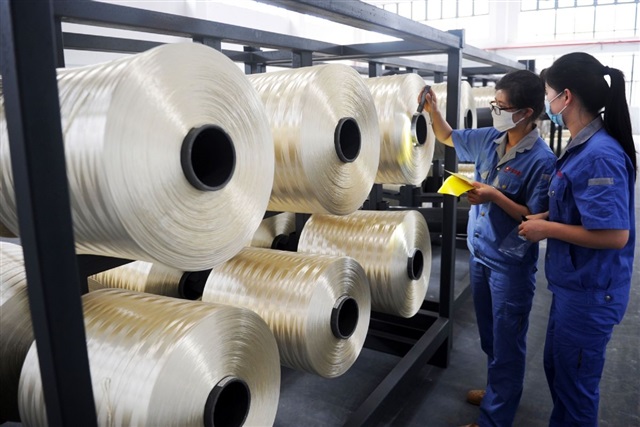
As the global semiconductor race accelerates into advanced process nodes, heterogeneous integration, and next-generation packaging, the real competition is no longer limited to who can etch smaller transistors. It’s also about who controls the materials that make modern chips possible—and who can produce them reliably at scale. In that context, China is drawing fresh attention for progress in a key part of the semiconductor supply chain: high-performance carbon fiber materials tied to the T1000-grade category.
Why carbon fiber matters in the semiconductor world
In chip manufacturing, “materials” isn’t just a supporting detail—it can be the difference between stable, repeatable yields and costly production bottlenecks. Advanced semiconductor equipment and precision manufacturing environments demand components that can hold their shape, resist vibration, and maintain performance under extreme conditions. Carbon fiber composites are valued for being exceptionally strong while remaining lightweight, and for offering excellent dimensional stability—traits that are increasingly important as fabrication and packaging become more complex.
As chipmakers shift toward advanced packaging, multi-die chiplets, and heterogeneous integration, the manufacturing ecosystem relies more heavily on ultra-stable frames, fixtures, robotic handling parts, and specialized structures used across semiconductor equipment and supporting infrastructure. High-end carbon fiber supply, once considered a niche material advantage, is now becoming strategically significant.
China’s reported progress with T1000-grade carbon fiber supply
China’s latest push highlights ongoing efforts to strengthen domestic supply chains for critical semiconductor-adjacent materials. T1000 carbon fiber is commonly associated with an ultra-high strength tier, used when conventional materials fall short in stiffness-to-weight requirements and long-term stability.
What stands out is not only the focus on producing advanced carbon fiber, but also the broader effort to develop a more complete supply chain—spanning production, refinement, and potential downstream applications in precision industries like semiconductor manufacturing. In today’s environment, where supply resilience is a priority for every major chip economy, expanding access to advanced materials can reduce external dependencies and support long-term industrial planning.
A shifting battleground: materials and equipment, not just process nodes
For years, the global conversation around semiconductors centered on manufacturing nodes—7nm, 5nm, 3nm, and beyond. That focus is still crucial, but it’s no longer the whole story. As chips evolve, packaging techniques and integration strategies become just as important as transistor scaling. That puts new pressure on equipment capabilities and the materials used to build and maintain that equipment.
Material stability affects precision. Precision affects yield. Yield affects cost and competitiveness. That chain is why carbon fiber, specialty materials, and equipment-grade components are getting more attention.
What this could mean for the global semiconductor ecosystem
Any meaningful movement in advanced material supply chains—especially for high-performance carbon fiber—can have ripple effects. If China continues to scale advanced carbon fiber production and integrates it into high-end manufacturing use cases, it could influence pricing, availability, and strategic sourcing decisions across multiple industries tied to semiconductor production.
At the same time, it reinforces a broader industry trend: semiconductor leadership increasingly depends on the strength of the entire ecosystem, from materials and chemicals to tools, packaging, and high-precision components. As competition expands beyond the wafer, more headlines will be shaped by supply chain milestones—not just chip launches.
If you’d like, paste the rest of the post content (the text that was cut off after “Recently, China’s…”) and I’ll rewrite the full article more accurately while keeping it search-optimized and engaging.