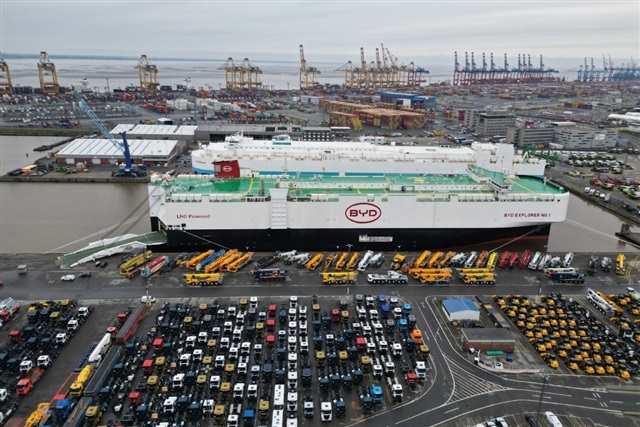
China will introduce an export license system for electric vehicles starting in 2026, a move designed to answer international concerns about market dumping and rein in domestic overcapacity. Beyond trade optics, the policy signals a strategic shift: pushing competition away from rock-bottom pricing and toward technology leadership, product quality, and global standards compliance.
At its core, the licensing framework is expected to set clearer benchmarks for vehicles shipped abroad, aligning exports with stringent safety, performance, and sustainability expectations in key markets. For global buyers and regulators, it suggests a future with more transparent, consistently built EVs. For Chinese automakers, it nudges the industry toward deeper investment in R&D, software, battery innovation, and long-term brand trust.
Why China is pivoting now
– International scrutiny: Several regions have raised concerns about underpriced EVs disrupting local industries. A formal license process is a signal that exports will meet defined thresholds beyond cost.
– Domestic overcapacity: Rapid expansion across assembly, batteries, and components has outpaced demand at times. A licensing system can moderate outbound volumes and favor higher-value models.
– Long-term competitiveness: Moving the battleground from price to technology helps elevate product perception, protect margins, and position leading brands for sustainable growth.
What an export license system could improve
While exact rules will be set by authorities, an export license often covers criteria that matter to global buyers:
– Quality and safety verification: Clear documentation of crashworthiness, battery integrity, and durability testing.
– Battery traceability and sustainability: Evidence of responsible sourcing, recycling pathways, and lifecycle reporting.
– Software and cybersecurity compliance: Confirmed adherence to data protection, over-the-air update security, and regional privacy rules.
– After-sales and warranty commitments: Reliable support, parts availability, and recall procedures to protect consumers.
– Emissions and energy reporting: Transparent manufacturing footprints and efficiency metrics to meet local environmental policies.
How it reshapes competition
The likely outcome is fewer race-to-the-bottom models and more emphasis on engineering excellence:
– Battery breakthroughs: Higher energy density, faster charging, and improved longevity move front and center.
– Efficiency and range: Real-world performance and thermal management trump spec-sheet hype.
– Safety and reliability: Rigorous validation, better crash structures, and advanced driver-assistance systems gain weight.
– Software experience: Stable operating systems, intuitive interfaces, and robust update pipelines become make-or-break features.
What this means for global markets
– More predictable exports: A licensing filter can smooth sudden surges of low-cost vehicles and reduce volatility.
– Stronger consumer confidence: Buyers may see improved warranties, better dealer networks, and clearer certification.
– Competitive recalibration: International automakers get a window to compete on innovation, not just price. Expect faster responses in design, efficiency, and connected features.
– Collaboration opportunities: As standards align, joint ventures, technology licensing, and cross-border supply deals may become more attractive.
Impact on Chinese automakers
– Scale and compliance: Larger brands with mature quality systems are best positioned to meet new thresholds quickly.
– Pressure on smaller players: Compliance costs may accelerate consolidation, pushing the market toward fewer, stronger exporters.
– Brand building: Consistent quality and service abroad can convert cost competitiveness into long-term reputation and pricing power.
What consumers might notice
– Fewer ultra-cheap imports: Entry-level EVs may thin out, while mid-range and premium options improve in feature sets and build quality.
– Better support: Warranty clarity, reliable service, and recall responsiveness should improve.
– Gradual price normalization: Quality-focused exports could temper extreme price cuts, but ongoing battery innovation and scale may keep EVs competitive overall.
Trade and policy outlook
This framework could help ease tensions by showing commitment to orderly exports and internationally credible standards. Whether it fully satisfies key markets will depend on the specifics: how strict the criteria are, how transparent the process becomes, and how consistently it is enforced. The 2026 start date gives industry and regulators time to adapt.
What to watch next
– Draft rules and categories: Which vehicle classes and components are covered, and what metrics define eligibility.
– Certification pathways: How testing, audits, and documentation will be handled for different export destinations.
– Battery and software requirements: Details on traceability, recycling obligations, data handling, and update security.
– Industry consolidation: Mergers, partnerships, or exits as companies align with the new compliance landscape.
Key takeaways
– China will require EV export licenses starting in 2026 to address dumping concerns and domestic overcapacity.
– The policy is designed to shift competition from price to technology, quality, and safety.
– Expect stronger certification, better after-sales support, and more predictable export flows.
– The move may encourage consolidation within China and sharpen global competition on innovation.
– Consumers could see fewer ultra-budget models but more reliable, well-supported EVs overall.
FAQ
What is an EV export license?
It is an official authorization confirming that vehicles destined for overseas markets meet defined standards, typically covering safety, quality, documentation, and regulatory compliance.
Why is China implementing this in 2026?
The timeline allows time to design the rules, prepare manufacturers for compliance, and coordinate with trading partners while addressing overcapacity and international concerns.
Will EV prices rise because of this policy?
Costs linked to compliance could reduce the number of ultra-low-priced models, but continued innovation and scale in batteries and manufacturing should keep many EVs competitive.
Who benefits from the change?
Consumers benefit from better-vetted products and service support. Automakers that invest in technology and quality gain credibility and pricing power. Regulators and trade partners get clearer assurance on standards.
Bottom line
By elevating export standards and encouraging innovation, China’s 2026 EV export license system aims to turn a volume-driven boom into a technology-led, quality-focused expansion—one that could ultimately deliver better vehicles and a healthier global EV market.