China Puts High-Bandwidth Memory and Flash at the Center of Its Next Tech Push
China is stepping up its ambitions in advanced semiconductor manufacturing, with high-bandwidth memory and high-bandwidth flash memory now officially named as key development priorities in the country’s latest industrial roadmap.
The Ministry of Industry and Information Technology and the National Development and Reform Commission have jointly introduced the 15th Five-Year Plan for the Development of the Electronic Information Manufacturing Industry. The plan outlines China’s strategy for strengthening its electronics and chip sectors over the coming years, with a clear focus on next-generation memory technologies.
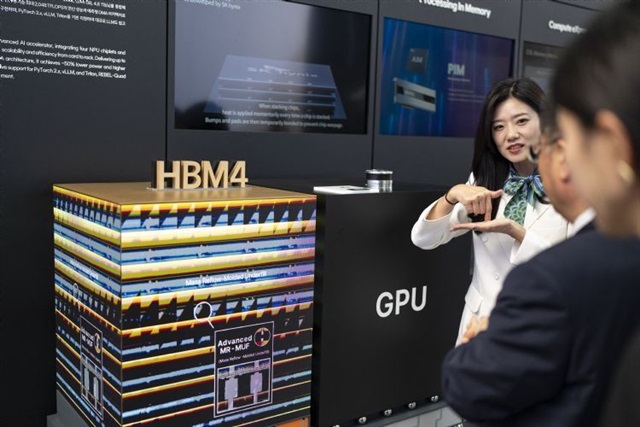
One of the most notable changes is the inclusion of high-bandwidth memory, often known as HBM, and high-bandwidth flash memory, or HBF, as priority research areas. This marks the first time these advanced memory categories have been highlighted in such a major national plan, signaling their growing importance in China’s long-term technology goals.
HBM is becoming increasingly critical for artificial intelligence, high-performance computing, data centers, and advanced graphics processors. As AI models grow larger and computing workloads become more demanding, faster memory with greater bandwidth is essential. By placing HBM on its strategic agenda, China is aiming to reduce reliance on foreign suppliers and accelerate domestic innovation in one of the most competitive areas of the semiconductor industry.
High-bandwidth flash memory is also gaining attention as future devices and computing systems require faster data access, improved storage efficiency, and better performance under heavy workloads. With digital infrastructure, cloud computing, AI applications, and smart devices expanding rapidly, advanced flash memory could play an important role in supporting the next wave of electronic products.
The new five-year plan reflects China’s broader effort to build a stronger and more self-sufficient electronics manufacturing ecosystem. Memory chips are a foundational part of modern technology, powering everything from smartphones and servers to autonomous systems and AI accelerators. By prioritizing HBM and HBF, China is positioning these technologies as essential building blocks for future industrial growth.
This move also highlights the global race to dominate advanced memory development. Demand for faster and more efficient memory continues to rise as artificial intelligence and high-performance computing reshape the technology landscape. Countries and companies that can master these memory technologies may gain a major advantage in next-generation computing.
While the plan does not provide full details on specific projects or funding levels, its message is clear: China sees advanced memory as a strategic sector that deserves national attention. The inclusion of high-bandwidth memory and high-bandwidth flash memory could encourage greater investment, research, and collaboration across China’s semiconductor supply chain.
As the 15th Five-Year Plan begins to take shape, the development of HBM and HBF will likely become an important measure of China’s progress in advanced chip manufacturing. If successful, this strategy could help the country strengthen its role in the global semiconductor industry and support the growing demand for AI, cloud computing, and next-generation electronics.