China Keeps Indium Phosphide Export Controls in Place as US-China Tech Tensions Continue
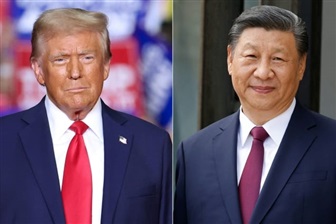
China’s export restrictions on indium phosphide substrates remain firmly in place, even as high-level discussions between Donald Trump and Xi Jinping have raised hopes for a possible easing of trade tensions between the United States and China.
Industry sources say there has been no meaningful change to Beijing’s controls on indium phosphide, commonly known as InP, a key material used in optical communications. The restrictions are increasingly viewed as part of China’s broader strategy to protect its position in critical materials and advanced technology supply chains.
Indium phosphide plays an important role in high-speed optical networks, data center connectivity, 5G infrastructure, laser diodes, photodetectors, and other photonics applications. Because of its performance advantages in transmitting data at high speeds, InP has become essential for industries that depend on advanced communications hardware.
The continued restrictions come at a time when the global technology sector is already facing supply chain uncertainty. As demand rises for artificial intelligence infrastructure, cloud computing, high-bandwidth internet, and next-generation telecom equipment, access to specialized materials like indium phosphide has become more strategically important.
For companies outside China, the unchanged export controls create ongoing pressure. Manufacturers that rely on InP substrates may need to plan for longer lead times, higher procurement costs, and increased difficulty securing stable supply. Some firms may also accelerate efforts to diversify sourcing, build alternative supply chains, or invest in domestic production capabilities.
Beijing’s decision to maintain tight control over indium phosphide also reflects a wider trend in the technology rivalry between China and the United States. Critical materials are no longer seen only as industrial inputs. They are now viewed as strategic assets that can influence national security, semiconductor development, telecommunications leadership, and the future of digital infrastructure.
The US has been working to reduce its dependence on China for key materials and components, while China has responded by tightening oversight of exports in areas where it holds significant influence. This back-and-forth has expanded beyond chips and rare earths to include advanced materials used in photonics and optical communication systems.
Although recent Trump-Xi talks have drawn attention from markets and policymakers, industry observers say the situation surrounding indium phosphide shows that major technology and materials disputes are unlikely to be resolved quickly. Diplomatic conversations may help stabilize relations, but export controls tied to strategic industries are expected to remain a powerful tool in the competition between the world’s two largest economies.
For the optical communications market, the message is clear: indium phosphide supply remains a sensitive issue, and companies dependent on the material will need to prepare for continued uncertainty. As global demand for faster networks and AI-driven infrastructure grows, the importance of InP substrates is likely to increase further, making China’s export policy a key factor to watch in the months ahead.