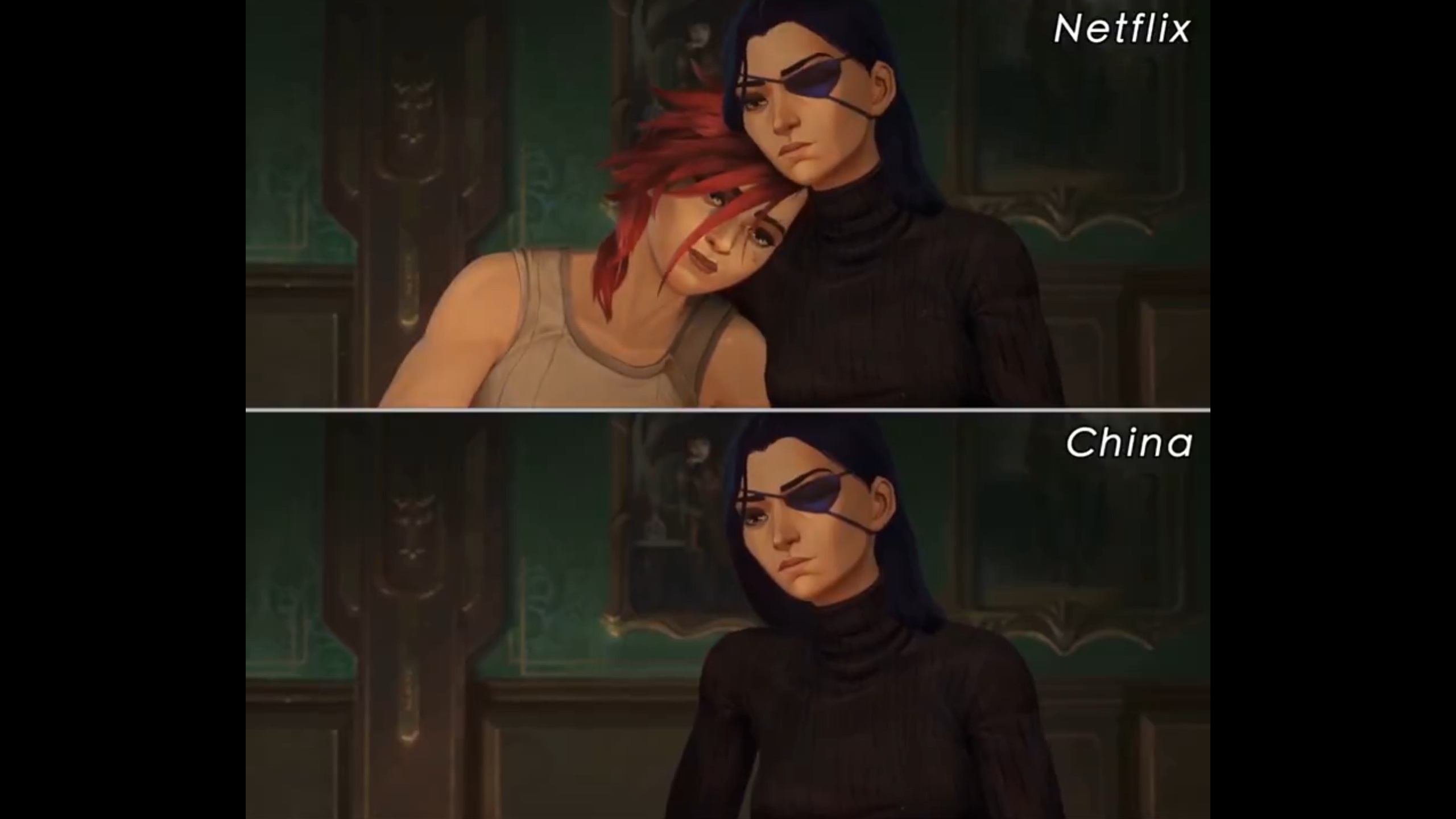
The Chinese version of “Arcane: League of Legends” has reportedly edited out romantic scenes between the female characters Vi and Caitlyn. In the original scene, the two characters share a tender moment and cuddle, but the Chinese adaptation employs awkward editing techniques to separate them. In some instances, Caitlyn is obscured or completely removed, maintaining a distance likely in line with government approval.
Adapting content to align with the demands of authoritarian regimes isn’t new. Companies often alter scenes or character dynamics to satisfy government censors, leading to the removal or modification of content deemed unsuitable. This practice raises alarms about the broader implications of censorship, particularly when it targets specific demographics, such as the LGBT+ community.
Critics highlight the inconsistency in censorship policies, pointing out that while some content is censored under the guise of preventing objectification, those same rules can easily suppress LGBT+ representation. The situation is particularly intriguing given that Riot Games is owned by Tencent, a Chinese media conglomerate. This suggests that any inclusion of diverse representation in “Arcane” may have been strategically designed to appeal to Western audiences rather than reflect authentic progressive values.
Fans and critics continue to discuss these edits, emphasizing the importance of genuine representation in media and questioning the motives behind content alterations prompted by censorship. The debate underscores a broader conversation about artistic freedom and the challenges faced by creators in navigating global markets with differing cultural and political climates.