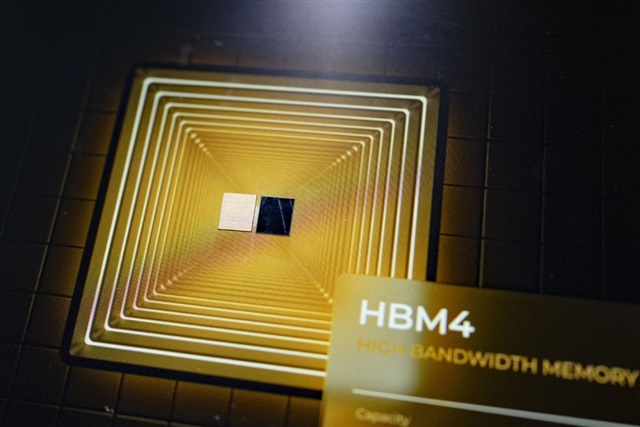
At CES 2026, a small but telling moment has the semiconductor world paying close attention: executives from Nvidia reportedly made an unannounced stop at Samsung Electronics’ private chip showcase. While no official meeting details were shared, the surprise visit is widely being read as a strong signal that conversations could be forming around next-generation high-bandwidth memory, often referred to as HBM4.
This matters because high-bandwidth memory is one of the most critical components powering today’s AI accelerators and high-performance GPUs. As demand for generative AI training and inference continues to surge, companies like Nvidia are under enormous pressure to secure reliable, high-volume supplies of the fastest memory available. The next leap, HBM4, is expected to push performance and efficiency further—exactly what future AI hardware will need to stay competitive.
Samsung, for its part, has been working to strengthen its position in advanced memory, including HBM development for data center and AI workloads. A visit like this—especially one that wasn’t on the public schedule—naturally fuels speculation about potential supply discussions, technical evaluations, or early coordination for upcoming product cycles.
For industry watchers, the timing is just as interesting as the setting. CES has increasingly become a stage not only for consumer gadgets, but also for behind-the-scenes moves that shape the next wave of computing. If Nvidia is exploring options for HBM4 sourcing, every interaction with a major memory supplier becomes a piece of a much larger puzzle: who will provide the memory that powers the next generation of AI GPUs?
Nothing has been confirmed, and it’s possible the visit was simply exploratory. Still, in an industry where capacity planning and supplier agreements can be decided years in advance, even a brief, quiet stop can hint at serious intent. As the race to deliver faster AI hardware accelerates, any sign of Nvidia aligning with Samsung on HBM4 will be closely tracked—because it could influence performance, availability, and competition across the entire AI chip market in the years ahead.