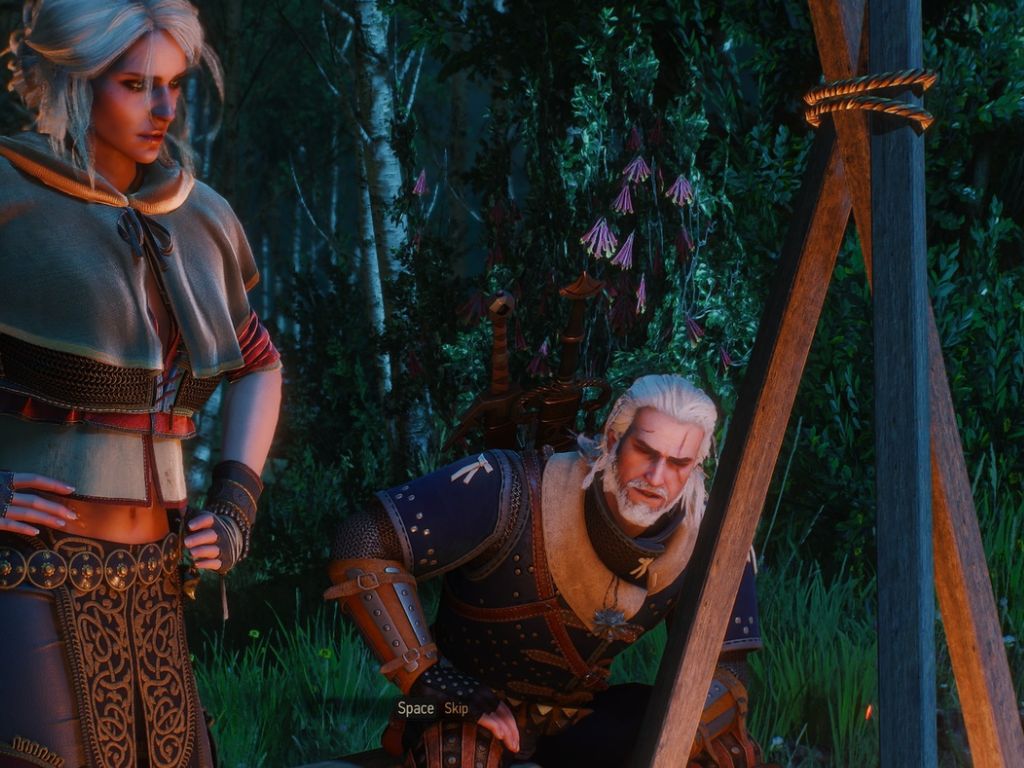
CD Projekt Red is using AI voice technology to preserve Geralt’s Polish voice in The Witcher 3: Songs of the Past
CD Projekt Red has confirmed that Jacek Rozenek, the Polish voice of Geralt of Rivia, is recording new dialogue for The Witcher 3: Songs of the Past, with AI-assisted voice conversion being used to make his performance sound closer to the original The Witcher 3 recordings.
The decision comes after Rozenek suffered a stroke in 2019, which left him unable to speak for several months. After a long and demanding recovery, the actor rebuilt his voice through intensive rehabilitation. Although he is now able to perform again, his voice has naturally changed over time and has become lower and rougher than it was when The Witcher 3 first launched in 2015.
To keep the new expansion consistent with the original game, CD Projekt Red is working with Respeecher, a Ukrainian company specializing in voice conversion. Rozenek still performs every new line himself, but the recorded audio is then processed using a model built from his earlier Geralt performances. This model is based on the thousands of lines he recorded for The Witcher 3, including around 10,000 lines from the base game.
Rozenek has been the Polish voice of Geralt since the first Witcher game was released in 2007. His performance has become deeply tied to the character for Polish players, making continuity especially important for a new story expansion.
His recovery after the 2019 stroke was difficult. During rehabilitation, he reportedly trained his voice for six to seven hours a day. In 2021, he briefly returned to record dialogue for a quest included in The Witcher 3’s next-gen update, which was released in 2022. Even that smaller recording session was physically demanding for him.
That experience made it clear that recording a much larger project would require careful handling. Songs of the Past will include new Geralt dialogue, combat lines, reactions, and short one-liners that may play close to older lines recorded more than a decade ago. Without voice matching, the difference between the old and new recordings could be noticeable.
CD Projekt Red invited Rozenek to the studio to hear how his voice sounded after the passage of time and his health struggles. The team found that while his performance remained strong, the tonal difference was significant enough to risk breaking immersion when placed alongside the original dialogue.
With Rozenek’s approval, the studio turned to Respeecher. The goal is not to replace the actor, but to preserve the familiar sound of his Geralt while keeping his own performance at the center of the process.
Respeecher’s work involves converting Rozenek’s new recordings so they more closely match his earlier Witcher 3 voice. This includes capturing not only the basic tone, but also the emotional range that makes Geralt sound authentic. The challenge includes everything from quiet half-spoken lines to shouts, groans, laughter, and battle reactions.
Rozenek has said the intention is to make the voice sound as close as possible to how he performed Geralt years ago. He has also expressed trust in the game’s creators, though he has not personally listened to the processed AI-assisted lines.
CD Projekt Red has described this as a special case connected to Rozenek’s health. The studio has also acknowledged that AI voice technology is a major concern for voice actors, especially as the gaming industry continues to debate consent, ownership, and the future of performance work.
In this case, the company says the process is being done with the actor’s permission and with Rozenek still delivering every line. The AI tool is being used to adjust the sound of his own performance, not to create a replacement without his involvement.
This is not the first time CD Projekt Red has used Respeecher. The studio previously used the company’s voice technology for Cyberpunk 2077: Phantom Liberty after the death of Miłogost Reczek, the Polish voice actor for Viktor Vektor. For that expansion, another actor performed the new lines, and Respeecher converted the performance to resemble Reczek’s voice with approval from his family.
The Witcher 3 situation is different because Rozenek is alive, has consented, and remains actively involved in the recording process. That distinction is important as more studios explore AI-assisted production methods.
CD Projekt Red has also suggested that it does not intend to keep changing Rozenek’s voice in future projects. His current, deeper delivery could potentially fit an older version of Geralt, especially if the character appears in future Witcher games.
The Witcher 3: Songs of the Past was announced in May and is being co-developed with Fool’s Theory. It is planned as the third story expansion for The Witcher 3 and is expected to launch as a paid release in 2027.
For longtime fans, the return of Jacek Rozenek as Geralt is a meaningful part of the expansion’s appeal. By combining his new performance with carefully applied voice conversion, CD Projekt Red hopes to maintain the emotional continuity of the Polish version while respecting the actor’s health, legacy, and consent.