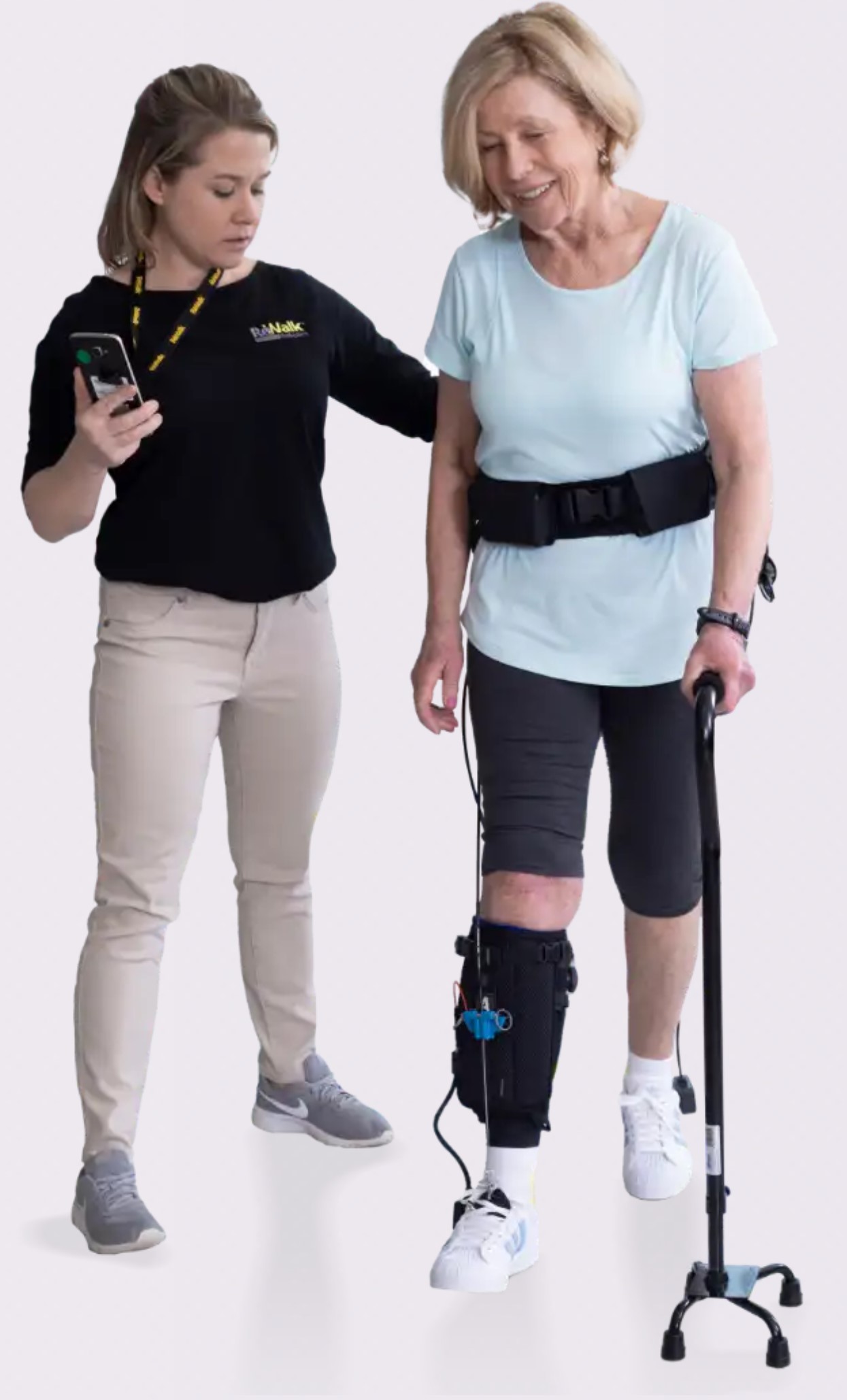
Researchers at the University of Pécs, Hungary, have provided hopeful news for stroke survivors aiming to regain their walking abilities. Their study highlights the effectiveness of the Lifeward ReStore Exo-Suit in improving walking skills better than traditional rehabilitation methods.
The cutting-edge Exo-Suit is designed with a focus on assisting patients’ lower leg movements. It includes a calf wrap attached to sensors and insoles on the user’s feet, with cables that actively flex the foot upward or downward at the ankle with each step. This intelligent design aims to mimic natural walking movements, enhancing the rehabilitation process.
After a stroke, many patients face challenges with muscle control, making it difficult to perform basic actions like walking and standing. Coordinating leg muscles is essential for these tasks, and the loss of control often leads to problems with foot placement – adversely affecting balance and safety during walking.
Traditional rehabilitation has primarily focused on enhancing patient balance but has often fallen short in accurately positioning the foot with each step. The Hungarian researchers decided to put this traditional method to the test against the ReStore Exo-Suit’s capabilities.
They conducted an experiment with two groups of stroke patients with an average age of 65 and similar health backgrounds. Performance evaluation was done at multiple intervals – five days, fifteen days, and five weeks after starting rehab exercises – without the aid of the Exo-Suit for assessment purposes.
The rehab protocol for the Exo-Suit users included diverse walking exercises over a total of 26 minutes. Patients navigated hallways, maneuvered slalom courses, and altered their walking pace. Meanwhile, the traditional therapy group underwent seated exercises and practiced walking and balance for one hour.
Remarkably, at the five-week mark, the group using the Lifeward ReStore Exo-Suit were achieving faster walking speeds by approximately 0.11 meters per second and covering longer distances up to 111 meters, outperforming their counterparts in traditional rehab. It was also noted that Exo-Suit users exhibited improved stability while standing.
The implications of this research are significant for stroke recovery, as the ReStore Exo-Suit represents a potential leap forward in therapeutic technology. It offers a more active and targeted approach to rehabilitation, which could lead to better outcomes for patients striving to regain their mobility.
For those seeking to maintain their health and potentially reduce the risk of stroke, regular exercise and a balanced diet are key preventive measures. Engaging in regular physical activities and ensuring a nutritious diet can contribute to overall well-being and help keep the body’s vital systems in check.
This advancement in stroke rehabilitation technology not only offers promise to individuals recovering from a stroke but also underscores the importance of continual innovation in medical aids and therapeutic approaches to enhance patient care and quality of life.


