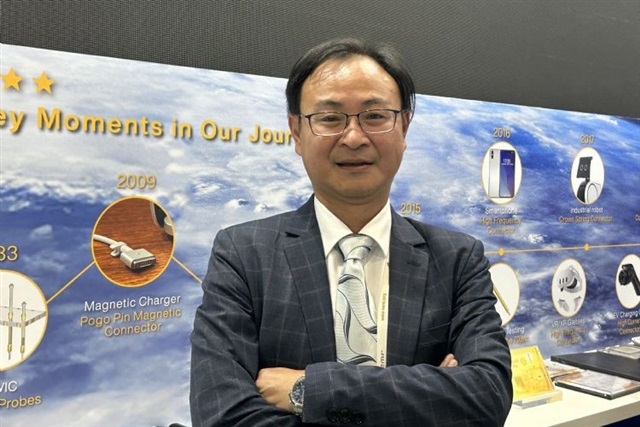
CCP Contact Probes is sharpening its edge in semiconductor testing. At SEMICON Taiwan 2025, the company unveiled three additions to its portfolio—sockets, microelectromechanical system (MEMS) probes, and high‑power burn‑in sockets—targeted at the growing demands of advanced chip validation and production. The launch underscores a push to strengthen market presence and is expected to support revenue growth as testing requirements intensify across AI, 5G, automotive, and data center applications.
Why this matters
– Next‑generation chips demand higher accuracy and reliability. As device complexity rises, so does the need for precise, repeatable contact and low contact resistance during test.
– Higher currents and hotter thermal profiles are becoming the norm. Robust power handling and thermal stability are critical for both burn‑in and high‑throughput production test.
– Time‑to‑market pressures are compressing. Modular, durable, and fine‑pitch solutions help engineering teams move faster from design validation to mass production.
What CCP introduced
– Sockets: Engineered for stable contact at fine pitches, these sockets aim to improve yield and throughput by reducing intermittent connections and minimizing wear over long test cycles. They are designed for quick changeovers and consistent signal integrity, helping teams accelerate device evaluation and production ramp.
– MEMS probes: Built for uniform force and planarity, MEMS probes deliver high repeatability and durability—key advantages for wafer‑level and package‑level testing. By tightening variability and maintaining low contact resistance over many insertions, they support both high‑volume screening and performance characterization.
– High‑power burn‑in sockets: Designed for demanding stress environments, these sockets support elevated temperatures and higher current loads typical of reliability and burn‑in workflows. Attention to thermal management, mechanical stability, and long‑duration contact aims to reduce failures, safeguard devices under test, and provide cleaner data for reliability modeling.
How customers benefit
– Better signal integrity and lower noise floors translate to more accurate test results, fewer re‑runs, and tighter guardbands.
– Improved durability and contact stability reduce downtime from maintenance and consumable swaps, increasing overall equipment effectiveness.
– Compatibility with fine‑pitch and high‑density packages helps future‑proof lines as advanced nodes and chiplet architectures proliferate.
– Stronger thermal and power design in burn‑in sockets can lower risk during extended stress testing and support more aggressive reliability screens.
Market impact
The test industry is converging on solutions that balance precision, speed, and robustness. With these introductions, CCP Contact Probes is expanding its addressable market—from engineering validation to high‑volume production and long‑duration reliability testing. As chipmakers and OSATs push for higher throughput and tighter quality control, demand for sockets and probes that maintain consistent performance under stress is rising, positioning CCP’s expanded lineup to capture new programs and refresh older test cells.
Where these products fit
– AI accelerators and high‑performance computing: fast edges, high currents, and dense packaging demand stable, low‑loss interconnects.
– Automotive electronics: safety‑critical applications require stringent reliability and extended burn‑in, elevating the importance of power‑capable sockets and durable probes.
– 5G and networking: wide frequency ranges and tight signal budgets call for excellent contact integrity and repeatable performance.
– Consumer and IoT: high volumes favor solutions that minimize maintenance and maximize uptime.
Bottom line
By bringing new sockets, MEMS probes, and high‑power burn‑in sockets to SEMICON Taiwan 2025, CCP Contact Probes is responding to the industry’s toughest testing challenges: finer pitches, higher currents, hotter profiles, and tighter timelines. The portfolio expansion strengthens the company’s competitive stance in semiconductor test and is poised to support revenue growth as customers scale production and elevate reliability standards.