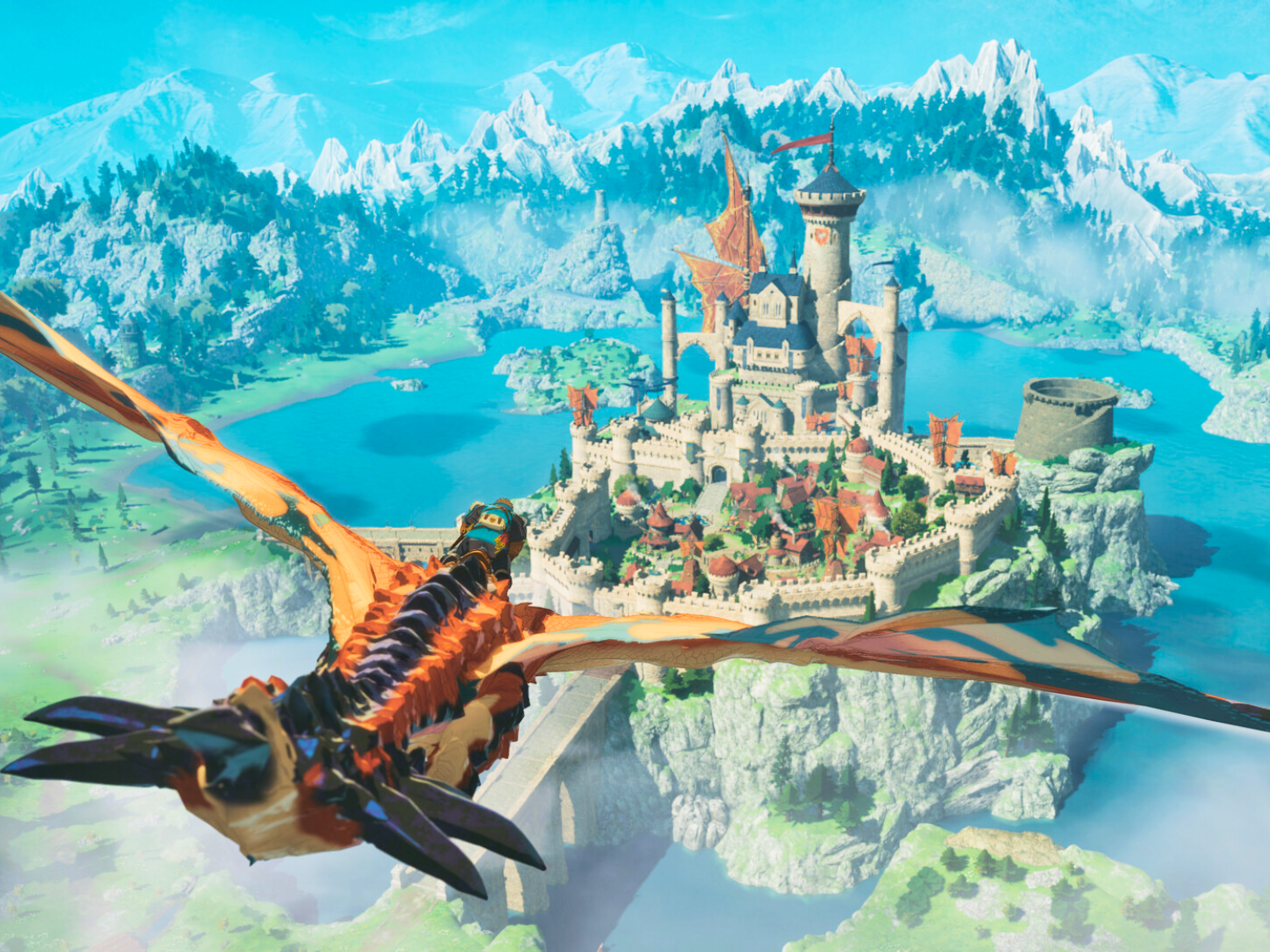
Capcom has officially launched Monster Hunter Stories 3: Twisted Reflection worldwide, bringing the turn-based Monster Hunter spin-off to modern platforms for the first time. Released on March 13, 2026 for PC, PlayStation 5, Xbox Series X|S, and Nintendo Switch 2, the game arrives with a $69.99 price tag and a “Mostly Positive” reception on Steam. Early user sentiment is notably divided, with the current Steam rating sitting at 74% positive—largely due to one major change that longtime fans weren’t expecting.
Twisted Reflection puts you in the role of a Ranger investigating a world nearing collapse after the birth of twin Rathalos, a species believed to be extinct. The setting spans the nations of Azuria and Vermeil, taking place 200 years after a catastrophic civil war. Compared to earlier entries, the tone leans more mature and story-driven, aiming for heavier narrative stakes while expanding the series’ mechanics.
One of the biggest upgrades is the visual leap. Capcom is using the RE Engine, delivering what’s being described as the most visually rich Monster Hunter Stories game so far. On supported hardware, the game targets 4K at 60 FPS on high-end PCs and PS5, while the Nintendo Switch 2 version offers a stable 30 FPS mode. Capcom is also supporting a wide audience with full audio and interface options across 14 languages, including English and Japanese.
In terms of content, Monster Hunter Stories 3 is positioned as a substantial RPG. The main story is estimated at about 40 to 50 hours, with post-game activities that can push playtime past 100 hours. On PC, players will want to plan for a 50 GB install, and an SSD is strongly recommended to keep biome transitions running smoothly.
Series fans will also notice a companion shake-up. Instead of the earlier games’ talkative Felyne partner, Navirou, Twisted Reflection introduces a new companion named Rudy. Rudy is written as a more subdued presence, and Capcom adds customization flair by allowing players to change Rudy’s look using layered armor sets.
A standout new system called Habitat Restoration is designed to make exploration and progression feel more connected to the world itself. By defeating Feral Monsters and establishing campsites, you’re able to release hatched monsters back into the wild, improving an area’s ecosystem rank. Building a habitat to an “S” rank rewards significant buffs for monsters of that species in your party, and can even trigger dual-element mutations—such as a water-aligned Rathian. For players who love long-term progression systems and world-building mechanics, this feature is one of the game’s biggest hooks.
Still, the conversation around Monster Hunter Stories 3 is dominated by its most controversial decision: Capcom has shifted the experience to a purely single-player focus by removing traditional multiplayer features, including PvP. That change has created a clear split in the community. Some players appreciate the tighter design and the freedom it gives the developers—without PvP balance concerns, player skills and Monsties can be made dramatically more powerful. Others feel the loss of competitive and community-driven play removes a key reason to invest hundreds of hours, especially for fans who loved the multiplayer meta in previous games.
With a premium $69.99 entry price, Twisted Reflection is asking players to accept a different kind of Monster Hunter Stories: less of an online ecosystem, and more of a self-contained RPG built around narrative weight and deep ecosystem management. If you’re looking for a modern, mechanically expanded turn-based Monster Hunter adventure with a longer campaign and richer visuals, it has a lot to offer. But if your favorite part of the series was battling and building teams around competitive play, the absence of PvP may be a dealbreaker—and could also mean some players choose to wait for a future discount rather than jump in immediately.