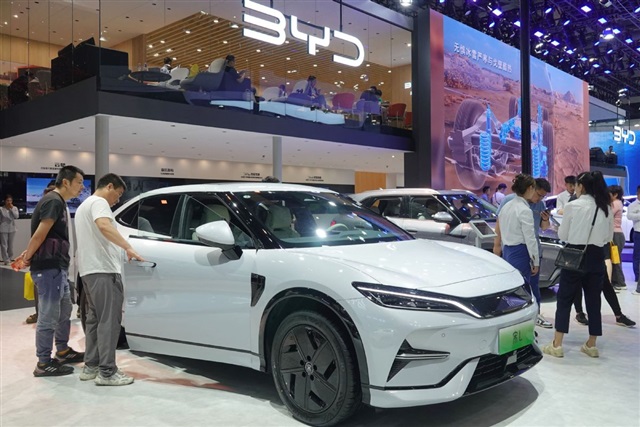
BYD helped kick-start China’s electric vehicle boom, and now the company is steering into its next chapter. In 2025, the focus shifts from pure electrification to intelligent mobility, with a bold new push the automaker calls “smart driving for everyone.” The goal: make advanced autonomous driving capabilities accessible to mainstream buyers, not just luxury models.
This pivot reflects a wider evolution in the EV market. Early growth was driven by battery range, charging speed, and price. The next wave is all about software, sensors, and seamless human-machine interaction. BYD’s campaign signals a commitment to bring cutting-edge driver assistance and automation down to everyday price points, accelerating adoption well beyond tech enthusiasts.
What “smart driving for everyone” could look like
– Broad availability of advanced driver-assistance features that reduce driver workload on highways and in traffic.
– Intelligent navigation that supports smoother, safer city driving with improved perception and decision-making.
– Continuous improvement through over-the-air software updates that enhance capabilities without a dealership visit.
– Scalable hardware platforms—sensors, chips, and controllers—designed to deliver reliable performance across multiple vehicle segments.
– Intuitive interfaces that make automation features easy to understand, activate, and trust.
Why this matters to drivers and the market
– Safety gains: Wider access to features that help avoid collisions, maintain lanes, and manage speed can reduce everyday risks.
– Convenience: Commuters benefit from traffic jam assistance and smart cruise features that ease fatigue.
– Efficiency: Smarter driving can optimize energy use, potentially extending real-world range.
– Accessibility: When advanced tech is no longer paywalled behind premium trims, more households can experience the benefits.
– Market momentum: As features become standard, expectations rise—and the entire industry moves faster.
The road ahead
Delivering intelligent mobility at scale isn’t just a software challenge. It requires dependable, cost-effective hardware; rigorous testing across diverse road conditions; and alignment with evolving regulations. Consumer education and trust are equally vital—drivers need to understand what the system can do, what it cannot, and how to use it responsibly.
Key questions for 2025
– How quickly will advanced features spread from flagship models to compact cars and family SUVs?
– What mix of sensors and computing platforms will balance performance, reliability, and cost?
– How will regional regulations influence rollouts of higher-level automated functions?
– Can user experience design make complex technology feel simple and indispensable?
A new chapter for the EV era
BYD’s early success helped normalize electric driving for millions. By turning attention to intelligent mobility, the company is aiming to define the next phase: vehicles that are not just electric, but perceptive, adaptive, and easy to live with. If “smart driving for everyone” becomes reality, it could mark a turning point where automation moves from a premium perk to a daily convenience—reshaping expectations for what a modern car should be.
For drivers, the promise is straightforward: safer, calmer, more efficient journeys. For the industry, it’s a clear signal that the competition is shifting from kilowatts and range to intelligence and user experience. And for the market at large, 2025 could be the year when smart driving stops being a future promise and starts becoming an everyday standard.