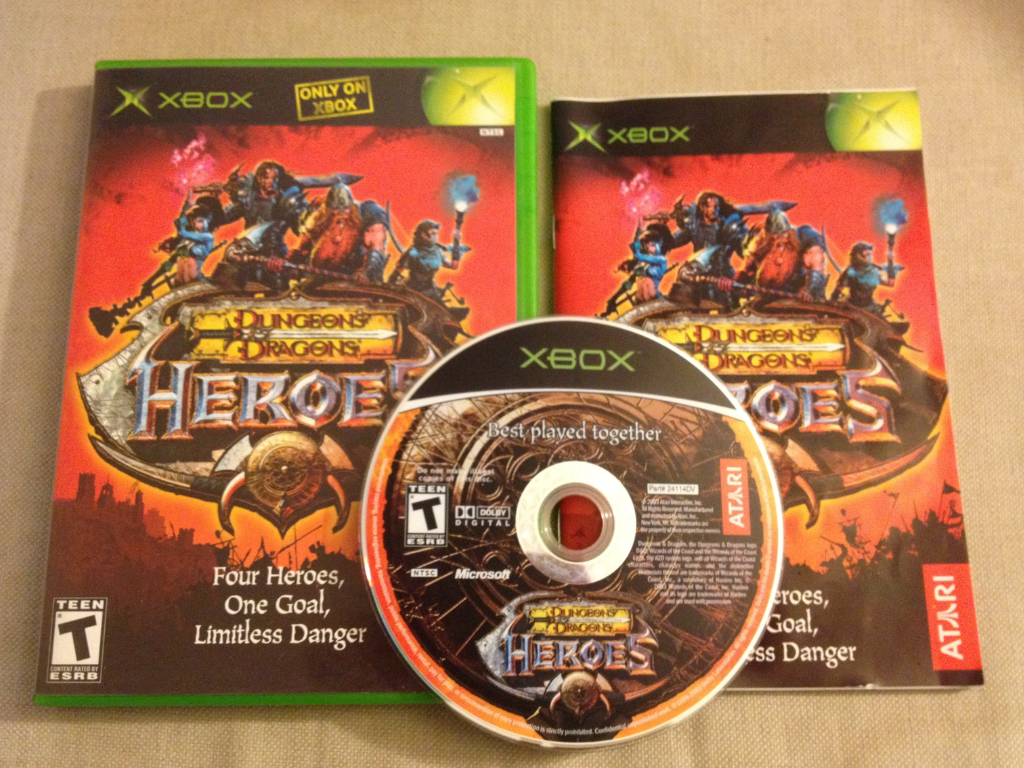
Brenda Romero still can’t quite believe what happened behind the scenes of Dungeons & Dragons Heroes, the 2003 Xbox-exclusive action RPG. More than two decades later, she’s still calling its development turnaround a “miracle” because the game was effectively rescued only months before launch—after it spent much of production heading in a completely different direction.
Speaking at the Dark and Doomy event in Wakefield, England, Romero looked back on a project that nearly shipped as a straightforward hack-and-slash game with a Dungeons & Dragons skin. In her words, when she thinks about how close it came to that version—and how much the team managed to rebuild in a tiny window—her reaction is still basically: how did we pull this off?
Atari’s original idea for Dungeons & Dragons Heroes was simple on paper: make something in the spirit of an old-school arcade brawler like Gauntlet, but with recognizable D&D characters. The problem, Romero explained, is that Dungeons & Dragons doesn’t feel like D&D without the role-playing pillars players expect—building a character, growing stronger, finding better gear, taking on quests, interacting with NPCs, and having systems like shops and an in-game economy to make the world feel alive.
Romero, who had spent years designing RPGs, found herself stuck trying to make what was essentially a non-RPG on a console. The plan stripped away upgrades, progression depth, side quests, and the kind of loop that makes players feel invested in their character beyond button-mashing through enemies. She even remembers thinking at the time that she might not be the right designer for the direction the project was heading.
Then came the moment that changed everything.
With Dungeons & Dragons Heroes just five months from release—and only three months away from certification—the team held an emergency meeting about the game’s overall quality. During that meeting, a programmer spoke up and backed Romero’s concerns, pointing out the obvious gap: the game was missing “all kinds of stuff” that players would expect from a Dungeons & Dragons RPG.
That was the turning point. The team pivoted hard and started cramming in essential RPG features at breakneck speed. Quests were added. Items and loot systems were incorporated. NPCs became part of the experience. A full progression system was implemented. Even basic world-building necessities—like where a shop would logically exist on the maps—had to be figured out quickly and carefully. Romero recalls looking at her own level designs and wondering where on earth a store could even fit, then making those placements in a way she describes as “surgical.”
The end result wasn’t universally praised. Dungeons & Dragons Heroes received mixed reviews and didn’t become a genre-defining classic. Romero herself is candid about its shortcomings and calls the final product “mediocre.” But her amazement isn’t about review scores—it’s about the sheer reality of what the team accomplished under extreme time pressure, transforming a nearly feature-bare brawler into something with real RPG depth just in time to ship.
For Romero, that frantic last-minute reinvention is exactly the kind of behind-the-scenes story many players never hear: the chaos, the tough calls, the problem-solving, and the rare moments when a team refuses to launch something that doesn’t feel finished. Dungeons & Dragons Heroes may not have changed the industry, but its development story remains a testament to how quickly a game can be saved when the right people speak up—and everyone else rallies to rebuild what’s missing.