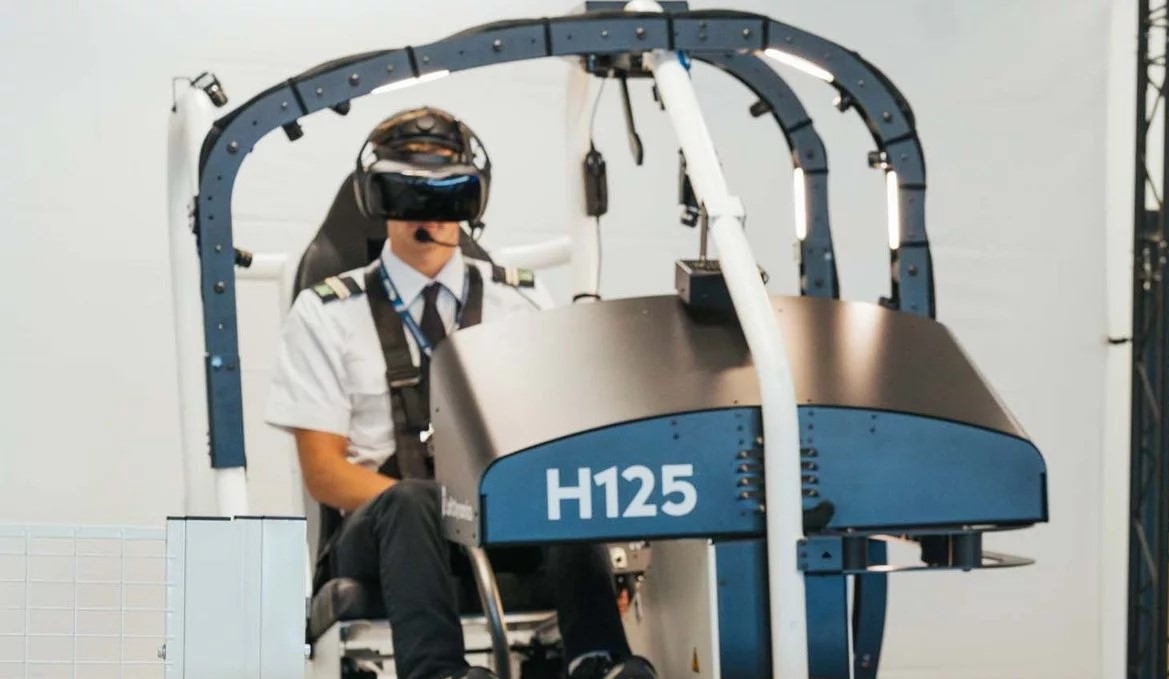
The world of aviation training has reached a significant milestone with the qualification of the first-ever virtual reality (VR) flight simulator by the Federal Aviation Administration (FAA). This groundbreaking development positions the company behind the simulator, Loft Dynamics, at the forefront of advanced pilot training mechanisms. Loft Dynamics has not only received this qualification within the United States but is also recognized by the European Union Aviation Safety Agency (EASA), making it a dual-qualified training solution provider for pilots.
Helicopter pilots across the U.S. now have the unprecedented opportunity to use an FAA-approved VR Flight Simulation Training Device (FSTD) to earn credits toward their pilot ratings. Loft Dynamics’ simulator goes beyond standard training, enabling pilots to practice complex operations such as engine failures, emergency procedures, sling load operations, and pinnacle landings in a completely immersive VR environment.
The Loft Dynamics H125 simulator was scrutinized under 14 CFR Part 60 by the FAA for its technical capability and accuracy, resulting in its qualification. The H125 VR FSTD, evaluated at Marshall University, is a full-scale, high-fidelity cockpit that offers 360-degree panoramic views and six-degrees-of-freedom motion platform, providing a highly realistic training environment. These features, coupled with verified flight modeling, allow for an unparalleled training experience that is more accessible and cost-effective compared to traditional flight simulators.
The FAA’s endorsement comes at a time when the aviation industry is facing a critical pilot shortage. The availability of a qualified VR FSTD extends a lifeline to operators, enabling them to meet obligatory training requirements in a manner that’s both efficient and scalable. Additionally, the FAA itself utilizes Loft Dynamics simulators in its William J. Hughes Technical Center to conduct safety research, reflecting the government’s commitment to integrating state-of-the-art technology in meeting evolving industry needs.
The qualifying of the VR simulator by the FAA and EASA serves as a testament to the technology’s safety and reliability, providing a solution to global pilot deficits and paving the way for high-quality pilot training. Loft Dynamics’ expansion to include eVTOL and airplane simulators further extends its contribution to the aviation industry.
Fabi Riesen, founder and CEO of Loft Dynamics, emphasizes the joint effort with Airbus Helicopters in achieving FAA qualification and the collective ambition to democratize access to their advanced FSTDs. The recent establishment of Loft Dynamics’ North American headquarters in Santa Monica marks a new phase in its growth, reinforcing the trust the market has placed in the company—a trust exemplified by esteemed partners like the Los Angeles Police Department.
The addition of former FAA Administrators Randy Babbitt and Michael Huerta to the company’s advisory board brings invaluable expertise and vision to Loft Dynamics. Their experience will offer strategic guidance in addressing the needs across the aviation spectrum, from pilot training enhancement to regulatory compliance.
Loft Dynamics is a pioneering company committed to revolutionizing the world of pilot training. By integrating real incident scenarios into their immersive training platform, Loft Dynamics offers pilots the ability to engage in emergency situations without risking lives. This measure not only elevates training standards but also underscores the company’s dedication to advancing aviation safety and sustainability.
With acknowledgement from top aviation authorities and an unwavering commitment to innovation, Loft Dynamics is poised to impact the aviation training industry profoundly, igniting a passion in future aviators and tackling the pressing issue of pilot shortages head-on.