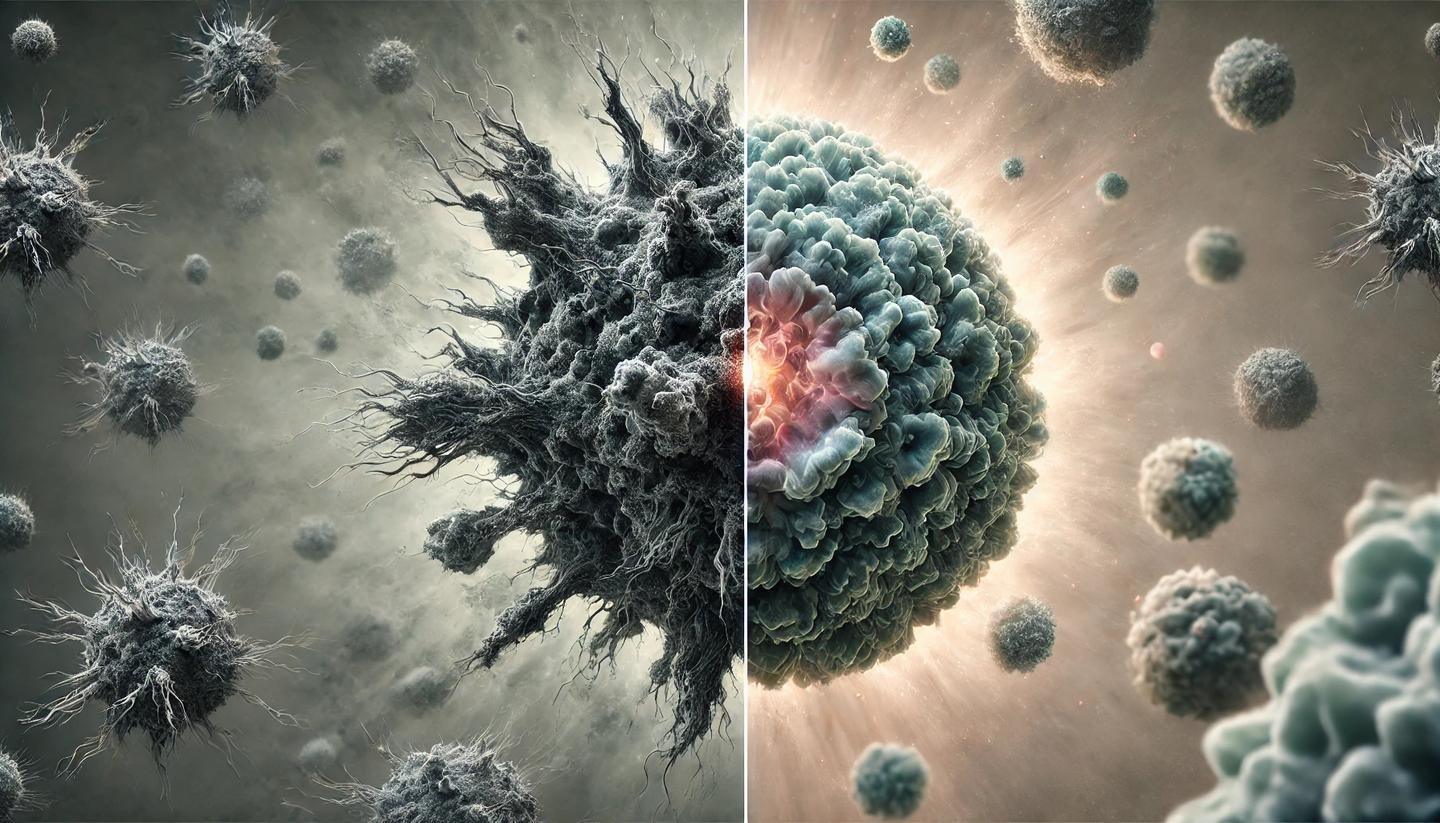
Cancer reversion, the fascinating concept of transforming cancer cells back into their normal, non-malignant form, has taken a major leap forward. Driven by the relentless pursuit of innovation, researchers at Korea Advanced Institute of Science & Technology (KAIST) have unveiled a groundbreaking computational tool named BENEIN, designed to harness the power of single-cell transcriptome data. This cutting-edge framework identifies crucial master regulators responsible for cell differentiation, offering new hope in the battle against cancer by potentially reverting it to a benign state.
BENEIN operates by employing Boolean network modeling to track the intricate regulatory web governing gene expression. In a revelatory exploration with colorectal cancer cells, the framework spotlighted three pivotal targets: MYB, HDAC2, and FOXA2. Intriguingly, the simultaneous inhibition of these targets successfully coaxed cancer cells back into normal-like enterocytes, as confirmed through rigorous laboratory and animal model testing. This monumental achievement paves the way for safer, more precise cancer therapies, putting more control in the hands of scientists aiming to re-wire the genetic network of cancer cells.
This computational marvel goes beyond identifying dynamics; it strategically designs interventions. Through simulations of gene network reactions, BENEIN showed that suppressing MYB, HDAC2, and FOXA2 led to a remarkable transformation in cancer cell behavior—curtailing cell proliferation and sparking differentiation. Perhaps most compelling is the affirmation from animal studies, where the silencing of these regulators profoundly stunted tumor growth.
While the initial focus was on colorectal cancer, the versatility of BENEIN is one of its most promising features, as it has demonstrated adaptability across various tissues. This suggests a potential wider application in targeting different cancers, holding the keys to unlock the secrets of diverse biological systems. Although technical hurdles and certain cancer-specific mutations present ongoing challenges, the framework lays a robust foundation for the future of personalized medicine.
In essence, BENEIN stands as a beacon of hope, shifting the paradigm of cancer treatment. Rather than simply managing malignancy, it offers a transformative approach aiming to reverse cancer by reinstating the cellular harmony of healthy function. This innovative stride is not just a novel addition to cancer research—it signifies a promising step towards reshaping the future landscape of cancer therapies.