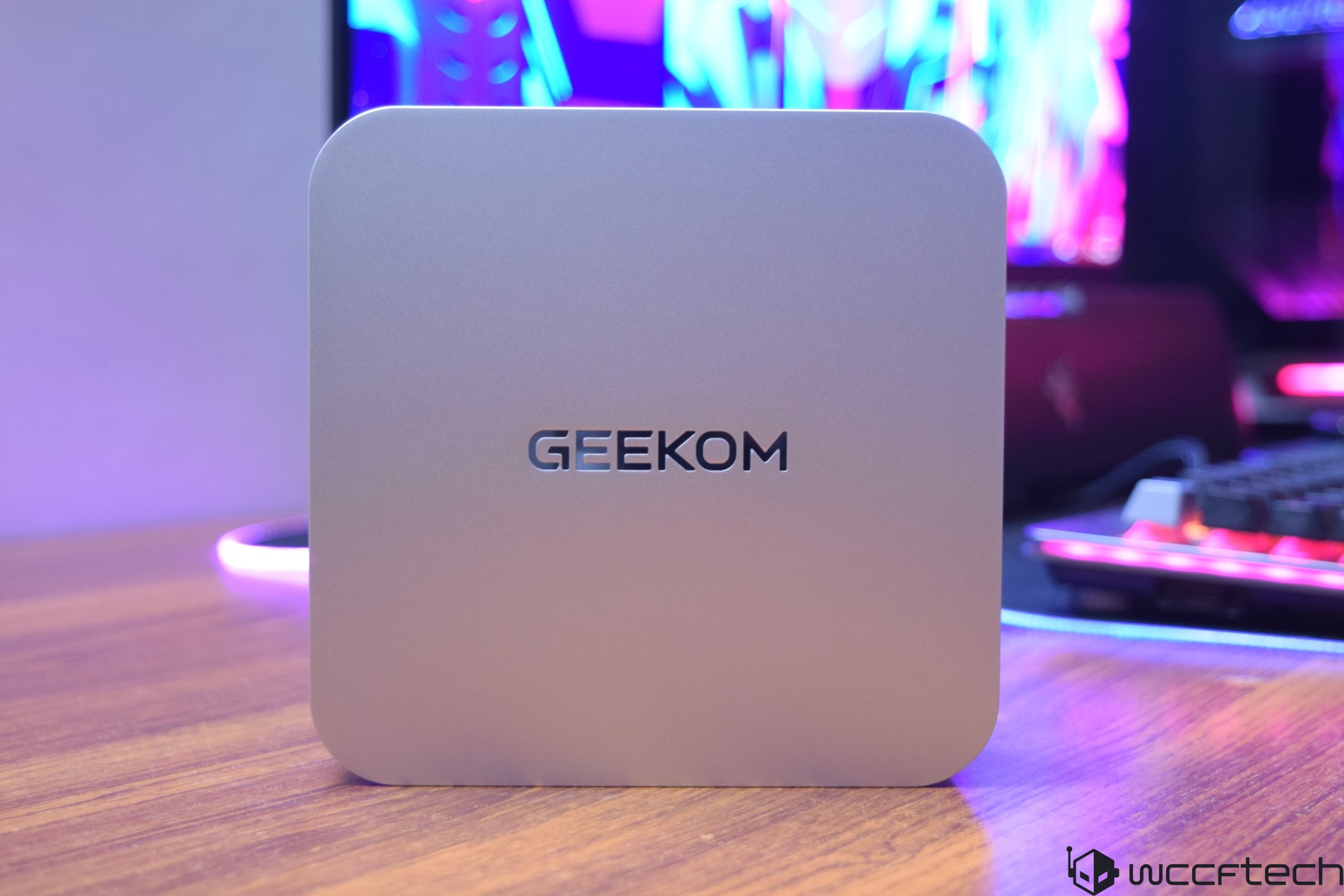
Geekom A9 Max Mini PC: a pocket powerhouse for AI, gaming, and creators
If you’ve been waiting for a compact desktop that doesn’t compromise on performance, the Geekom A9 Max is built to impress. Launching August 2025 at $999 US, this high-end mini PC pairs AMD’s Ryzen AI 9 HX 370 with Radeon 890M graphics and next‑gen connectivity to deliver desktop-class speed in a sleek, space-saving chassis.
Ryzen AI at the core
At the heart of the A9 Max sits AMD’s flagship Strix-series Ryzen AI 9 HX 370 APU. It combines 12 cores and 24 threads in a hybrid design with 4 performance-focused Zen 5 cores and 8 efficient Zen 5C cores. The CPU runs at a 2.0 GHz base frequency, boosting up to 5.1 GHz on the Zen 5 cores and up to 3.3 GHz on the Zen 5C cluster, with a configurable TDP spanning 15–54 watts to balance quiet operation with maximum speed.
For AI acceleration, the XDNA 2 NPU delivers up to 50 TOPS on its own, while the platform can reach up to roughly 80 TOPS combined. That means smoother on-device AI experiences for tasks like generative content, image enhancement, voice processing, and real-time background removal—all without leaning on the cloud.
RDNA 3.5 graphics for modern gaming
The integrated Radeon 890M iGPU uses AMD’s RDNA 3.5 architecture with 16 compute units (1024 stream processors) clocking up to 2.9 GHz. It supports the latest graphics APIs and AI frameworks, along with FSR 2, FSR 3 and Frame Generation, AFMF2, and Anti-Lag 2. In plain English: it’s one of the fastest integrated GPUs available, making it a capable 1080p gaming and creator machine with modern upscaling and latency-reduction technologies.
Creator-ready memory and storage
– 32 GB DDR5-5600 SO-DIMM included, user-upgradable to 128 GB
– 2 TB PCIe 4.0 NVMe SSD preinstalled
– Second M.2 PCIe 4.0 x4 slot for up to 8 TB total storage across both slots
– Geekom’s current max factory configuration: 32 GB RAM and 2 TB storage
Versatile display and I/O for productivity
– Drive up to four displays, with support up to 8K
– Two USB4 Type‑C ports (one with DP‑Alt and PD‑in; the other DP‑Alt)
– Two HDMI 2.1 ports for high-refresh, high‑resolution output
– Four front USB 3.2 Gen 2 Type‑A, plus rear USB 3.2 Gen 2 Type‑A and USB 2.0
– Dual 2.5 GbE LAN for fast, reliable networking or link aggregation
– Wi‑Fi 7 and Bluetooth 5.4 for cutting-edge wireless performance
– SD card reader for quick media ingest and a Kensington lock slot for security
– 3.5 mm headset jack and an always‑on USB port at the front
Tunable performance and quiet thermals
Geekom includes BIOS controls you don’t often see in this size class, letting power users adjust DDR5 memory clocks, iGPU frequencies, and performance modes up to a 70W power profile. Cooling is handled by the company’s IceBlast 2.0 system: a blower-style fan paired with a full copper heatsink, dual copper heat pipes, and a dedicated baseplate. The design targets up to 52% higher thermal dissipation efficiency for sustained performance with low noise in small form factor builds.
Premium build, ready out of the box
– Compact aluminum chassis with curved edges and a refined metallic finish
– Robust enough to withstand up to 200 kg of pressure
– VESA mount support for clutter‑free, behind‑monitor setups
– Passed 339 quality tests, targeting over five years of stable operation
– 120W power adapter included, along with HDMI cable and documentation
– Preinstalled Windows 11 Pro with Copilot AI; compatible with Linux and other OS options
Unboxing and internal layout
Inside the box, you’ll find the A9 Max, the 120W power adapter, an HDMI cable, and the quick start/warranty guide. Accessing internals is simple—remove the four feet to reveal both M.2 slots and two DDR5 SO‑DIMM sockets. One slot is populated with a 2 TB Lexar SSD under a thermal pad; both memory slots come filled with 32 GB total at DDR5‑5600 in the default configuration.
Who is the Geekom A9 Max for?
– Gamers who want smooth 1080p performance with modern upscaling
– Creators and editors seeking fast I/O, multi-display workflows, and ample RAM/SSD headroom
– Power users who want on-device AI acceleration without a bulky tower
– Professionals needing Wi‑Fi 7, dual 2.5GbE, and USB4 in a compact, VESA-mountable PC
Bottom line
The Geekom A9 Max is a compact AI PC that punches above its weight. With Ryzen AI 9 HX 370, Radeon 890M graphics, fast DDR5 memory, dual PCIe 4.0 storage, and a rich I/O array—including USB4, HDMI 2.1, dual 2.5GbE, and Wi‑Fi 7—it delivers a rare blend of performance and portability at $999. Whether you’re gaming, creating, coding, or running AI workloads at the edge, this mini PC is built to keep up.Three powerhouse mini PCs, one big question: which compact rig gives you the best blend of CPU speed, AI acceleration, and 1080p gaming? We put the GMKtec EVO T1 with Intel’s Core Ultra 9 285H and Arc 140T graphics up against two Ryzen AI 9 HX 370 machines, the Beelink SER9 and the Geekom A9 MAX, all configured at 70W. Here’s how they stack up across content creation, productivity, AI, and gaming.
We started with content creation and general compute. Using Blender’s standard monster, junkshop, and classroom scenes, all three systems delivered smooth viewport and render performance appropriate for serious hobbyist work and light pro tasks. CPU-Z and Cinebench 2024 highlighted strong single-thread responsiveness and multi-core muscle across the board, while Geekbench 6’s full-suite runs reinforced that these chips trade blows depending on workload mix. In UL Procyon Office, day-to-day productivity was snappy on all three, and the WinRAR test showed fast decompression and archiving throughput, with small lead changes that will be hard to feel in real use.
AI is where things get interesting. In early synthetic testing, Intel’s latest platform consistently showed an edge. Geekbench AI favored the Core Ultra 9 285H platform, and UL Procyon’s AI workloads confirmed that combining Intel’s NPU with the Arc iGPU can unlock higher acceleration than current Ryzen AI configurations in similar conditions. If you’re eyeing on-device AI inferencing—video effects, transcription, lightweight assistants—the Intel-based EVO T1 is the safer bet today.
Next, we looked at integrated GPU performance. Despite the Radeon 890M’s higher theoretical FLOPs, architecture and drivers matter just as much as raw numbers. In 3DMark Speed Way, the Radeon iGPU in the Beelink SER9 and Geekom A9 MAX narrowly edged out Intel’s Arc 140T, a ray-traced test where Intel still needs some tuning. But the picture flips in other synthetics: in 3DMark Port Royal, Arc led by about 10%, and in Time Spy, Arc was roughly 30% faster than Radeon 890M. Fire Strike and Night Raid also favored Intel, and non-RT runs like Steel Nomad showed competitive results from both camps. The takeaway: Arc 140T generally posts the higher synthetic benchmarks, with Speed Way as an outlier.
Real-world gaming at 1080p tells a similar story. We tested with upscaling enabled and sensible presets for iGPUs:
– Cyberpunk 2077 at 1080p Medium with Balanced XeSS/FSR
– Forza Horizon 5 at 1080p Medium with Quality upscaling
– F1 24 at 1080p High
– Horizon Zero Dawn at the Favor Quality preset with Balanced FSR 2
– Metro Exodus at 1080p High with ray tracing
– The Callisto Protocol at 1080p with tuned settings
All three machines produced playable performance across this lineup. The Arc 140T often pulled ahead, particularly in titles that benefit from Intel’s XeSS and strong shader throughput, and it even handled Metro Exodus with ray tracing at around the low-40s to 30 FPS range—impressive for an iGPU. The Radeon 890M remained competitive and sometimes matched or slightly led in select titles and scenarios, especially where FSR is well-optimized. In The Callisto Protocol, performance was very close, landing in the mid-50s on both architectures with the right settings. Between the two Ryzen-based mini PCs, results were neck and neck, as expected with identical silicon and power limits.
What it means for you:
– For creators and multitaskers: All three are fast at 70W. Day-to-day feel and render times are close, so choose based on price, thermals, and I/O.
– For AI workloads: The EVO T1’s Core Ultra 9 285H currently enjoys an advantage in synthetic AI tests, thanks to a potent NPU/GPU combo.
– For 1080p gaming on integrated graphics: Intel’s Arc 140T generally leads in 3DMark and often in games, with solid XeSS support and credible ray tracing for an iGPU. Radeon 890M is still a strong performer, and the Beelink SER9 and Geekom A9 MAX deliver very similar frame rates.
– For ecosystem and upscaling: XeSS favors Intel; FSR is widely supported and works well on both, which helps the Radeon 890M close the gap in many titles.
Bottom line: If your priorities are AI acceleration and the strongest integrated graphics for modern 1080p gaming with upscaling, the GMKtec EVO T1 with Core Ultra 9 285H and Arc 140T has the edge. If you prefer AMD’s platform or find a better deal, the Beelink SER9 and Geekom A9 MAX offer excellent performance parity with efficient, competitive Radeon 890M graphics and mature FSR support. Any of these compact PCs will handle creative work, office tasks, and light-to-moderate gaming with surprising confidence.If you’re considering a compact powerhouse for work, AI tasks, and casual gaming, the latest wave of Mini PCs shows just how far integrated graphics have come. With FSR 2 enabled, these systems can push past 50 FPS in many modern titles. Dropping the render resolution a notch further smooths things out for an even better experience, which is a smart tweak for iGPU gaming.
In testing, three standout configurations emerged:
– Beelink SER9 running Radeon 890M with FSR
– Geekom A9 Max running Radeon 890M with FSR
– GMKtec EVO T1 powered by Intel Arc 140T with XeSS
On the power and thermals front, the newest Mini PCs demonstrate efficient performance for their size, and the Geekom A9 Max’s cooling solution holds a small edge. One reason is its modular memory design; with RAM not soldered to the same PCB, heat is managed a bit more effectively during sustained loads.
The Geekom A9 Max makes a strong case as an all-round AMD Mini PC. Its AMD Ryzen AI 9 HX 370 APU is quick in productivity apps, accelerates AI-assisted workloads, and offers surprising 1080p gaming chops for an integrated GPU, especially when you lean on FSR 2. AMD’s latest SoC really does deliver a rare balance of speed, efficiency, and graphics capability in a tiny footprint.
Upgradability is another high point. The A9 Max ships with 32 GB of 5600 MT/s SO-DIMM memory and a 2 TB Gen4 x4 SSD, but you can scale up to 128 GB of RAM for local AI or content creation, and populate two M.2 slots with up to 4 TB each for a massive 8 TB of fast NVMe storage.
Compared with the Beelink SER9, you’re choosing between memory speed and long-term flexibility. Beelink uses soldered RAM running at 7500 MT/s, which brings a small performance edge in certain scenarios but cannot be upgraded. Geekom’s SO-DIMM approach tops out at 128 GB, twice the SER9’s maximum capacity, albeit at 5600 MT/s. In day-to-day use, the performance difference is modest, but the expandability on the A9 Max can be a decisive advantage for power users.
I/O is another area where both machines shine differently. Geekom equips the A9 Max with dual 2.5 GbE LAN ports, more USB 3.2 Gen 2 Type-A ports, and two USB4 ports for high-speed peripherals and external GPUs or displays. Beelink counters with a built-in power supply, an integrated speaker system, and a microphone array that plays nicely with Windows Copilot+, plus a solid port mix including one USB4. Pick the configuration that best fits your desk setup and workflow.
Bottom line: the Geekom A9 Max is a versatile Mini PC that nails the essentials—fast APU, capable integrated graphics with FSR 2 support, excellent connectivity, and meaningful upgrade paths. It’s a compelling choice for anyone who needs a small form factor system that can handle productivity, AI tasks, and smooth 1080p gaming without taking over your workspace.
Pricing at the time of writing sits at $999, and there’s a discount code available—WCCFA9MAX—that takes $60 off, bringing the total to $939.