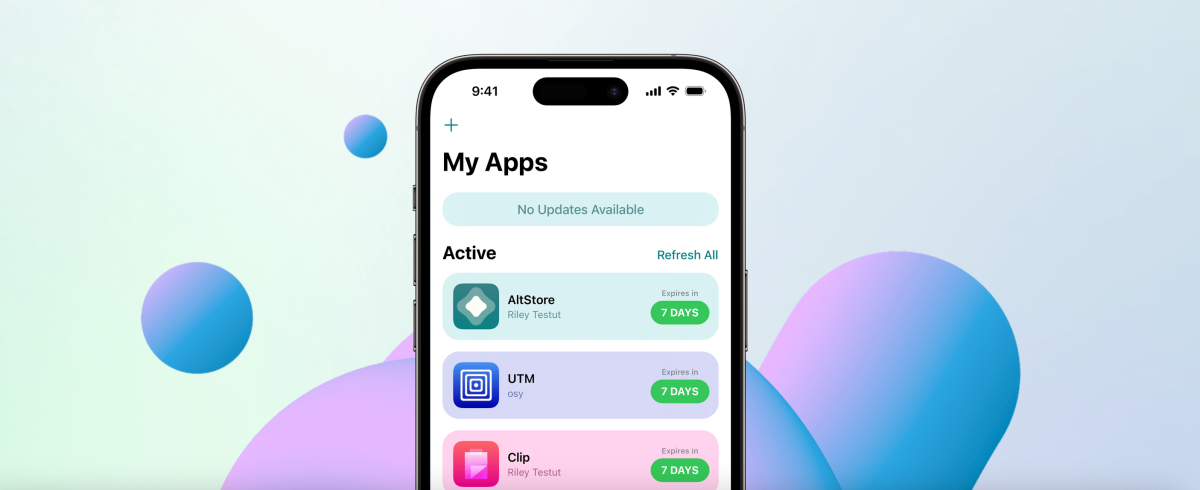
iPhone users in the European Union now have something that was impossible just a short time ago: the ability to download apps from alternative app stores, not just Apple’s App Store. This change comes from the Digital Markets Act (DMA), a landmark regulation meant to increase competition and give developers and consumers more choice across the app ecosystem.
How alternative iOS app stores work in the EU
These third-party marketplaces can feel similar to Apple’s App Store because they offer a central place to browse and install apps. The big difference is what happens behind the scenes. Apps distributed through alternative marketplaces don’t go through Apple’s traditional App Review process. Instead, they must pass a notarization process that Apple says checks for baseline platform integrity standards, such as being free of malware.
Each marketplace can then apply its own policies for reviewing, approving, and featuring apps. That also means the marketplace—not Apple—handles customer support and refunds for purchases made through that store.
There’s also a cost hurdle for anyone who wants to run an alternative marketplace. Developers have to accept Apple’s DMA-specific business terms, including a Core Technology Fee of €0.50 for each first annual install of the marketplace app. Notably, marketplace apps are charged this fee for every first annual install even before reaching the 1 million installs threshold that applies to other EU apps using Apple’s DMA business terms.
Alternative app stores are expanding beyond Europe, too
The EU isn’t the only place pushing the mobile app economy toward more openness. Japan is also moving in this direction under the Mobile Software Competition Act (MSCA). Apple announced compliance with the MSCA in December 2025, giving developers additional ways to distribute apps and process payments outside the App Store, but with its own set of business terms.
Those terms include a reduced App Store commission of 10% to 21%, a 5% payment processing fee for Apple in-app purchases, a 5% core technology fee, and a 15% store services commission on web sales made through a link in the app.
With that context in mind, here are the alternative app stores iPhone users in the EU (and in some cases Japan) can use today.
AltStore PAL (EU)
AltStore PAL is an officially approved alternative marketplace in the EU, co-created by developer Riley Testut, known for building the Nintendo game emulator app Delta. The store is open source and aims to give independent developers a way to distribute apps alongside offerings from the AltStore team, including Delta and a clipboard manager called Clip.
AltStore PAL works differently than a typical app store. Apps are self-hosted by developers rather than uploaded into a centralized catalog. Developers download an alternative distribution packet (ADP), upload it to their own server, and create a “source” that users add inside AltStore to access those apps. In practical terms, users only see apps from sources they’ve personally added.
Apps users commonly add through AltStore sources include UTM (a virtual machine app that can run Windows and other software on iOS or iPad), OldOS (a SwiftUI recreation of iOS 4), Kotoba (a dictionary app), iTorrent, qBitControl (a remote client for qBittorrent), and PeopleDrop (a social discovery platform).
Setapp Mobile (EU – closed Feb. 2026)
Setapp Mobile was one of the earlier, high-profile attempts at a subscription-based alternative app store in the EU, created by MacPaw. It offered a curated bundle of apps under one recurring subscription, with a focus on quality and an experience free from ads and in-app purchases. Over time, the catalog grew, but it didn’t include major mainstream services like Facebook, Uber, or Netflix.
The service ultimately didn’t last. Setapp Mobile was shut down on February 16, 2026, with the company citing Apple’s complex and still-evolving business terms as the reason. (Setapp Desktop was not affected.)
Epic Games Store (EU)
Epic Games launched its alternative iOS app store in the EU in August 2024. The goal is straightforward: make it easier for players to download games outside Apple’s App Store, including Fortnite and other titles such as Rocket League Sideswipe and Fall Guys, with more planned.
The launch also marked an important moment in Epic’s long-running battle with Apple over App Store policies—years after Fortnite was removed from the App Store and the dispute escalated into a legal fight over how Apple runs its mobile ecosystem. While U.S. courts ultimately ruled Apple wasn’t engaged in antitrust behavior, the broader conflict helped accelerate ongoing discussions and regulatory pressure around app distribution and payments.
Aptoide (EU)
Lisbon-based Aptoide is an open source alternative app distribution platform that’s well known for offering an alternative to Google Play. On iOS in the EU, it positions itself strongly as a game-focused store and says it scans apps to ensure they’re safe to download and install.
Aptoide’s iOS store launched as an invite-only beta in June 2024 before expanding across the EU. It’s free for users, and the company says it does not add extra charges to cover the Core Technology Fee it pays Apple. Instead, Aptoide takes a 10% to 20% commission on in-app purchases on iOS, depending on whether the purchase was generated by the marketplace.
Across platforms including Android, web, car, and TV, Aptoide says it serves more than 430 million users and offers access to around 1 million apps.
Mobivention marketplace (EU)
Mobivention takes a different approach from consumer-first app stores. It’s built for businesses that need a reliable way to distribute internal employee apps—especially ones that can’t or shouldn’t be published on Apple’s App Store.
The company offers a ready-to-use B2B marketplace and also develops custom app marketplaces for organizations that want their own private “company app store.” Larger enterprises can even license Mobivention’s technology to deeply tailor the marketplace to internal needs.
Skich (EU)
Skich is aiming to stand out in app discovery by making browsing feel more like a matchmaking experience. Its alternative app store for EU users uses a swipe-based, Tinder-like interface where people can swipe right to “match” with apps they’d likely enjoy. Users can also build playlists and see what their friends are playing.
Skich has said its new store will replace its existing app, and it plans to charge a 15% commission on purchases. Rather than launching with a packed catalog immediately, Skich leaned into developer outreach first, marketing the store to creators at the Game Developers Conference (GDC).
Onside (EU and Japan)
Onside is an alternative iOS app store available in the EU and in Japan as of February 17, 2026, aligning with new market rules. The company says it aims to offer developers lower rates while still maintaining a security-focused experience, including keeping payment information private.
Onside currently supports bank card payments and Apple Pay, with plans to add additional payment options later, including iDeal and Klarna. For users, it promotes a familiar app store-style interface with editorial collections, ratings and reviews, automatic updates, and a mix of popular apps and exclusives that aren’t available on other marketplaces.
What this means for iPhone users and developers
Alternative app stores on iPhone are no longer theoretical in the EU—and the list of real options is growing. For users, it could mean access to apps and game catalogs that don’t fit Apple’s App Store rules, along with new ways to discover and pay for software. For developers, it opens new distribution paths, but with new fees, new business terms, and more responsibility for support and refunds.