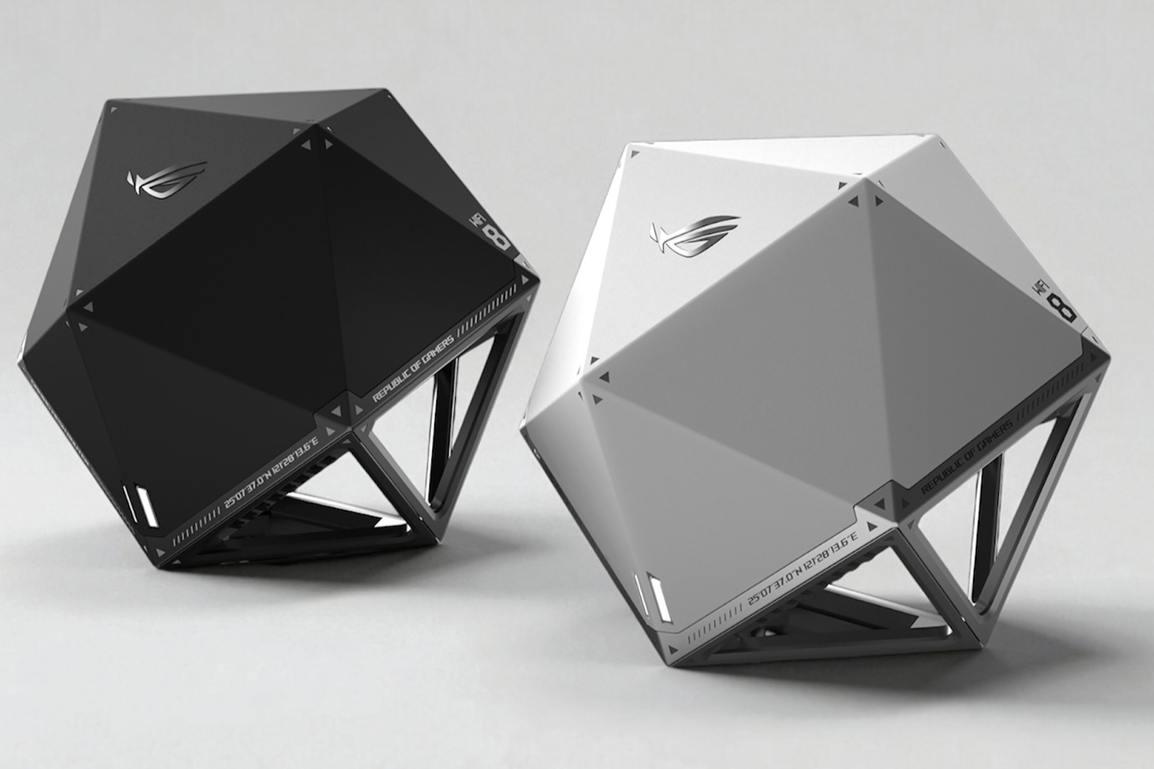
Asus is already looking beyond today’s WiFi 7 rollout with a new concept router built for the next wireless generation. Revealed at CES 2026 in Las Vegas, the Asus ROG NeoCore is a preview of what WiFi 8 (also known as IEEE 802.11bn) could deliver when the standard arrives: not just impressive peak numbers on paper, but a noticeably smoother, more reliable connection in real-world environments.
Rather than chasing higher headline speeds, the ROG NeoCore concept highlights a different priority for WiFi 8: better coordination between routers and access points to reduce congestion and interference. That matters most in places where WiFi struggles the hardest—apartment buildings, dorms, offices, and other densely populated areas packed with competing wireless networks. Asus points to intelligent spectrum management and improved multi-access-point coordination as key features designed to keep performance steady even when nearby networks are fighting for the same airwaves.
On the speed front, WiFi 8’s theoretical maximum currently remains the same as WiFi 7, topping out at 46Gbps. The bigger promise is consistency. In early hands-on testing shared alongside the concept, the router reportedly delivered up to double the throughput at medium range compared to WiFi 7, along with a more stable link for smart home devices—an area where connection dropouts and inconsistent responsiveness can be especially frustrating.
Gamers may be equally interested in the latency improvements Asus is hinting at. The company says WiFi 8 could significantly reduce “P99 latency,” which is a way of measuring worst-case lag spikes—the annoying outlier moments when ping suddenly jumps and gameplay feels jittery. According to Asus, those extreme latency spikes could be up to six times lower, potentially translating into fewer random hiccups during competitive matches and smoother performance in busy home networks.
Design-wise, the ROG NeoCore doesn’t lean into the typical aggressive “antenna array” look seen on many gaming routers. Instead, it’s presented as a simple geometric polyhedron with a hollowed base—an understated concept design that keeps the attention on what’s inside rather than external antenna theatrics.
Asus also suggests WiFi 8 hardware may arrive sooner than many people expect. The company says it plans to launch its first consumer-ready WiFi 8 routers and mesh systems during 2026, even though final approval of the WiFi 8 standard from the IEEE isn’t expected until 2028. If that timeline holds, early adopters could see next-gen wireless gear well before the spec is fully finalized—something Asus has historically been willing to do faster than many competitors.
For anyone frustrated by dead zones, inconsistent mesh performance, crowded-neighborhood interference, or lag spikes that show up at the worst possible time, the Asus ROG NeoCore concept is a clear sign of where WiFi is heading next: fewer “perfect conditions” speed claims, and more focus on stability, smarter coordination, and real-world performance that stays steady when the network gets busy.