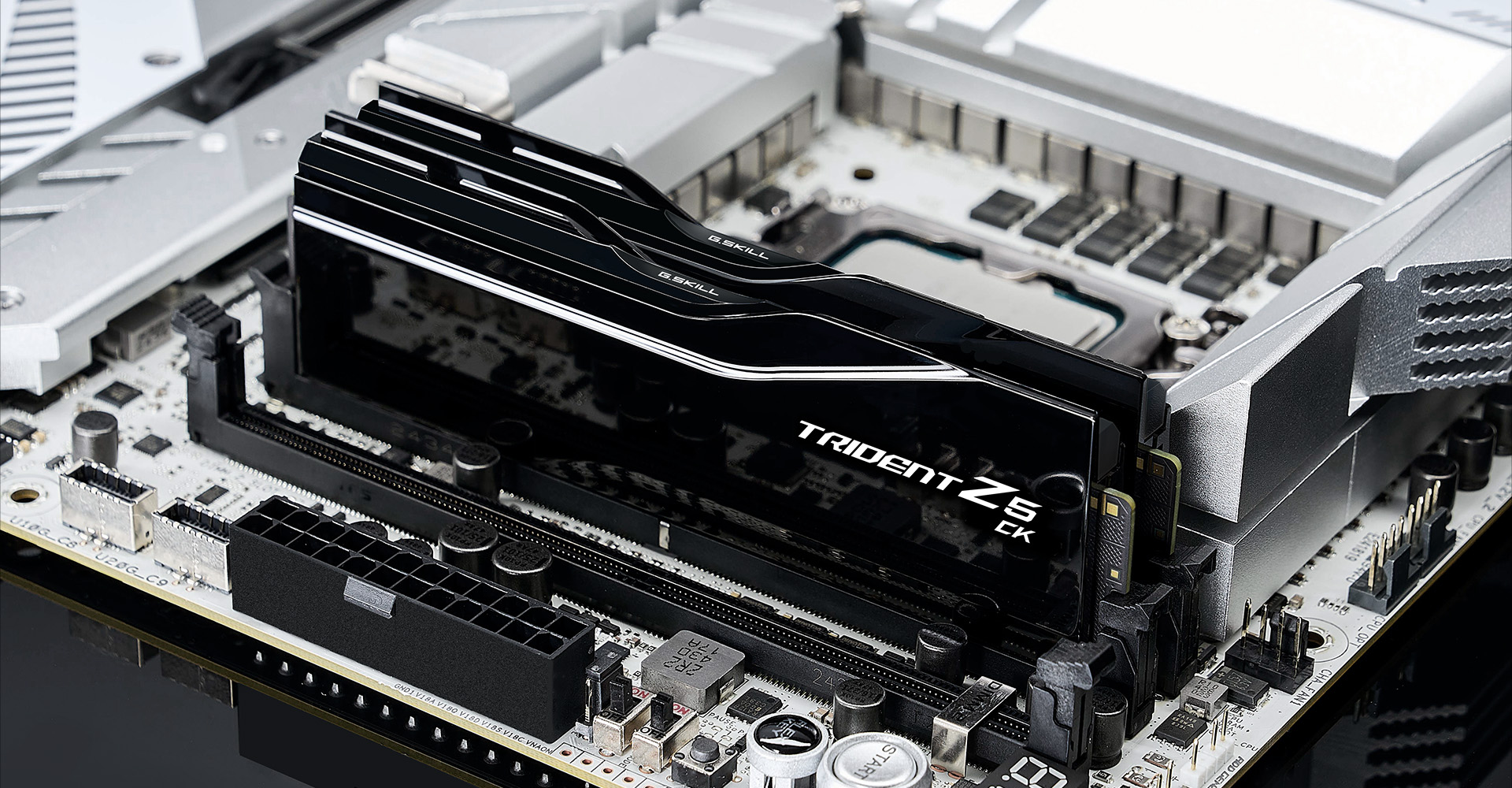
In recent developments, DDR5 Gear 2 memory configurations have emerged as the superior choice over Gear 4 for Intel Z890 motherboards, delivering enhanced performance and reduced latency. Despite the introduction of various high-frequency DDR5 CUDIMMs from brands like Corsair, G.Skill, and Colorful, it turns out that extreme memory speeds don’t always guarantee the expected real-world benefits.
A ROG engineer recently conducted a series of tests on the ROG Maximus Z890 Apex motherboard—a model known for holding world records in overclocking. The evaluations compared several CUDIMM frequencies alongside a UDIMM configuration. Notably, ASUS’s default setting for these motherboards is the Gear 4, or a 1:4 DRAM Frequency Ratio. This setting aims to optimize system performance straight out of the box. However, the BIOS offers an alternative Gear 2 setting, or a 1:2 ratio, which has shown to significantly boost both performance metrics and latency.
The tests indicated that Gear 2, with a DDR5 CUDIMM clocked at 9000 MT/s and a CL42 timing, achieved the highest read and write speeds along with a low latency of 76.1 ns. Conversely, using Gear 4, a CUDIMM at 9600 MT/s with CL46 showed inferior read/write performance and a higher latency of 85.6 ns. This marks a notable improvement of 12.48% in latency with the Gear 2 configuration. Furthermore, a DDR5 8800 MT/s CL42 without CKD surpassed the Gear 4 9200 CL42 setup, achieving a 12.2% reduction in latency and better read/write performance, demonstrating that even UDIMMs outshine high-frequency CUDIMMs.
The insights from ASUS’ overclockers, including SAFEDISK, further demonstrate the potential of Gear 2 configurations reaching speeds up to 9400 MT/s on higher-end Z890 motherboards. Although Asus has yet to officially change the default setting back to Gear 2, these findings suggest that such a shift might be recommended to enhance user experience.
These revelations could prompt users and manufacturers alike to reconsider the focus on sheer speed figures and instead optimize for configurations that deliver tangible performance benefits. The choice between Gear 2 and Gear 4 could be a game-changer in how enthusiasts and professionals configure their systems for maximum efficiency and speed.