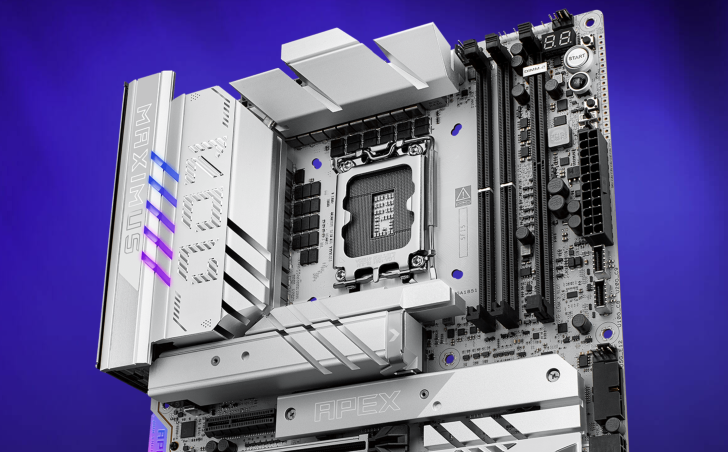
The ASUS ROG Maximus Z890 APEX motherboard is creating waves in the tech world with its incredible potential for memory overclocking. This powerhouse is setting the bar high with its ability to support up to 9200 MT/s Gear 2 mode on DDR5 CUDIMM, making it an enticing option for tech enthusiasts and overclockers.
In recent demonstrations, companies like TeamGroup and G.Skill have showcased the prowess of their DDR5 CUDIMM modules, but it’s the dual DIMM motherboards, such as the ASUS ROG Maximus Z890 APEX, that are truly maximizing the performance of next-gen DDR5 modules. Our exclusive sources have provided us early test results, revealing the Z890 APEX pushing G.Skill DDR5 CUDIMM modules, specifically the F5-9000C4256H24G, beyond their factory rating of 9000 MT/s to an astonishing 9200 MT/s speeds. This feat was achieved using the Gear 2 mode, highlighting the motherboard’s top-tier design tailored for pushing memory limits.
What truly sets this motherboard apart is how it handles overclocking. With voltages reaching up to 1.575V, the Z890 APEX showcases its reliability and excellence, making it a must-have for those looking to get the most out of their memory. In comparison, TeamGroup’s benchmarks with their own DDR5 CUDIMM modules running at 9600 MT/s on an undisclosed motherboard appear to fall short, especially since they operate in Gear 4 mode, which runs the memory controller at a lower frequency. This allowed the Z890 APEX to clock a remarkable 24T cover speed of 2449.21 MB/s, surpassing the competition which managed just 2212 MB/s.
The Z890 APEX, part of ASUS’s ROG division, seems to hold an advantage over the TeamGroup T-Force setup in Gear 2 mode, leading to superior performance. As the platform matures, enthusiasts can look forward to even more impressive results. This cutting-edge motherboard is available for pre-order at $719.99 in the US, with retail availability expected from October 24.
For those passionate about pushing boundaries in performance, the ASUS ROG Maximus Z890 APEX is a game-changer, offering a glimpse into the future of DDR5 overclocking.


