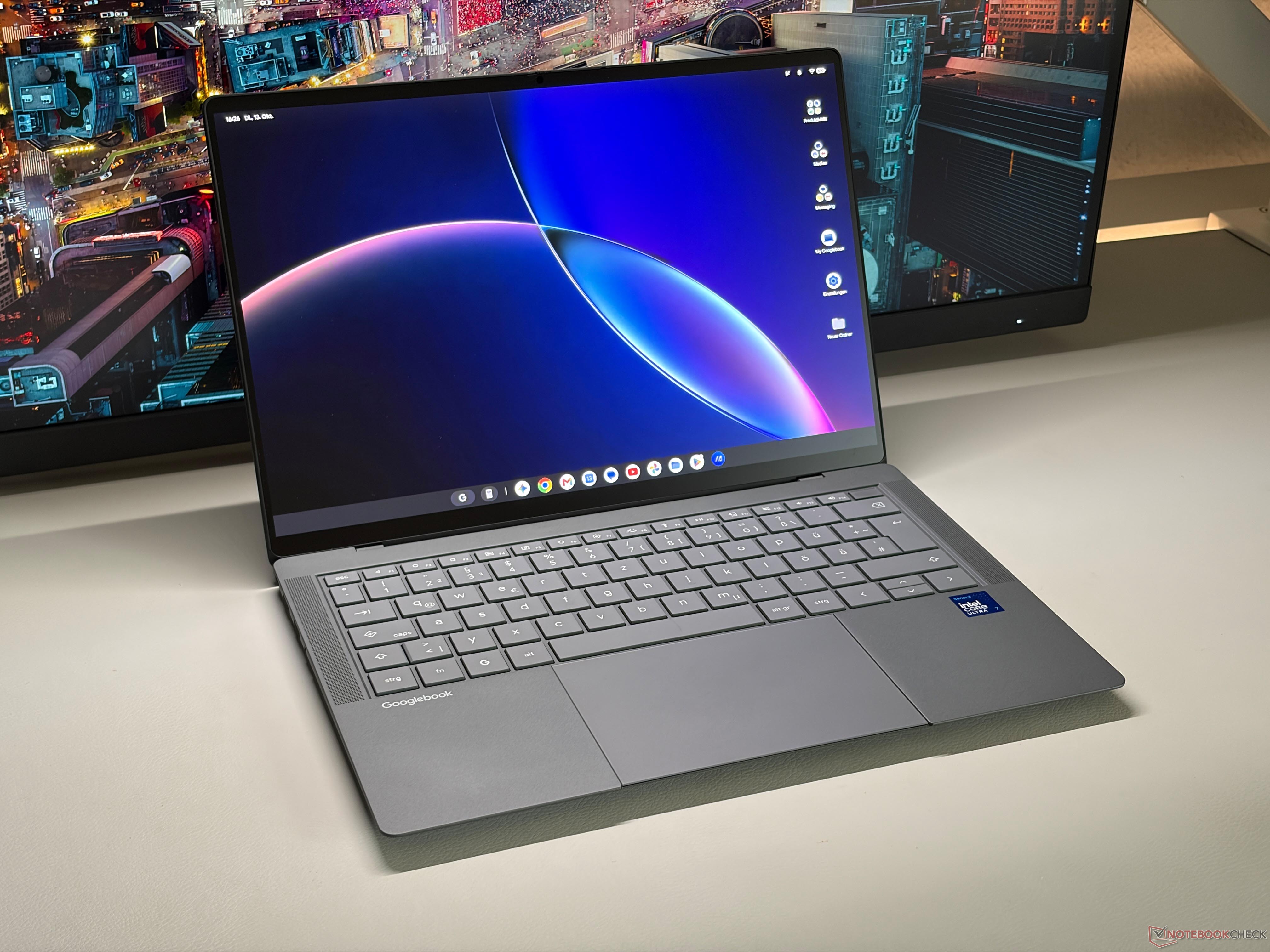
Asus Googlebook 14: A Premium Lightweight Laptop With a Few OS Limits
The Asus Googlebook 14 stands out as one of the most refined Googlebook devices yet, borrowing its premium design from Asus’s ExpertBook Ultra lineup. Instead of feeling like a basic everyday laptop, this model brings a business-class chassis, a lightweight build, strong connectivity, and a bright OLED touchscreen into a portable device made for daily productivity.
One of its biggest strengths is portability. Weighing under one kilogram, the Asus Googlebook 14 is extremely easy to carry, whether you are commuting, traveling, working from a café, or moving between meetings. Despite its low weight, the build quality feels sturdy and high-end, giving it a more premium feel than many other lightweight laptops in its category.
Asus has also done well with connectivity. The Googlebook 14 includes two Thunderbolt 4 ports, two USB-A ports, and an HDMI output, making it practical for users who still rely on accessories, external displays, flash drives, or office equipment. This is a major advantage for anyone who wants a slim laptop without sacrificing useful ports.
Performance is another highlight. The laptop is powered by a modern Intel Panther Lake processor, paired with 16 GB of RAM. For Android apps, web browsing, video streaming, document editing, and everyday multitasking, the system has more than enough power. It is clearly designed for smooth daily use rather than heavy workstation tasks, and in that role, it performs confidently.
The matte OLED touchscreen is also a key feature. It offers strong brightness, making the laptop easier to use outdoors or in bright rooms. The matte finish helps reduce reflections, which is especially useful for students, office workers, and frequent travelers who often work in different lighting conditions.
However, the display does come with some unexpected behavior. OLED screens are usually known for deep blacks, excellent contrast, and accurate colors, but the Googlebook 14 showed an unusually elevated black level, an active sRGB profile, and noticeable color deviations. These results do not match what would normally be expected from an OLED panel or from Asus’s stated specifications. This suggests that the issue may be related to Googlebook OS rather than the hardware itself.
Battery life is decent but not exceptional. Even with a large 70 Wh battery, the Asus Googlebook 14 reached just under 14 hours in Wi-Fi usage. That is still enough for a full day of work or study for many users, but it falls short of what some might expect from a highly efficient, lightweight device with a large battery. Another limitation is the lack of a 5G option, which may disappoint users who need constant mobile connectivity while traveling.
The biggest drawback remains Googlebook OS. While the hardware feels premium and capable, the operating system still limits what the device can fully achieve. For users who mainly rely on Android apps, cloud-based tools, web browsing, and lightweight productivity software, this may not be a major problem. But those expecting the flexibility of a traditional desktop operating system may feel restricted.
Overall, the Asus Googlebook 14 is a sleek, lightweight, and well-built laptop aimed at users who value portability, premium materials, strong everyday performance, and a bright touchscreen display. Its business-class design and excellent port selection make it more versatile than many ultra-light laptops. Still, the software limitations and some display inconsistencies prevent it from being a perfect all-rounder.
For students, professionals, and everyday users who want a premium Googlebook for web-based work, Android apps, media consumption, and travel-friendly productivity, the Asus Googlebook 14 is an attractive choice. Just keep in mind that its impressive hardware is held back somewhat by the current state of Googlebook OS.


