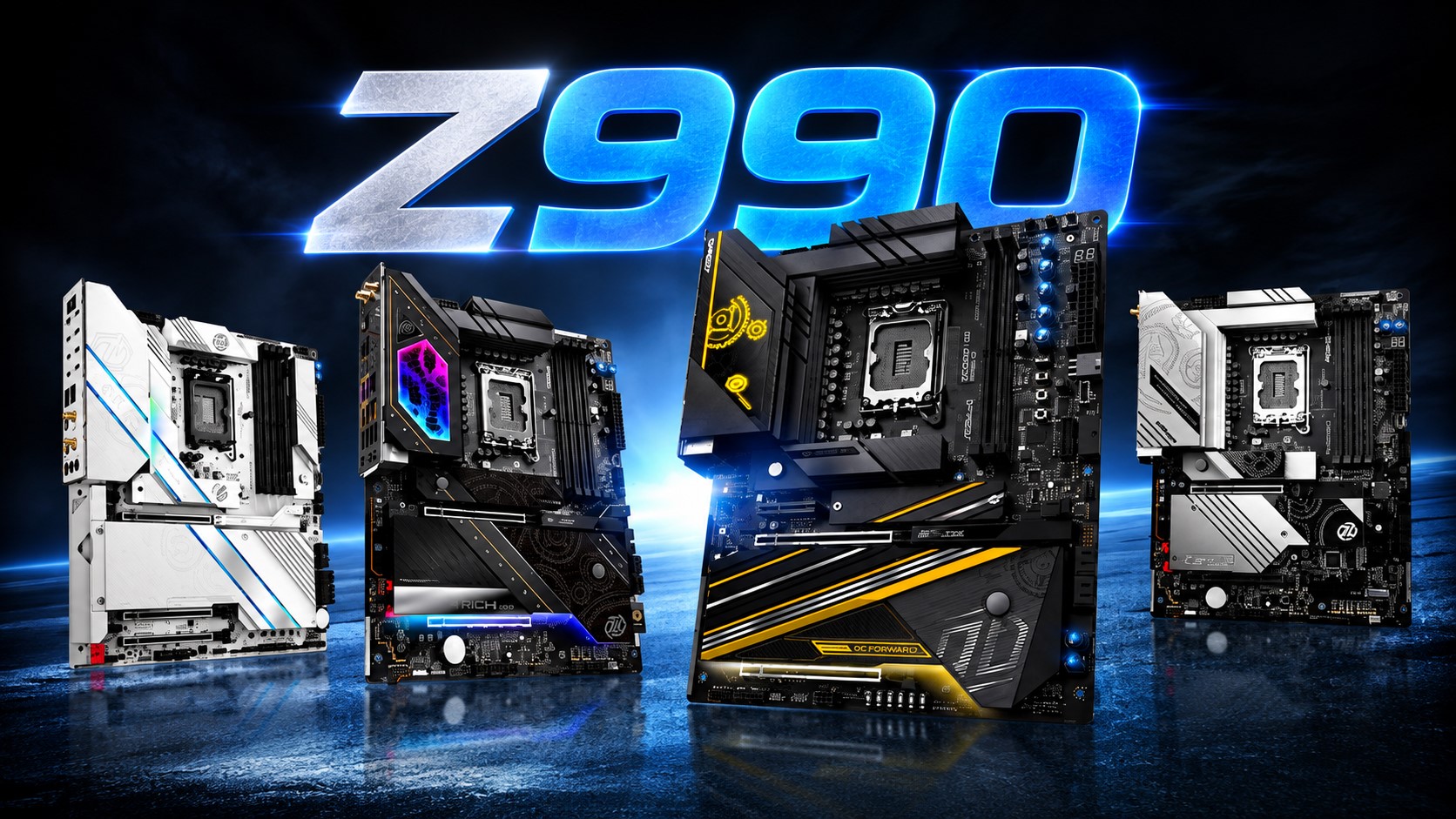
ASRock Z990 Motherboards Surface Ahead of Intel Nova Lake-S Desktop Launch
Intel’s next major desktop platform is starting to take shape, and motherboard makers appear to be getting ready well in advance. As the company prepares its upcoming Nova Lake-S desktop processors, expected around late 2026 or early 2027, new signs suggest that ASRock is already moving forward with its next-generation Z990 motherboard lineup.
A recent shipping manifest has revealed multiple ASRock Z990 motherboard models, indicating that early logistics, testing, or partner distribution may already be underway. These boards are expected to support Intel’s future LGA 1954 platform and will likely launch alongside the Nova Lake-S processor family.
The Z990 chipset is expected to be the flagship option in Intel’s 900-series motherboard lineup. It will target enthusiasts, gamers, creators, and high-end PC builders who want the best platform features available for Nova Lake desktop CPUs. Intel’s next-generation chips are rumored to scale up to a flagship 52-core configuration, making the Z990 platform especially important for demanding users building premium desktop systems.
The ASRock Z990 models listed in the shipping data include several familiar product families:
ASRock Z990 Steel Legend WiFi
ASRock Z990 Taichi Creator
ASRock Z990 Challenger WiFi
ASRock Z990 Taichi White
ASRock Z990 Challenger WiFi White
ASRock Z990 PRO RS WiFi
These names suggest that ASRock is preparing a broad Z990 lineup covering multiple market segments. The Taichi Creator series will likely focus on premium features for professionals and high-end enthusiasts, while Steel Legend and Pro RS models typically offer strong value for mainstream builders. The Challenger series could target users looking for a more affordable entry into the Z990 platform, and the white variants should appeal to PC builders planning clean, themed desktop builds.
Although the shipping manifest does not reveal detailed specifications for each motherboard, earlier platform information points to several major upgrades for Intel’s Z990 chipset compared with current-generation high-end boards. One of the biggest improvements is expected to be expanded PCIe 5.0 connectivity, giving future systems more bandwidth for next-generation graphics cards, ultra-fast SSDs, and high-speed add-in devices.
The Z990 chipset is also expected to offer a richer I/O configuration than lower-tier Intel 900-series chipsets. Reported platform details suggest the flagship chipset may feature 48 total PCIe lanes, support for two CPU-connected USB4 or Thunderbolt 4 ports, four DMI Gen5 lanes, 12 PCIe 5.0 lanes from the chipset, and 12 PCIe 4.0 lanes. It is also expected to support eight SATA 3.0 ports, multiple USB 3.2 ports, CPU and memory overclocking, and support for up to four displays.
However, the added capability may come with higher power requirements. The Z990 chipset is reportedly more power-hungry than current flagship chipsets, with power consumption potentially reaching up to 14W. That may influence motherboard cooling designs, especially on premium models built for overclocking and heavy workloads.
Intel’s wider 900-series chipset family is expected to include several options beyond Z990, such as Z970, W980, Q970, and B960. Each chipset will likely serve a different audience, from workstation users to business systems and mainstream consumer builds. Still, Z990 should remain the top choice for users who want the most complete Nova Lake-S desktop experience.
The appearance of ASRock Z990 motherboards in shipping records does not mean these products are close to retail launch, but it is an early sign that Intel’s next desktop ecosystem is moving forward. Motherboard vendors typically begin platform preparation long before processors arrive on store shelves, especially when a new socket and chipset family are involved.
For PC enthusiasts, the key takeaway is clear: Intel’s Nova Lake-S platform is beginning to emerge, and ASRock already appears to have several Z990 motherboards in development. As the launch window approaches, more details about board layouts, VRM designs, memory support, storage options, and pricing should begin to appear.