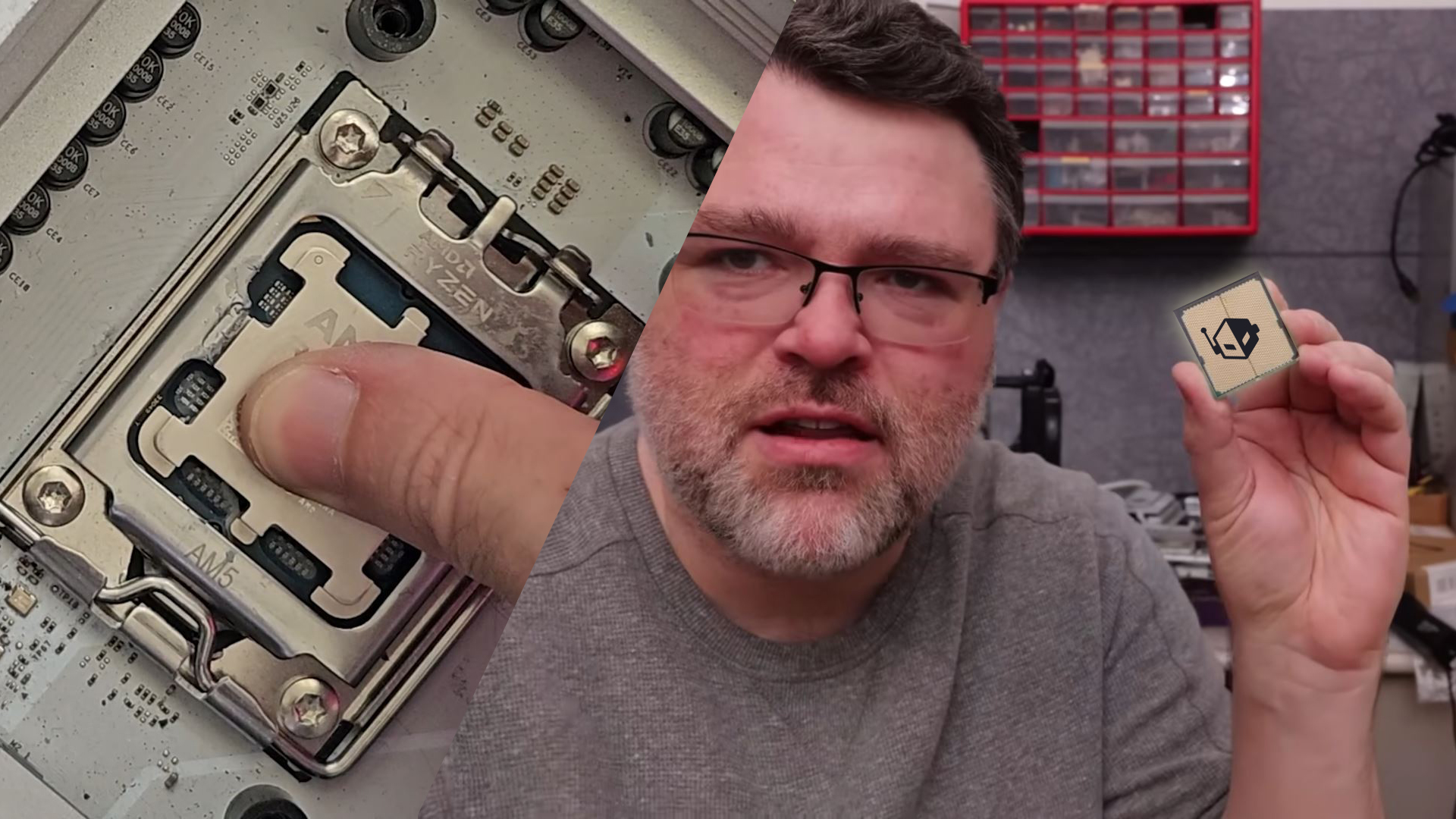
After weeks of worrying Reddit threads and scattered reports of “dead” Ryzen 9000 chips, a more reassuring picture is starting to emerge: not every Ryzen 9000 “failure” is an actual CPU death. In some cases, the system simply refuses to boot or behaves erratically without displaying the classic signs of hardware damage, such as burned pins, scorch marks, or socket discoloration.
That distinction matters, because it suggests at least some of these scary “no POST” situations may be firmware-related rather than permanent silicon failure. And for owners of specific ASRock AM5 motherboards, a recent BIOS update appears to be making a real difference.
ASRock has been working on BIOS updates designed to address boot problems and reported CPU failure behavior on certain AM5 boards. A newer BIOS track introduced AMD’s AGESA 1.3.0.0a microcode, initially arriving in beta form, and later rolling into a stable release (version 4.10). Alongside memory-related optimizations, that stable BIOS also targets boot failure mitigation—an issue many users describe as systems that suddenly stop posting, hang during training, or become inconsistent after what seemed like a normal build.
A notable real-world example comes from a troubleshooting attempt on an ASRock X870E Taichi paired with a Ryzen 5 9600X. The system showed a frustrating mix of symptoms: sometimes it would POST and sometimes it wouldn’t, it could stall on a motherboard status light, and it might lock up during memory training. Clearing CMOS didn’t provide a lasting solution. The instability continued inside Windows too, including freezes during updates and occasional black-screen boots.
Even more confusing, the machine could appear “fixed” when running a single RAM stick, only to become unreliable again after adding the second module—classic behavior that can look like a failing CPU or bad memory, but can also point to firmware-level training and compatibility issues.
After updating to the latest ASRock BIOS that includes AGESA 1.3.0.0a, those problems reportedly cleared up. The system returned to normal boot behavior and was stable enough for gaming and benchmarking, suggesting the CPU itself wasn’t dead—it simply wasn’t able to initialize consistently under the previous firmware.
If you’re running a Ryzen 9000 processor on an ASRock AM5 motherboard and you’re experiencing no POST, intermittent booting, freezing, or strange memory training behavior, updating to the newest stable BIOS may help mitigate or resolve those issues. However, it’s important to be realistic: firmware updates can’t revive a CPU that’s physically damaged or genuinely “fried.” If there are visible signs of burning or socket damage, you may be looking at a hardware failure that requires replacement rather than a software fix.
The encouraging takeaway is that at least some Ryzen 9000 “death” reports may actually be recoverable boot failures—and BIOS updates with the latest AGESA microcode are starting to look like a meaningful step toward fewer false-alarm “dead CPU” situations.


