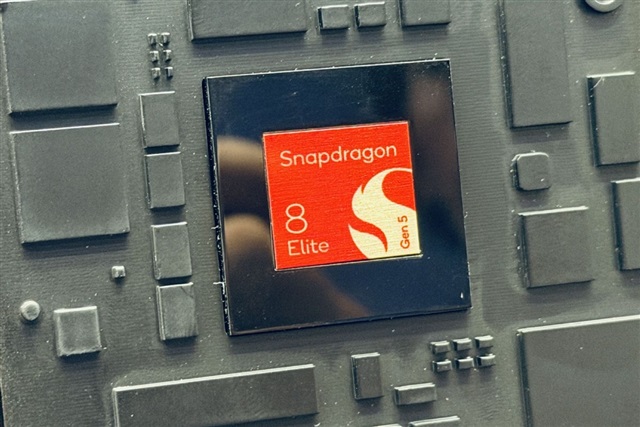
2025’s flagship smartphone chips are poised to give 3nm technology its grand finale. It’s a fitting send-off for a node that squeezed more performance and efficiency than many thought possible. But the real story isn’t just about smaller transistors anymore. The next era of mobile computing will be defined by on-device artificial intelligence, where dedicated AI accelerators matter more than raw CPU and GPU speed.
Why it matters
For years, the mobile race was measured in gigahertz and core counts. As 3nm reaches maturity and shrinking delivers diminishing returns, chipmakers are channeling their silicon budgets into neural processing units and AI-centric architectures. The result is a pivot from peak benchmarks to smarter, faster, and more private on-device intelligence that works even without the cloud.
What the last wave of 3nm brings
The final generation of 3nm flagship chips will be the most refined yet, pairing mature power efficiency with improved thermal behavior. Expect modest CPU and GPU gains, but the largest leaps will come from:
– Heavier investment in NPUs and AI engines designed for transformer models and diffusion tasks
– More efficient AI math (INT8, mixed precision) to fit bigger models into tight power envelopes
– Better memory controllers to feed AI workloads without stalling
– Tighter integration between CPU, GPU, ISP, and NPU so tasks move to the most efficient unit automatically
From speed to smarts: AI accelerators take the lead
On-device AI has moved from party trick to core experience. Phones in 2025 will focus on sustained, efficient AI performance measured in usable, real-world tasks—low-latency replies, longer sessions without overheating, and higher-quality outputs for photos, video, and audio.
Here’s where you’ll notice the difference:
– Camera and video: Real-time scene understanding, multi-frame HDR, semantic segmentation, portrait and night modes that look more natural, and steadier 4K/8K footage with AI stabilization.
– Voice and language: Faster, more reliable transcription and translation, plus offline assistants that can summarize, draft messages, and follow multi-step instructions without sending data to the cloud.
– Creativity and productivity: On-device image editing, background replacement, style transfer, and generative tools that run locally for privacy and speed.
– Gaming and graphics: Smarter upscaling, frame generation, and adaptive rendering that keep visuals sharp while conserving battery.
– Security and personalization: On-device anomaly detection, smarter spam filtering, and context-aware features that don’t need to share your data.
How to judge a 2025 mobile chip
Traditional benchmarks won’t tell the full story. Shoppers and reviewers will increasingly look at:
– NPU capability: Effective throughput and efficiency for modern model types, not just headline TOPS.
– Sustained performance: How the chip performs after 10–20 minutes of continuous AI or video tasks without throttling.
– Memory and storage: Bandwidth, latency, and fast local storage to keep large models responsive.
– Thermal design: Cooling solutions and power management that maintain comfort and consistency.
– Software stack: Optimized frameworks, model quantization, and driver-level enhancements that turn silicon potential into real gains.
– Battery impact: Power draw during AI-heavy usage and how well the system balances performance-per-watt.
The bigger transition on the horizon
As the industry prepares to move beyond 3nm, next-generation nodes will eventually bring new transistor structures and packaging advances that help power delivery and density. Still, the defining experience won’t be the node itself. It will be how well each platform orchestrates CPUs, GPUs, NPUs, and ISPs into a cohesive AI-first system that feels instantaneous and intuitive.
What this means for you
If you’re buying a premium phone in 2025, expect 3nm to deliver reliable efficiency, stronger thermals, and longer battery life. But the most noticeable upgrade will be how much you can do locally—faster, more private, and with fewer interruptions. Look for devices that highlight:
– Robust on-device AI features you’ll use daily
– Clear claims about sustained AI performance and thermal stability
– A track record of software updates that improve AI features over time
The bottom line
The 3nm era is wrapping up with its best performance yet, but the spotlight has shifted. The next wave of flagship smartphones will be defined by AI accelerators and intelligent system design, not just clock speeds. As on-device AI becomes the default, expect your phone to feel more capable, more personal, and more helpful—no tether to the cloud required.