Apple’s long-rumored Smart Home Display was expected to be part of the company’s recent wave of product announcements, but it didn’t show up. The reason appears to be simple: the software that’s meant to power its most important features still isn’t ready.
The device, known internally as J490, has reportedly been pushed back again as Apple continues to work through delays tied to its revamped Siri experience. Apple had initially targeted a spring 2025 debut, then aimed for a launch this month, but those plans have shifted as Siri’s updated capabilities remain unfinished.
At the center of the delay is Apple’s next-generation Siri, which is intended to deliver far more than basic voice commands. The upgraded assistant is expected to introduce long-awaited improvements such as in-app actions, personal context awareness, and on-screen awareness. In practical terms, that would let Siri take more advanced, “agent-like” actions across apps by understanding what’s on your screen and drawing on your personal data to complete tasks.
This version of Siri is designed to run through Apple’s Private Cloud Compute approach, splitting work between on-device processing for simpler tasks and Apple’s private cloud servers for heavier requests. The idea is to handle complex AI workloads while keeping data encrypted, stateless, and more privacy-focused than typical consumer cloud AI setups.
Even so, the rollout has reportedly hit performance-related inconsistencies, prompting Apple to extend the timeline yet again. Because Siri is an integral part of how the Smart Home Display will function day-to-day, the hardware launch is now tied to when Apple is confident the assistant is ready.
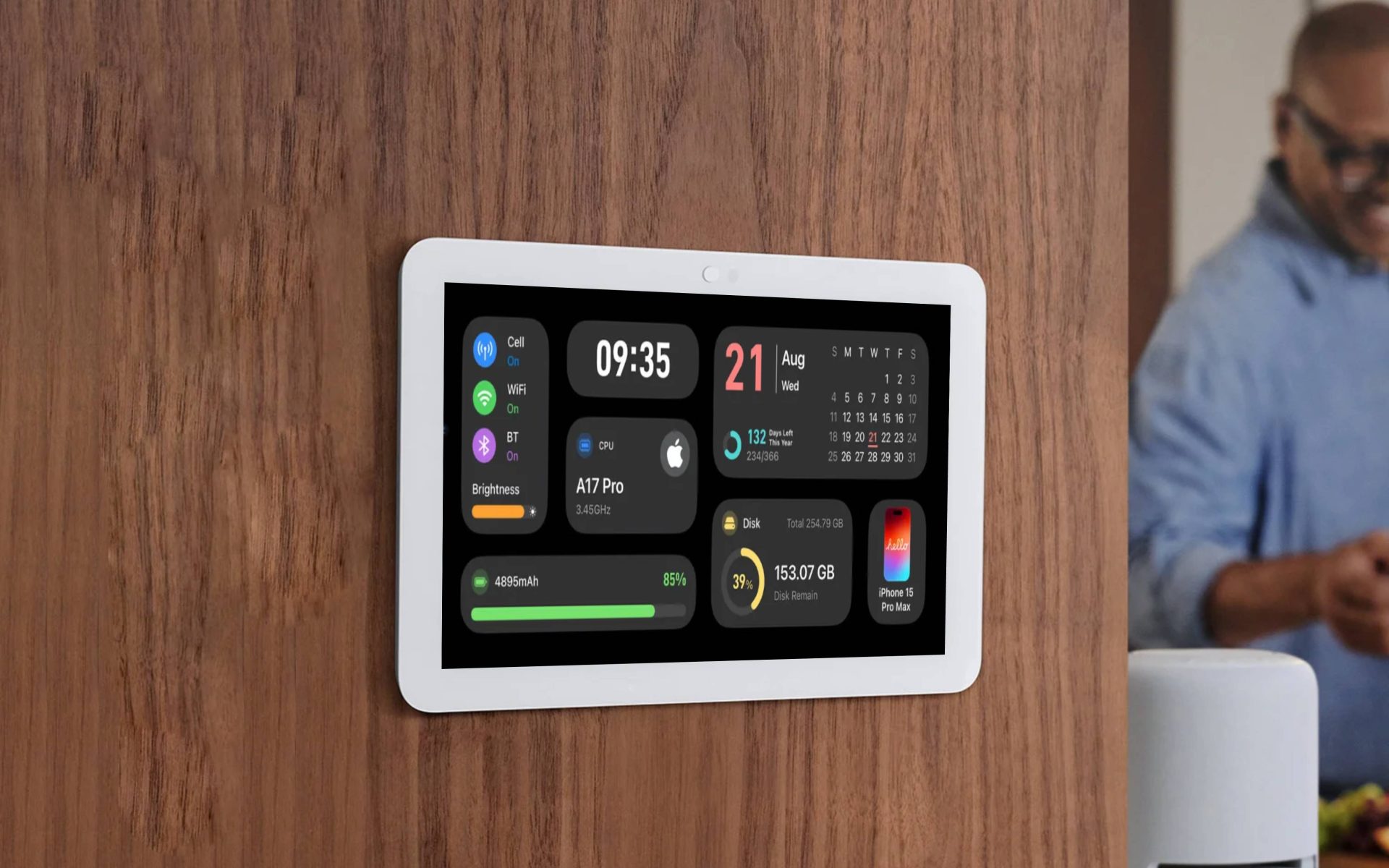
So what is Apple’s Smart Home Display supposed to be? The product is described as iPad-like in appearance and built for home use. It can reportedly sit on a dome-shaped speaker base or be attached to a wall mount. Hardware details mentioned so far include a 7-inch screen, an aluminum body, and a single USB‑C port.
One of the headline features is said to be facial recognition. The display would be able to identify who is approaching and automatically show personalized content tailored to that person’s preferences—an approach that could make it feel more like a shared household hub than a one-user tablet.
The interface is also expected to be distinct from iPadOS. The Smart Home Display is rumored to ship with a tvOS-like software variant and circular app icons reminiscent of the Apple Watch’s home screen, suggesting Apple is aiming for a simple, glanceable experience designed for kitchens, living rooms, and hallways.
As for when it might finally arrive, the current expectation is that the revamped Siri could be ready by September 2026, aligning with Apple’s likely iPhone 18 Pro window and other major launches. If that timing holds, Apple’s Smart Home Display may not land until fall 2026 as well.
For anyone tracking Apple’s push into smart home devices, the message is clear: the hardware may be close, but Apple is betting the experience will be defined by Siri—and it’s not ready to ship that centerpiece until it meets the company’s standards.


