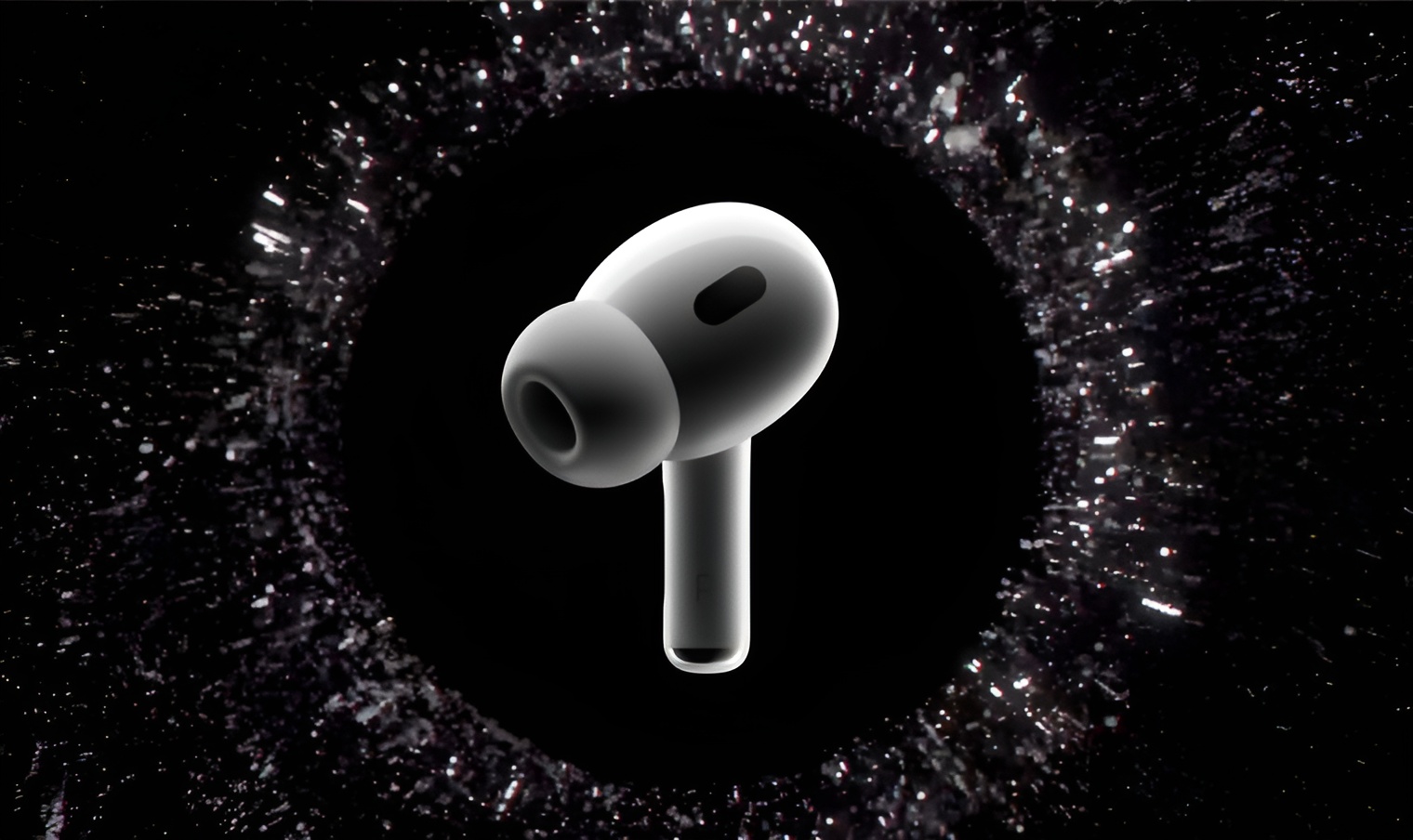
A fresh theory is tying together two of Apple’s most talked-about moves: its massive $2 billion acquisition of the secretive Israeli AI company Q.ai and the long-rumored next-generation AirPods Pro that could arrive as soon as this year with an infrared (IR) sensor.
Apple doesn’t typically spend this big without a clear endgame, and Q.ai’s specialty makes the rumor around IR-equipped AirPods Pro feel a lot less random. Q.ai is known for machine learning technology that can decipher whispered or silent speech and improve audio in difficult, noisy conditions. It also works on analyzing and interpreting micro facial expressions, an area that sounds niche until you imagine Apple turning it into a mainstream feature.
At the same time, industry chatter has been building around AirPods Pro gaining a new kind of “awareness” of their surroundings through an IR camera-like component, potentially without increasing the price. The idea of Apple adding sensors to AirPods isn’t far-fetched either, especially considering a patent granted in July 2025 that describes using camera-based systems similar to Face ID’s dot projector for proximity detection and 3D depth mapping. That kind of technology opens the door to spatial sensing features that go well beyond typical earbuds.
Here’s where the new theory gets interesting: an IR sensor on the AirPods Pro could potentially “read” subtle facial movements and pair that with Q.ai’s silent-speech and whisper recognition to understand what you’re saying even when you’re barely speaking—or not speaking out loud at all. In other words, IR-equipped AirPods Pro could enable a form of hands-free, discreet communication that doesn’t rely on you clearly talking into a microphone in public.
If Apple can pull that off, the use cases are immediately compelling. You could dictate voice-to-text in apps like iMessage without speaking audibly. You could interact with Siri on a noisy train or crowded street without raising your voice. And it could reduce the awkwardness that many people feel when saying wake phrases or taking voice calls in public spaces—making voice features more socially comfortable and more practical.
The implications don’t stop with AirPods Pro. Technology that combines sensor-driven perception with AI-based interpretation of speech and facial cues could also strengthen Apple’s broader wearable and spatial computing ambitions. It could meaningfully enhance how users interact with devices like Vision Pro, future Apple smart glasses, and even other rumored form factors in the wider Apple ecosystem—especially products that may depend on subtle, always-available input methods rather than constant tapping and swiping.
Whether the rumored IR camera on AirPods Pro ships this year or later, the Q.ai acquisition adds fuel to the idea that Apple is preparing for a new era of wearable AI—one where earbuds become not just audio devices, but intelligent, context-aware companions that help you communicate more naturally, even in total silence.