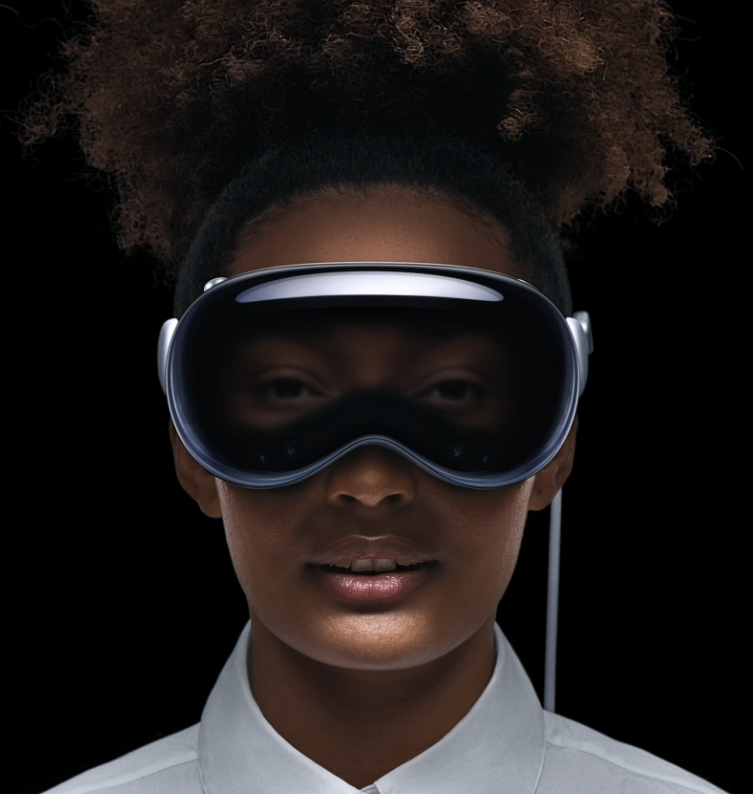
One aspect of the Vision Pro launch that has been surprising is the noticeable gap between the marketing shots of the Vision Pro EyeSight feature and what it looks like in real life. For the uninitiated, EyeSight is an outward facing display on the front of the Vision Pro that uses cameras positioned inside the headset to project the wearer’s eyes outwards to anyone nearby. Ahead of the Vision Pro launch, EyeSight was marketed as a signature feature of the Vision Pro, differentiating it from other headsets on the market that completely shut off the user’s face from others. Apple explains the feature on its website: Apple Vision Pro helps you remain connected to those around you. EyeSight reveals your eyes and lets those nearby know when you’re using apps or fully immersed in an experience. When someone approaches, Apple Vision Pro simultaneously lets you see the person and reveals your eyes to them.Based on the marketing shots, it is not uncommon for people to mistake this feature for a completely transparent window on the front of the headset. However, since the AR/VR headset went on sale on February 2, it has become apparent that Apple’s marketing hasn’t been completely transparent as it has made the shots of the feature look like in promotional shots. As you can see from the photos accompanying the article, the difference between the promotional shots and photos of Vision Pro customers using the EyeSight feature are markedly different.
Instead of being able to see the Vision Pro wearer’s eyes clearly, at best, the outward facing OLED panel offers a very pixelated image that is often obscured by the lenticular effect of the outer glass layer with a strange blueish glow emanating from the front of the headset. It is a far cry from what Apple’s marketing has been leading people to believe in the leadup to the launch and since. There is only one shot on Apple’s website where a hint of the glowing effect is noticeable, but it shows this glow more noticeably in the first video promo since it went on sale.
Apple’s marketing shots also show the wearer’s eyes are where you would expect them to be located in relation to the rest of their uncovered or exposed face. The eyes appear exactly where they should in relation to the forehead, nose, mouth, cheeks, jaw. In reality, however, they appear to be positioned where the wearer’s brow, or even forehead would be located. This gives the impression that the wearer’s face is abnormally elongated. So while the feature was intended to make interactions with people wearing the headset more “natural”, it is actually producing the opposite effect making interactions between the wearer and observers stranger and more bizarre than might otherwise have been the case.
At this early juncture, it doesn’t seem as though there are any obvious solutions to the issues that the EyeSight feature is currently presenting. A software update could potentially help improve the performance of the feature if the pixelation has anything to do with the cameras and video processing involved. However, it is possible the issue lies with the quality of the panel Apple is using and materials between the panel and the exterior of the Vision Pro. That would present a far greater challenge to fix.
At the time of writing, Apple has not made any public comment in relation to the performance of the Vision Pro’s EyeSight feature, but we will certainly be keeping an eye on the issue.
Purchase the Meta Quest 3 from Amazon from $499.Sanjiv Sathiah – Senior Tech Writer – 1449 articles published on Notebookcheck since 2017I have been writing about consumer technology over the past ten years, previously with the former MacNN and Electronista, and now Notebookcheck since 2017. My first computer was an Apple ][c and this sparked a passion for Apple, but also technology in general. In the past decade, I’ve become increasingly platform agnostic and love to get my hands on and explore as much technology as I can get my hand on. Whether it is Windows, Mac, iOS, Android, Linux, Nintendo, Xbox, or PlayStation, each has plenty to offer and has given me great joy exploring them all. I was drawn to writing about tech because I love learning about the latest devices and also sharing whatever insights my experience can bring to the site and its readership.