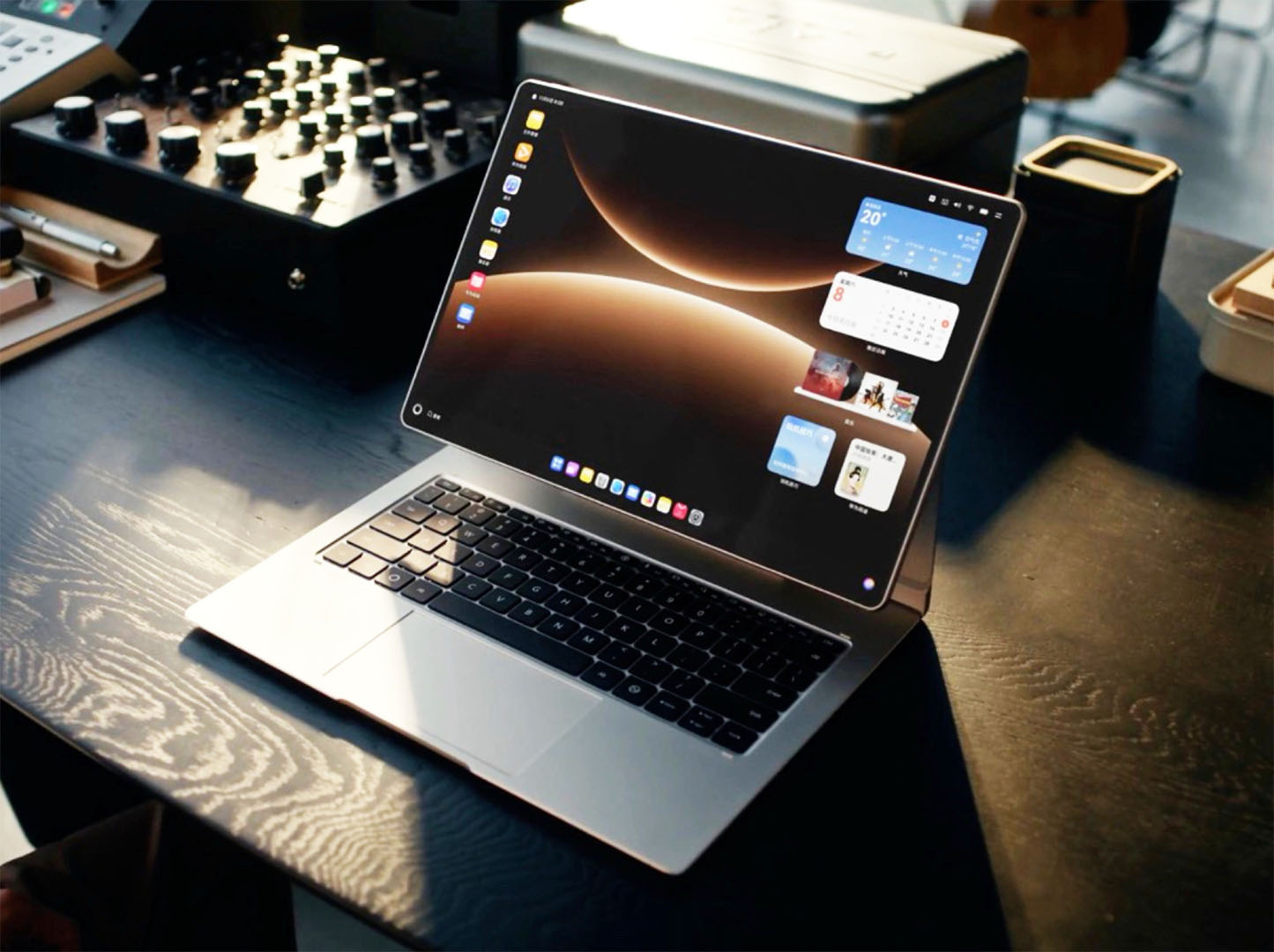
Huawei has pulled the curtain back on the MatePad Edge, a new 2-in-1 tablet designed to handle demanding work while packing a huge screen and a seriously large battery. The headline feature is its 14.2-inch OLED display, but the real story for power users is what’s happening inside: a 12,900mAh battery and a cooling system built to keep performance steady when workloads get heavy.
Huawei is positioning the MatePad Edge as a tablet that can stay fast for longer, thanks to an upgraded thermal design that aims to reduce heat buildup and performance throttling. The company is using a two-phase module vapor chamber alongside an ultra-thin 0.335mm micro-pump liquid cooling film to improve heat dissipation. On top of that, the MatePad Edge includes active cooling fans—something still uncommon in tablets—helping it manage temperatures when the processor is pushed hard.
That cooling setup is important because it reportedly allows the tablet’s chipset to run at a 28W power limit while keeping temperatures lower. In practical terms, a higher sustained power limit usually translates into the ability to hold higher clock speeds without quickly throttling, which can make a noticeable difference in tasks like multitasking, creative work, and other performance-heavy applications.
There is a trade-off, though: performance-focused cooling often comes with a size penalty. The MatePad Edge is said to be 6.85mm thick, making it around 34.3% thicker than the ultra-slim M5 iPad Pro models, which sit at about 5.1mm (with the smaller 11-inch version around 5.3mm). Huawei’s choice suggests a clear priority—more thermal headroom and sustained performance—even if it means giving up some of the “impossibly thin” tablet design appeal.
The comparison also highlights a broader point about modern tablets: flagship chips can be incredibly fast, but sustained performance depends heavily on cooling. The M5 iPad Pro devices already deliver impressive speed in a thin chassis, but stronger thermal solutions could potentially allow even higher performance over longer periods. Still, it’s widely expected Apple would avoid built-in fans in a future M6 iPad Pro, which makes Huawei’s more aggressive cooling approach a notable differentiator.
In short, Huawei’s MatePad Edge combines a large OLED screen, a massive 12,900mAh battery, and an ambitious cooling system—complete with vapor chamber tech, liquid cooling film, and active fans—to help the tablet maintain performance under pressure. If you’re looking for a 2-in-1 tablet built around sustained power rather than maximum thinness, the MatePad Edge is clearly aiming to fit that role.