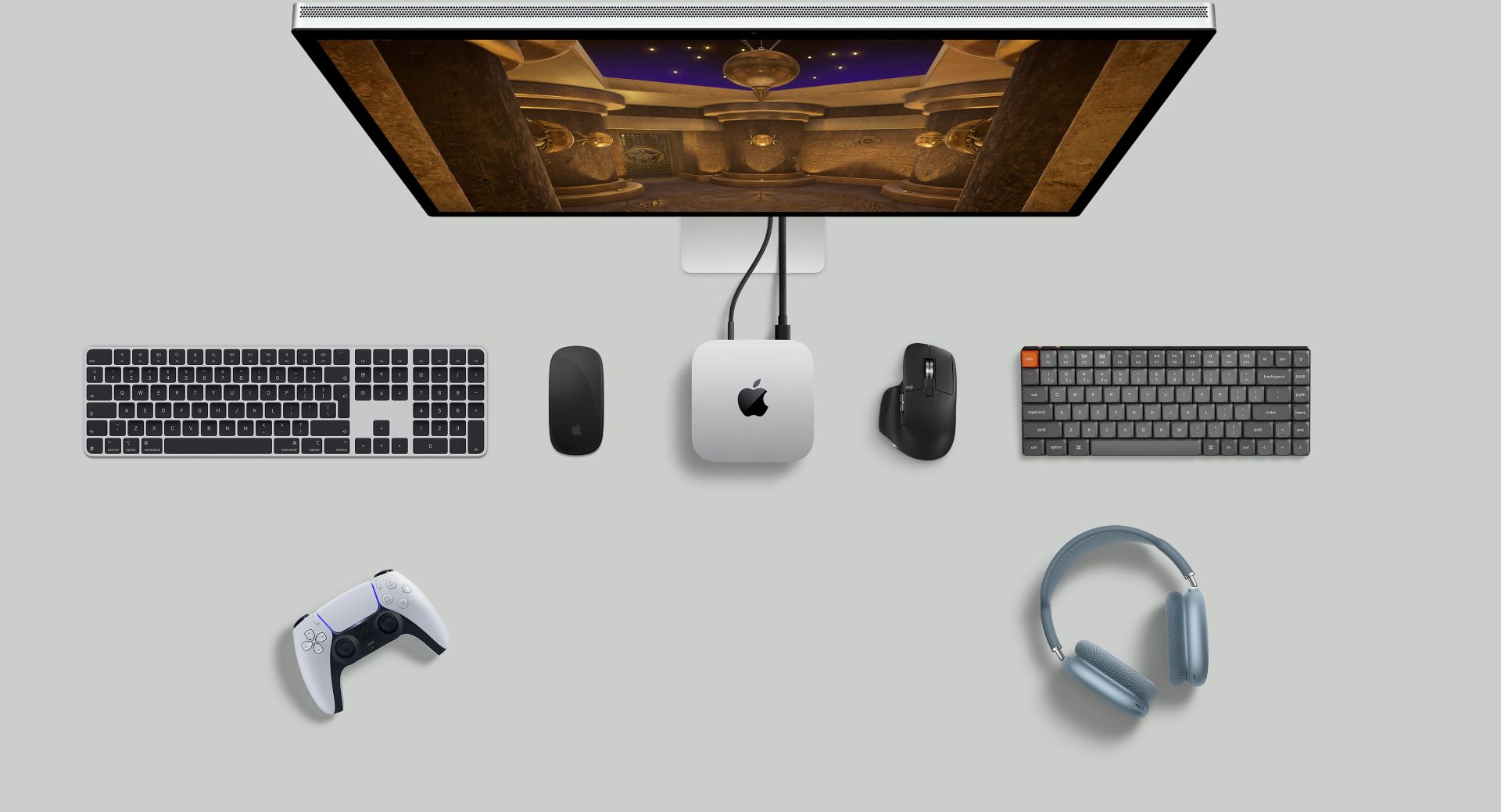
At $599, the M4 Mac mini is turning into one of the most talked-about small desktops on the market—and for good reason. For buyers who want serious performance without spending workstation money, it delivers a rare mix of speed, efficiency, and overall value. That combination has also made it a go-to option for people running local AI agents to streamline everyday tasks. The downside: demand has spiked so sharply that supplies are now tightening, leaving some shoppers facing delays and limited availability.
What’s especially notable is that the M4 Mac mini’s price hasn’t been pushed upward by the ongoing DRAM-related market pressures, making the current shortage feel even more frustrating for would-be buyers. When a product offers this level of capability at a relatively accessible price, it tends to sell fast—and that’s exactly what’s happening.
A major driver of the Mac mini’s popularity is its ability to run Moltbot (previously known as Clawdbot), a localized AI assistant that’s been gaining traction since its release in November. Moltbot is designed to handle practical, time-saving tasks like summarizing emails, sorting and organizing messages, and reducing the amount of manual busywork that piles up during the day. As interest in on-device AI grows, more users are looking for hardware that can run these tools quickly and smoothly without relying on cloud processing.
According to reporting from Korea Economic Daily, most buyers are choosing the base M4 Mac mini configuration. While it launched at $599, it has also been seen for as low as $549 through certain online retailers, which only adds fuel to demand. For many shoppers, that entry price hits a sweet spot: affordable enough to justify as a daily productivity machine, yet powerful enough to handle modern AI-assisted workflows.
Part of what makes the M4 Mac mini stand out is its architecture and tight hardware-software integration. Local AI tools can expose performance weaknesses on similarly priced machines, especially when components don’t work as efficiently together. In contrast, Apple’s approach helps the Mac mini run Moltbot in a way that feels fast and responsive, avoiding the kinds of bottlenecks that can slow down AI workloads on other systems in the same price range.
The compact size also opens up a unique use case: it can function like a small “mobile” home data center. Because localized AI assistants can run without an internet connection, some users are drawn to the idea of keeping more processing on-device rather than sending data back and forth to online services.
That said, Moltbot’s setup raises important security considerations. Since it needs wide access to applications on the Mac mini to perform its automation and organization features, it may also be exposed to sensitive information. For users intrigued by local AI assistants, this is a key point to weigh—convenience and speed are appealing, but permissions and data access should be reviewed carefully before going all-in.
Apple also offers a higher-tier Mac mini with the M4 Pro, but it’s positioned for a different audience. That model costs significantly more and targets power users who need extra CPU and GPU cores for heavier professional workloads—not necessarily people buying primarily to run local AI assistants. For shoppers focused on AI productivity at the best price, the base M4 model appears to be the main attraction.
Looking ahead, an updated Mac mini with the M5 chip is expected later this year, which should further improve performance for on-device AI applications and similar tools. For now, though, the current M4 Mac mini is clearly hitting a nerve in the market—proving that compact desktops can still be some of the most compelling buys when performance, price, and practical AI features align.