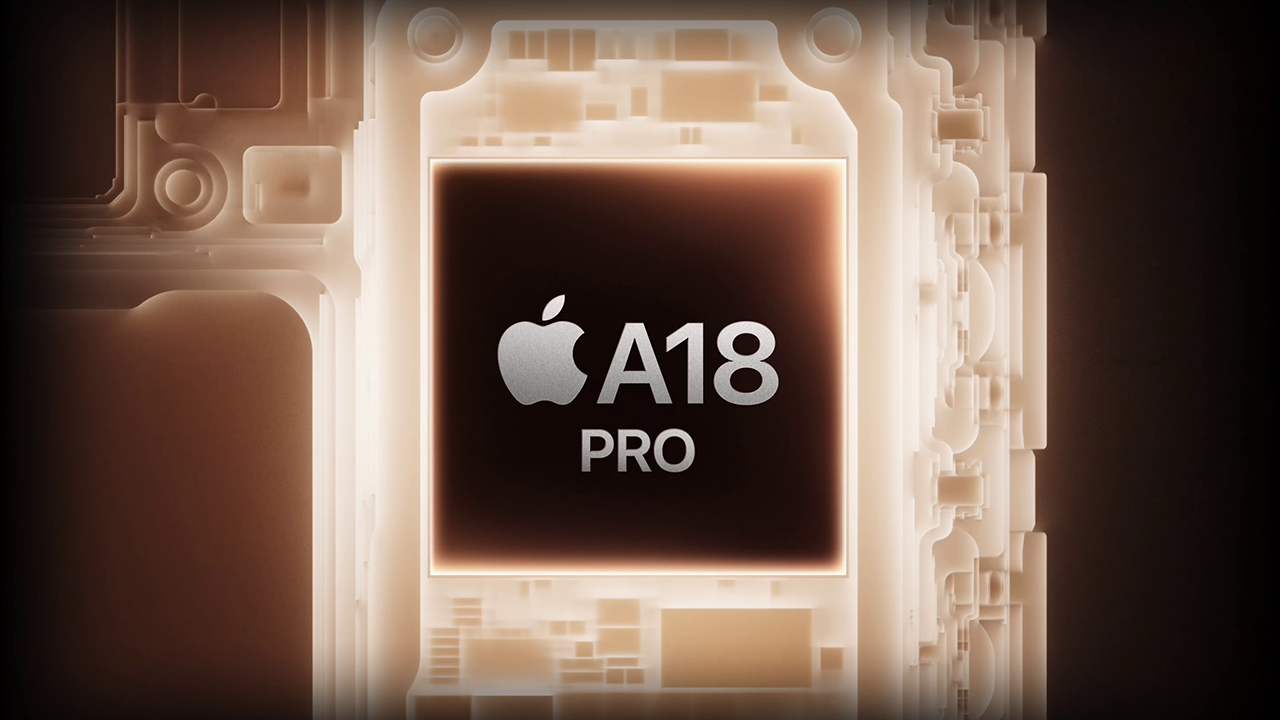
The latest Apple iPhone 16 Pro series boasts the powerful A18 Pro chip, setting new benchmarks in performance. During a recent Geekbench GPU test, this cutting-edge SoC not only outperformed its predecessor, the A17 Pro, but also surpassed Apple’s impressive M1 chip.
At the much-anticipated iPhone 16 series launch, Apple highlighted the capabilities of the A18 Pro, promising a 15% boost in CPU performance and a whopping 20% improvement in GPU capabilities. Recent Geekbench results confirm that the chip lives up to the hype on the CPU front. And now, with the emergence of its GPU benchmark scores, the A18 Pro appears even more formidable.
The iPhone 16 Pro Max, powered by this new flagship SoC, achieved an impressive Metal score of 32,997. For context, the iPhone 15 Pro Max, which houses the A17 Pro, typically scores around 28,022. This puts the A18 Pro’s GPU performance about 18% ahead of its predecessor. Even more striking is that the A18 Pro surpasses the Apple M1 chip, which powers some of the late 2020 MacBook Airs and 2021 iPad Pros, achieving a score around 32,548.
This significant GPU improvement could herald a new era for mobile gaming on the iPhone 16 Pro Max. Previous iterations like the iPhone 15 Pro line already set a high bar by natively supporting heavy-hitting titles such as Resident Evil Village, Assassin’s Creed Mirage, and Death Stranding. Although these games ran impressively, they were not without issues like occasional frame drops and overheating.
The enhanced performance of the Apple A18 Pro’s GPU may address these problems, potentially offering smoother and more consistent gameplay for AAA titles. However, it’s important to remember that synthetic benchmarks don’t always translate to real-world performance. We’ll still need comprehensive game benchmarks to draw definitive conclusions.
Interestingly, the A18 Pro retains a 6-core GPU design, similar to the A17 Pro, showing that significant performance gains can still be achieved without adding more cores, unlike strategies used with older chips like the A15.
The evolution of Apple’s chip technology continues to push boundaries, setting new standards for performance and innovation in the mobile industry. As we anticipate more detailed reviews and game benchmarks, it’s clear that the iPhone 16 Pro Max is poised to offer a superior user experience, solidifying its place at the forefront of the smartphone market.