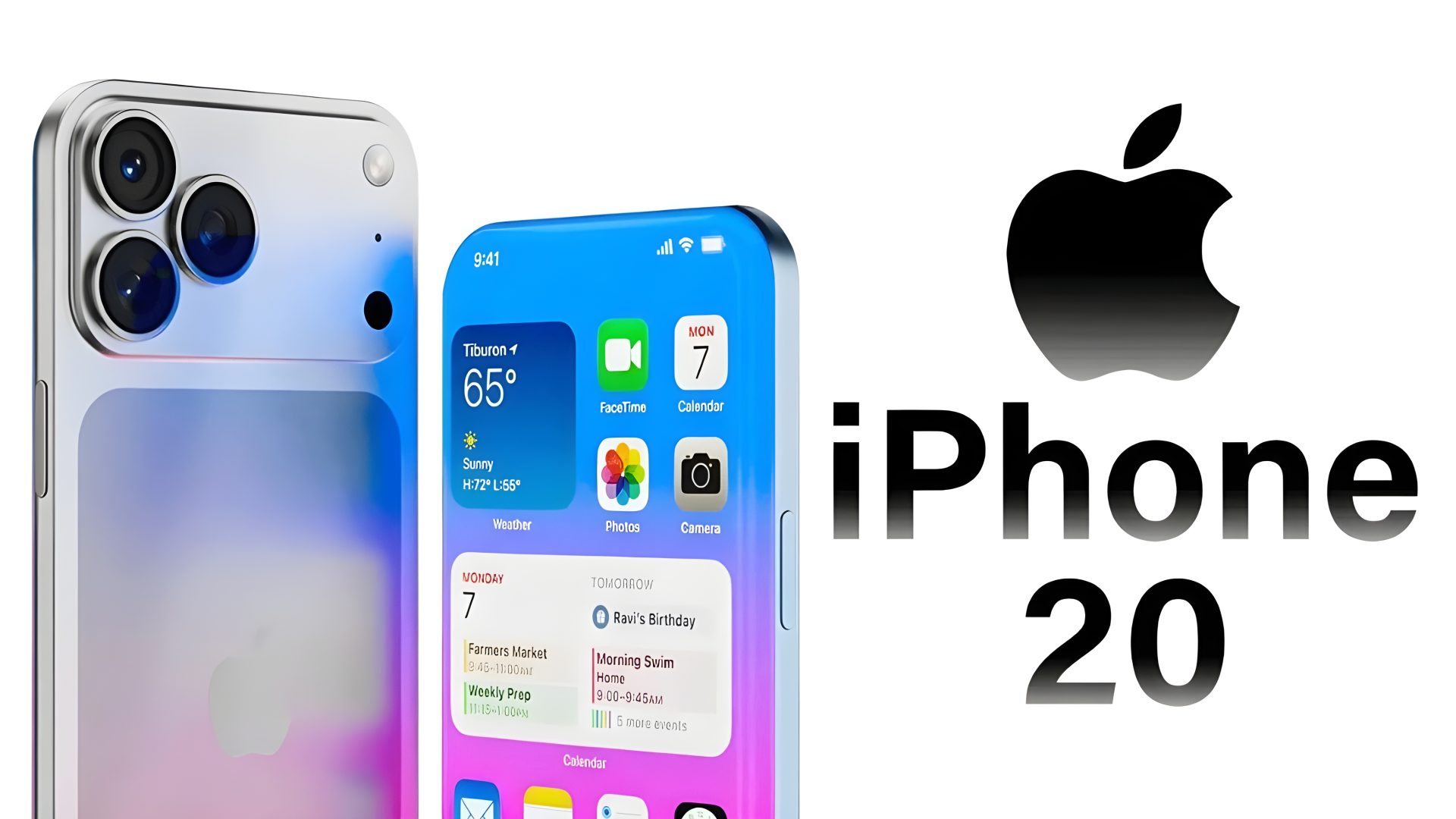
Apple’s 2027 iPhone 20 is already shaping up to be one of the most talked-about smartphones in years, largely because it’s expected to mark 20 years since the original iPhone changed the mobile world. While Apple hasn’t confirmed anything yet, a steady stream of leaks and industry chatter keeps pointing to the same ambitious goal: an iPhone that looks and feels like a perfectly seamless slab of glass.
The newest detail focuses on the iPhone 20 frame design, and it suggests Apple may be taking a big step toward that ultra-minimal look.
A recent leak from tipster Schrödinger claims the iPhone 20 will feature an extremely thin 1.1mm frame with a rounded shape designed to match a “quad-curve” display. In simple terms, this would mean the screen curves toward the edges on all four sides, blending into the frame so cleanly that the phone could appear almost borderless from every angle. If Apple pulls it off, the iPhone 20 could deliver one of the most immersive iPhone displays yet, with the front of the device looking like a continuous piece of glass.
This lines up with earlier rumors about a quad-curved, waterfall-style screen—an approach where the display subtly wraps into the sides rather than ending in a flat edge. The bigger idea behind these reports is that the anniversary iPhone could remove common visual interruptions entirely, including physical buttons and display cutouts. That would create a sleek, uninterrupted front surface that feels more futuristic than today’s iPhones.
To achieve a true all-screen iPhone, however, Apple would likely need to place key components under the display, including the selfie camera and the Face ID sensor system. That’s one of the toughest challenges in smartphone design right now. Under-display cameras and sensors exist in other devices, but image quality, reliability, and sensor performance can suffer when hardware is hidden beneath the screen. Recent reports suggest Apple has been facing difficulties getting under-display sensors to meet its standards, which could slow down plans for a fully uninterrupted display.
Even so, the timing gives Apple some breathing room. With the iPhone 20 expected in 2027, there’s still a significant development window for Apple to refine manufacturing, improve sensor performance, and solve any design obstacles that stand between concept and reality.
Another intriguing detail in the latest rumor is naming. The leak suggests Apple may skip the iPhone 19 label and jump straight to iPhone 20, aligning the model name with the anniversary milestone. If that ends up being true, it would reinforce the idea that Apple is planning something notably different from a routine yearly upgrade.
For now, the iPhone 20 remains a rumor-driven product, but the hints are consistent: a thin 1.1mm rounded frame, a quad-curved display, and a design direction aimed at creating an all-glass, all-screen iPhone. If Apple can successfully integrate Face ID and the front camera under the display without compromising performance, the iPhone 20 could become one of the most important iPhone redesigns in years—and a fitting way to celebrate two decades of the iPhone.


