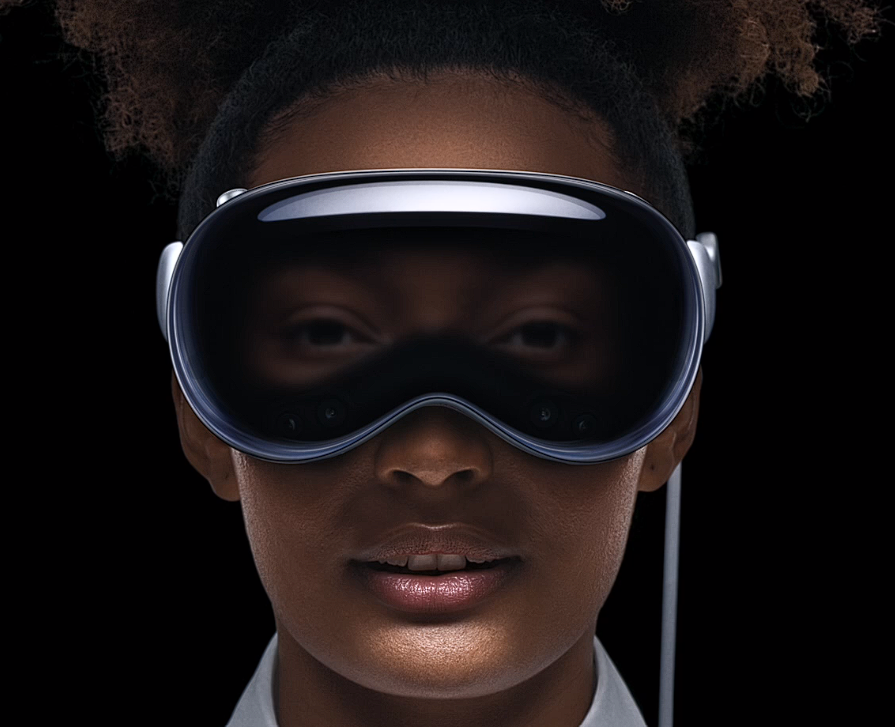
Despite high anticipation, the launch of Apple’s Vision Pro was met with an unexpected outcome – a failure to sell out. Forecasts predicted a tight supply of between 60,000 and 80,000 units on day one, yet the product remained available beyond its initial release.
The Apple Vision Pro, a new frontier in Apple’s product lineup, boasted of ushering in an “era of spatial computing,” but the appeal appears to have been less than anticipated. Retailing from $3,500 for the 256GB base model to $3,899 for the premium 1TB variant, the Apple Vision Pro came with a significant price tag. The base model quickly slipped into backorder status right on launch day, but the models with larger capacities stayed within reach for customers interested in immediate pick-up.
Tech enthusiast and YouTuber Aaron Zollo highlighted that even a day after the launch, the 512GB and 1TB models were still accessible for in-store pick-up. However, availability has since changed, with all models currently showing an extended wait time of 5-6 weeks for shipping, indicating that the inventory may have finally started to dwindle.
Apple’s strategy to build anticipation around the Vision Pro emphasized its cutting-edge technology, despite it being available exclusively in the US market. Nonetheless, the reluctance of consumers to rapidly snatch up the device may suggest a hesitation in the wider adoption of AR and VR headsets that rivals in the market have also experienced.
Apple’s usually robust marketing machine faced a new challenge, as revealed by Ming-Chi Kuo, a respected analyst in Apple’s supply chain network. He suggested that the limited stock might not have been the sole cause for the stagnant sales on launch day.
Moreover, concerns have risen regarding the Vision Pro’s weight, equating it to that of a 12.9-inch iPad Pro, which could be a factor in consumers’ hesitation. Additionally, the reception for apps and experiences on the device has been lukewarm, with only a handful of Apple’s own spatialized stock apps available at launch. The lack of third-party support is evident, with major content providers like Netflix, YouTube, and Spotify showing no immediate interest in adapting their services for the new Apple device.
Consumers on the lookout for alternative AR and VR experiences might consider the Meta Quest 3, which is available bundled with Asgard’s Wrath on Amazon starting at a more accessible price point of $499.
As the situation stands, it will be intriguing to see how Apple’s strategy will evolve to spark interest and drive the sales of their latest high-end device. Will the Apple brand and its technological prowess be enough to convince a broader audience to invest in the new era of spatial computing? Only time will tell.
For enthusiasts and tech aficionados, the launch of the Apple Vision Pro continues to be a development worth monitoring, especially as Apple navigates the challenges of introducing a novel product category within its ecosystem.
Please consider sharing this article – every link helps spread the word!