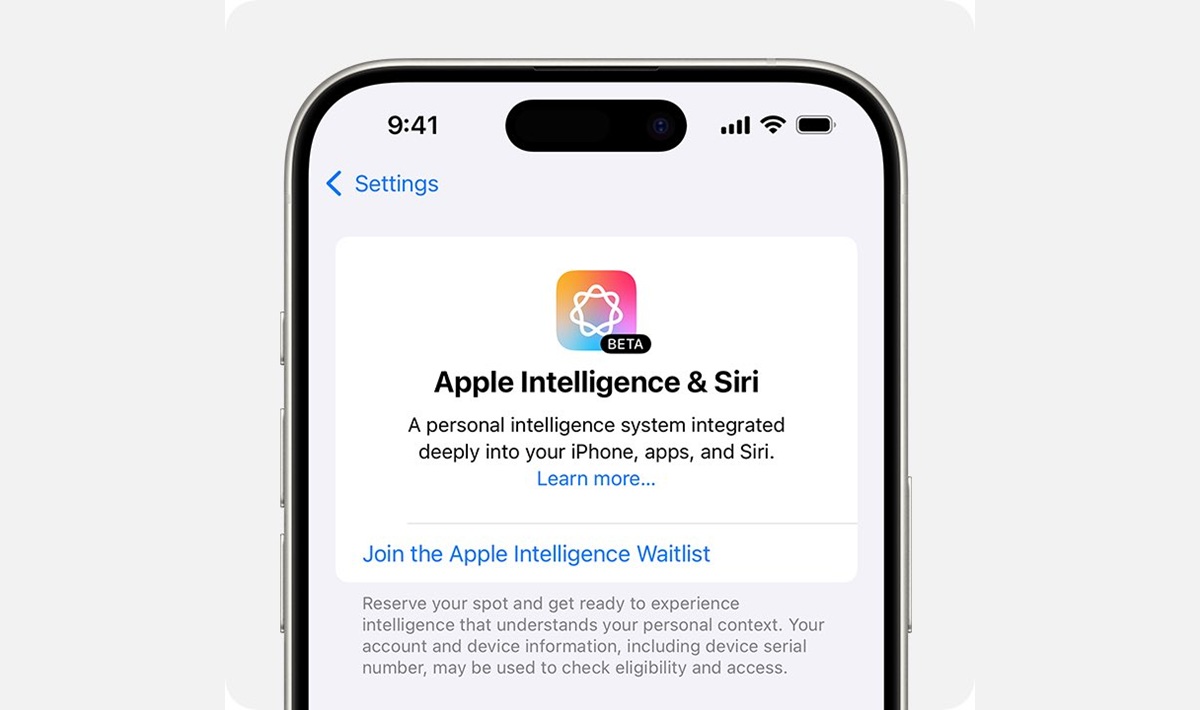
Apple Intelligence could soon make the iPhone far more powerful for accessibility, and Apple’s latest preview offers a revealing look at where Siri and on-device AI may be heading next.
The company has introduced a new wave of accessibility-focused Apple Intelligence features designed to help users who are blind, have low vision, are hearing impaired, experience motion sickness, or need extra support when reading and navigating content. The additions include major upgrades to VoiceOver, Magnifier, Voice Control, and a new Accessibility Reader, with several features expected to arrive in a future iOS release, possibly iOS 27.
While these tools are being framed around accessibility, they also hint at something much bigger: Apple appears to be building more advanced AI-driven control into the iPhone, including the kind of natural-language interaction that could eventually support smarter Siri actions and AI agent-like behavior.
One of the most notable updates is coming to VoiceOver, Apple’s screen reader for people who are blind or have limited vision. With Apple Intelligence, VoiceOver is getting a feature called Image Explorer, which can describe images in greater detail. This includes photos, documents, and even scanned bills.
That means users may be able to understand what is in an image without needing someone else to explain it. If a picture contains people, objects, text, or other important visual details, Apple Intelligence can help describe the scene in a more useful way.
VoiceOver is also gaining stronger Live Recognition capabilities. By pressing the iPhone’s Action button, users can ask questions about what the camera is seeing. For example, someone could point their iPhone at an object, a sign, or a document and ask for information about it. This turns the iPhone camera into a real-time visual assistant, which could make everyday tasks easier and more independent for users with vision challenges.
The Magnifier app is also receiving a major Apple Intelligence upgrade. Magnifier already helps users enlarge objects, text, and scenes using the iPhone camera, but the new version will add visual descriptions inside a high-contrast interface.
Users will also be able to control Magnifier with voice commands. Simple phrases like “zoom in” or “turn on flashlight” can adjust the view without needing to tap through menus. Support for the Action button will make the experience faster, allowing users to quickly ask visual questions about what is in front of them.
This combination of camera input, voice commands, and AI-generated answers is one of the clearest signs that Apple is preparing the iPhone for deeper AI interaction. Even though the feature is designed for accessibility, the underlying technology could eventually support broader Siri and Apple Intelligence functions.
Voice Control is another area getting smarter. Apple says users will be able to control the iPhone and its apps using more natural language. Instead of relying only on rigid voice commands, the system will better understand what users want to do.
A new “say what you see” capability will make it easier to navigate apps with visual layouts. This could be especially useful in apps like Apple Maps, where buttons, icons, labels, and map elements may change depending on what is on the screen.
For accessibility, this is a meaningful improvement. For Apple Intelligence as a whole, it is also significant. If a person can control an iPhone through natural language, the same foundation could help Siri perform more complex actions across apps in the future. That is the type of functionality many users have been waiting for as Apple works to make Siri more capable and context-aware.
Apple is also introducing Accessibility Reader, a feature built to make dense or complex text easier to read. It is designed for users with a wide range of disabilities, including dyslexia, and can help simplify the reading experience across supported content.
Accessibility Reader will include on-demand summaries, allowing users to quickly understand long or complicated text. It will also support high-quality translations, making it more useful for people reading in different languages or trying to understand content that is not in their native language.
This feature could be especially valuable for students, professionals, and everyday users who need help processing large amounts of information. It also fits into Apple’s wider push to bring practical AI tools into daily iPhone use.
Beyond the four major features, Apple also previewed several other accessibility improvements across its ecosystem.
Apple Intelligence will bring on-device speech recognition that can generate subtitles for videos across Apple platforms. This could make video content easier to follow for users who are deaf or hard of hearing, while also helping anyone watching in a noisy environment or with the sound off.
Apple Vision Pro will gain new accessibility options as well. In the United States, users will be able to control compatible wheelchair systems using Vision Pro with supported drive systems. Vision Pro is also adding Vehicle Motion Cues in visionOS to help reduce motion sickness for passengers using the headset in a car.
Another Vision Pro feature, Dwell Control, will allow users to select items using eye movement. This could make the device more accessible for people with limited mobility.
Apple is also adding Name Recognition, a feature that can notify hearing-impaired users when their name is called. This may be useful in workplaces, classrooms, public spaces, or social settings where someone might otherwise miss an important cue.
The timing of Apple’s announcement is difficult to ignore. The preview arrived shortly before Google’s I/O event, where Google is expected to showcase new Gemini-powered AI features and more advanced AI assistant capabilities.
Apple has faced growing pressure over the pace of its artificial intelligence rollout. Many users and analysts believe the company is still behind competitors in generative AI and assistant intelligence. Reports have suggested that Apple may need another year or two to match some of the AI capabilities already being demonstrated elsewhere.
That context makes this accessibility announcement especially interesting. Apple is not simply presenting helpful tools for users with disabilities, though that is clearly the main purpose. It is also showing that Apple Intelligence is being woven more deeply into the iPhone, Vision Pro, and the broader Apple ecosystem.
The biggest takeaway is that Apple’s accessibility features may offer an early look at the future of Siri. Real-time visual understanding, natural-language device control, on-demand summaries, image descriptions, and contextual voice interaction are all essential pieces of a smarter AI assistant.
For iPhone users, these updates could make Apple Intelligence feel far more useful in everyday life. For accessibility, they could provide more independence and control. And for Apple, they may help shift the conversation from being behind in AI to building AI features that are practical, private, and deeply integrated into its devices.