Apple’s upcoming MacBook Neo is being positioned as a new, budget-friendly Mac notebook, starting at $599. With an efficient ARM-based chip, an aluminium chassis, and a bright display, it’s designed to deliver strong everyday performance at a much lower entry price than Apple’s other laptops. But early firmware clues point to an unexpected twist: Apple’s new Studio Display lineup may actually pack more processing power than the MacBook Neo itself.
The MacBook Neo is notable because it represents Apple’s first completely new MacBook product line in more than a decade. According to the available details, it pairs an Apple A18 Pro with 8GB of RAM. In real-world terms, that configuration is said to land around the performance level of the original M1 MacBook Air from 2020—still capable and efficient, but no longer cutting-edge in raw speed.
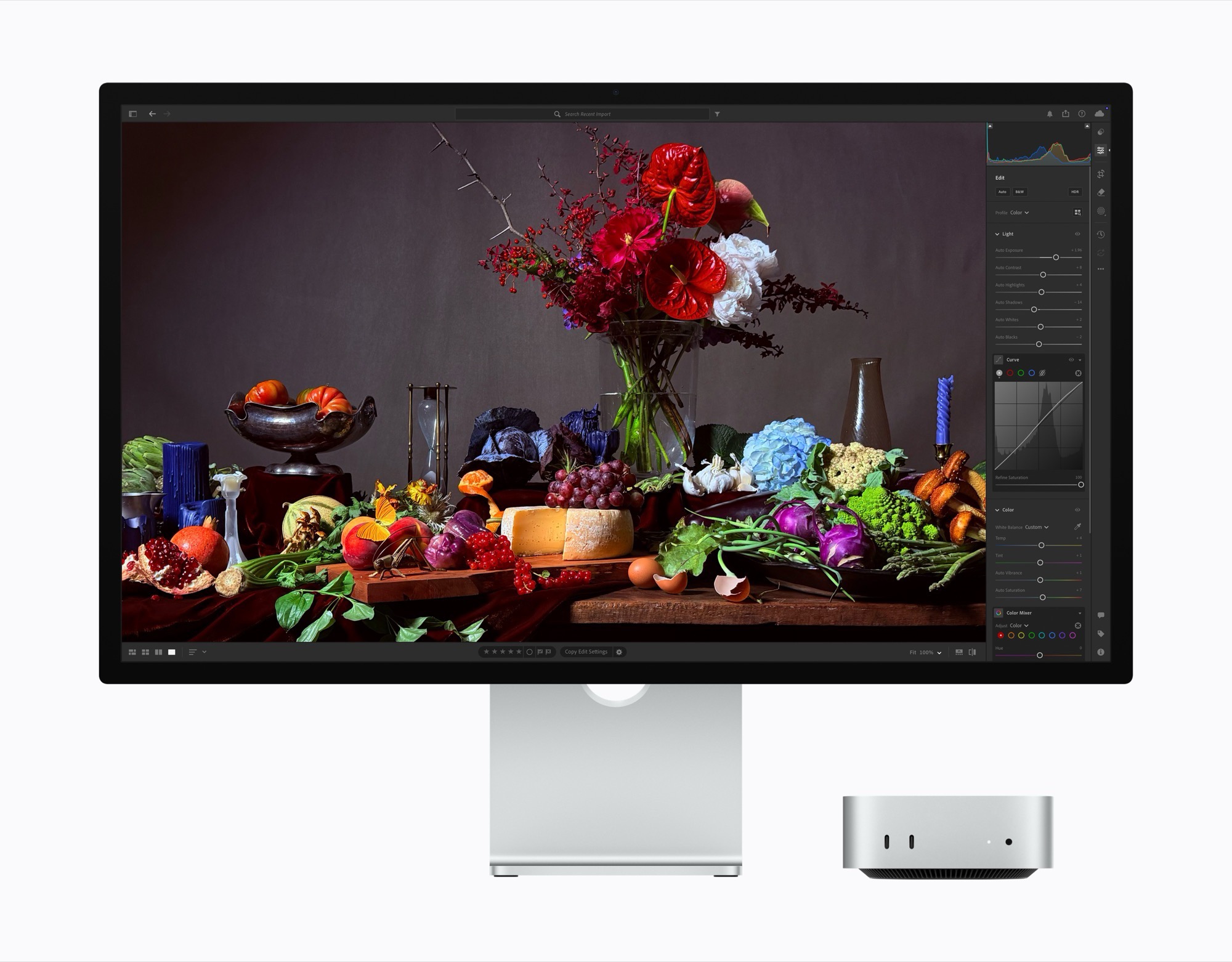
Meanwhile, code discovered inside the first firmware update for Apple’s refreshed Studio Display and Studio Display XDR suggests the monitors may be getting surprisingly powerful internal chips. The standard Apple Studio Display is rumored to include an Apple A19, a newer and faster processor than the A18 Pro expected in the MacBook Neo. Even more striking, the higher-end Studio Display XDR appears to step up to an Apple A19 Pro—the same class of chip used in the iPhone 17 Pro.
What’s still unclear is how much memory or storage Apple is pairing with these monitor-based processors. That matters because while a fast chip can enable advanced features, the overall experience depends heavily on the rest of the hardware behind the scenes.
Despite the apparent horsepower inside both monitors, Apple doesn’t seem to be marketing them as full “smart monitors” that can run streaming apps on their own or operate independently like a standalone computer. Instead, the extra processing power appears to be focused on enhancing built-in monitor features.
Previous Studio Displays used internal Apple silicon (such as the A13 Bionic) to power capabilities like “Hey Siri” support when connected to a Mac and Center Stage, which keeps you framed during video calls using the built-in 12MP webcam. The upcoming Studio Display models are expected to add at least one notable new feature that benefits from increased processing headroom: Desk View. This video-call tool can show your face while also presenting the workspace in front of the monitor, making it easier to demonstrate notes, sketches, devices, or documents during meetings and presentations.
If these firmware details hold true, Apple’s display strategy is becoming even more intriguing: a value-focused MacBook for everyday computing, and monitors that quietly carry iPhone-class processors to power smarter camera and conferencing features—without necessarily becoming full standalone entertainment or computing hubs.