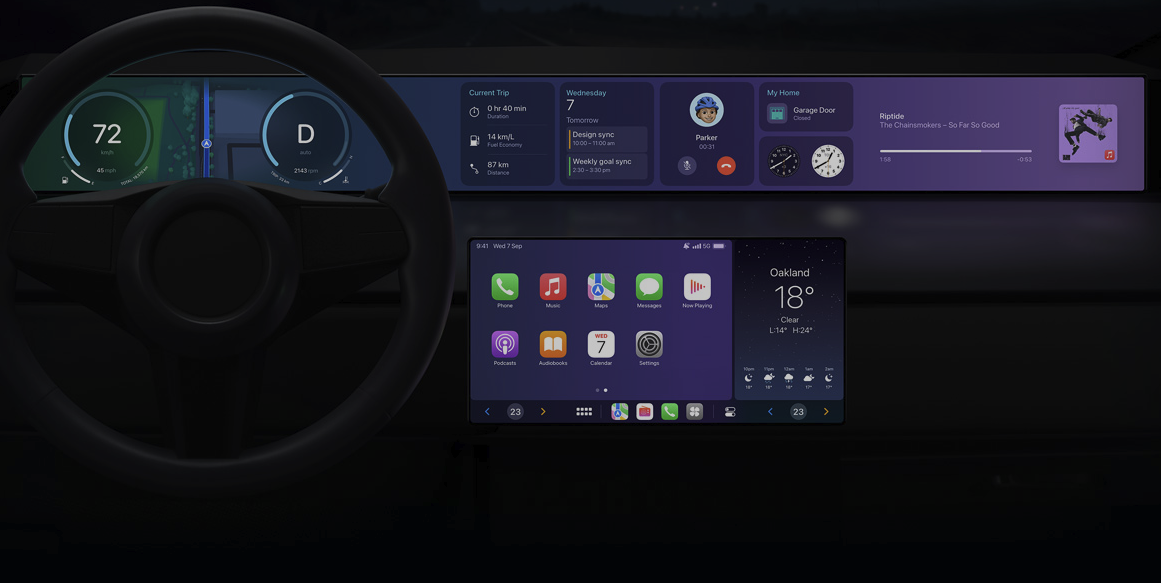
Apple is reverting to a business practice it hasn’t engaged in for over three decades—licensing its operating system. This time, the focus is on the “next-generation Apple CarPlay,” a software that integrates deeply with a car’s systems, unlike its predecessor which functions primarily through a user’s iPhone. This maneuver signifies a noteworthy divergence from Apple’s long-standing policy of closely integrating its software with its hardware, maintaining control over the entire user experience.
Next-generation CarPlay’s debut in premium automobiles like Porsche and Aston Martin indicates Apple’s intent to target the luxury vehicle segment initially. This move underscores the company’s aspiration to fortify its premium brand image, much like the Apple Watch x Hermes collaboration. By aligning itself with high-end car manufacturers, Apple is looking to bolster its brand and tap into the lucrative luxury market with higher profit margins.
Looking back, the scenario was quite different during the ’90s. Apple’s attempt to boost its profits and market share by licensing its Macintosh operating system to Power Computing backfired, leading to a devaluation of its brand and driving Mac sales down further. In contrast, the tight initial release of next-generation CarPlay seems to reduce such risks, prioritizing brand prestige over widespread accessibility.
One key question arises from this strategic shift: what chipset powers Apple’s CarPlay OS? In an industry where Nvidia and other OEMs are major players in providing Arm-based chipsets for automotive use, there’s a keen interest in whether next-generation CarPlay also employs Apple silicon. So far, discussions around this aspect have been surprisingly absent.
The relationship between next-generation CarPlay and the elusive Apple Car project, speculated to launch in 2028, is also ripe for speculation. There is curiosity around how the eventual launch of an Apple Car might co-exist with the licensing of its CarPlay system to other manufacturers. Will these automakers be supported continuously, or will Apple pivot back to exclusivity once its vehicle hits the market?
Furthermore, Apple’s entry into car operating systems has implications for the competition, particularly Google with its Android Automotive and BlackBerry, whose QNX system currently dominates the automotive market. As Apple and Google vie for control, forecasts predict a substantial dip in QNX’s market share.
Despite the delayed launch of the Apple Car, Apple’s move to license its car operating system is a strategic step to safeguard interests in a shifting market landscape. It’s an unusual play from a company that traditionally favors keeping its technology in-house. Whether or not this will impact Apple’s market strategy and affect its competition remains to be seen.
For those seeking to upgrade their vehicles, Apple CarPlay displays with Bluetooth are available for purchase on Amazon, with prices starting at around $90. This offers a way to enjoy CarPlay features in cars that do not come with built-in support.
The entry of Apple into automotive software licensing heralds an interesting chapter for the tech giant, one which could reshape the industry and redefine the in-car experience for luxury vehicle owners.