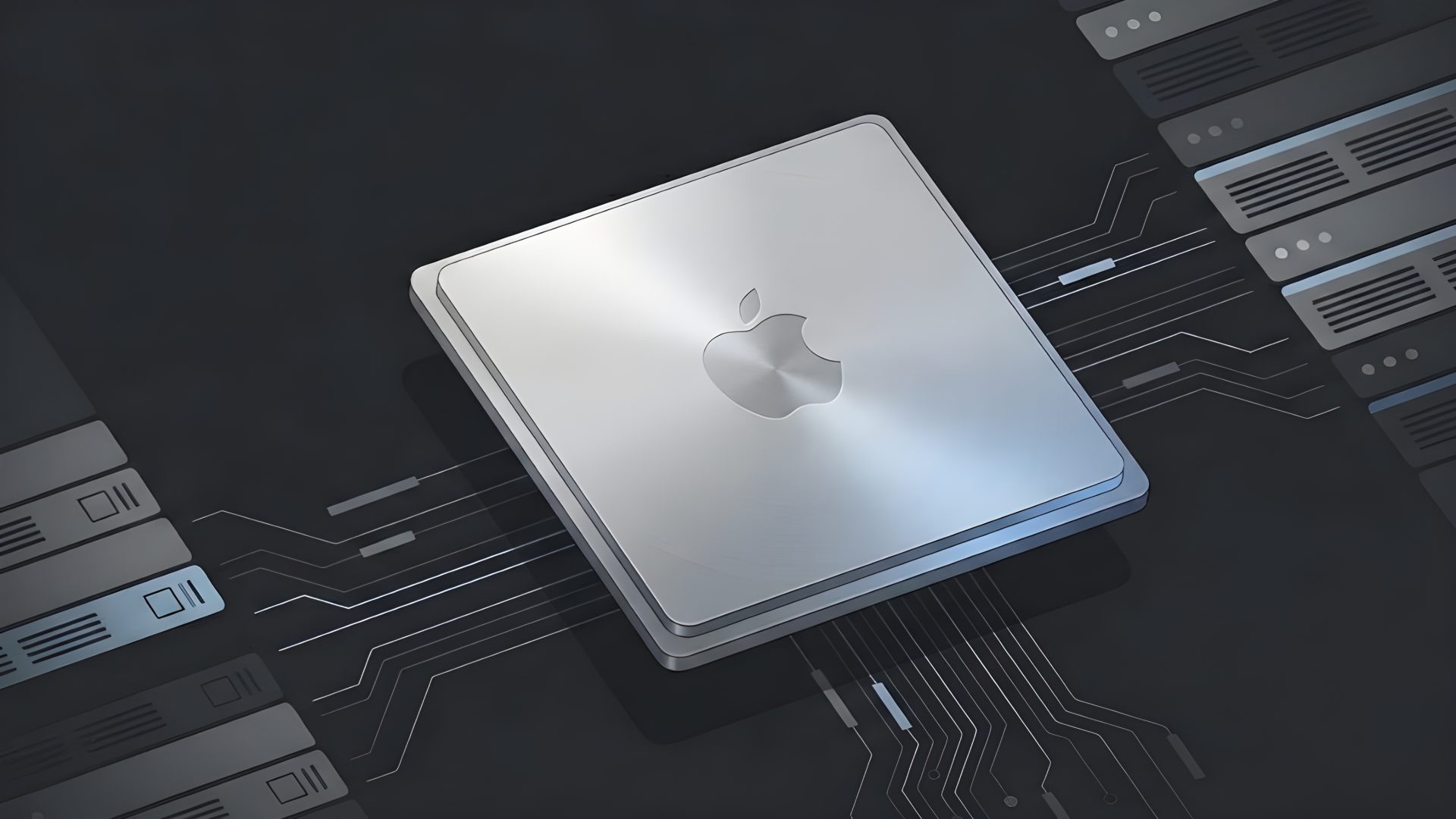
Apple is famous for keeping upcoming products under wraps until a polished, headline-making reveal. But even the most secretive company can’t fully seal off a global supply chain. That’s why fresh chatter around Apple’s next AI-focused chip, internally known as Baltra, is drawing attention—because it hints at a major shift in how Apple wants to build the hardware behind its AI ambitions.
New reporting out of South Korea says Samsung Electro-Mechanics (SEMCO) has delivered samples of its glass substrate technology, often referred to as T-glass, to both Broadcom and Apple. SEMCO is known for key electronic building blocks like chip substrates and multilayer ceramic capacitors, so its role here matters—especially as advanced packaging becomes just as important as raw chip performance.
To understand why this is a big deal, it helps to know what a substrate does. In simple terms, it’s the foundation that supports integrated circuits and connects them to the rest of the package. It also plays a major role in heat dissipation, which is critical for high-performance AI workloads. T-glass is a specialized fiberglass material with high silica content that can replace the organic core used in conventional FC-BGA packaging. The advantages are compelling for next-generation chips: improved thermal stability, a flatter surface that supports more intricate wiring, and higher overall reliability.
Broadcom’s involvement adds another layer to the story. As a leading designer of AI-oriented ASICs, Broadcom is reportedly working with Apple on a custom AI server chip—Baltra—aimed at powering Apple Intelligence in data-center environments. Previous expectations suggest Baltra could be built on TSMC’s 3nm N3E process and use a chiplet-based design, where multiple smaller dies handle specialized tasks. Those chiplets can then be combined into a single high-performance unit. In this kind of architecture, one of the hardest parts is making sure all the chiplets communicate efficiently while running complex AI workloads at scale—an area where Broadcom’s experience would be especially valuable.
What makes the T-glass sampling noteworthy is what it implies about Apple’s direction. By sourcing advanced substrate materials directly, Apple can more closely evaluate the packaging quality and manufacturing approach used for its AI ASIC. But the bigger takeaway may be strategic: Apple appears to be laying groundwork to bring more of the Baltra effort in-house over time.
That would fit Apple’s long-running preference for vertical integration—controlling more of the stack to improve performance, efficiency, and long-term flexibility. If Baltra is a key pillar for Apple’s AI infrastructure, moving design and critical decisions inward could help Apple protect its architecture, tune hardware tightly to its software, and rely less on outside partners as Apple Intelligence expands.
For now, the T-glass detail is only one piece of a much larger puzzle. Still, it’s the kind of supply-chain signal that suggests Apple isn’t just experimenting with AI server silicon—it’s committing to it, and potentially preparing to own more of the process end to end.