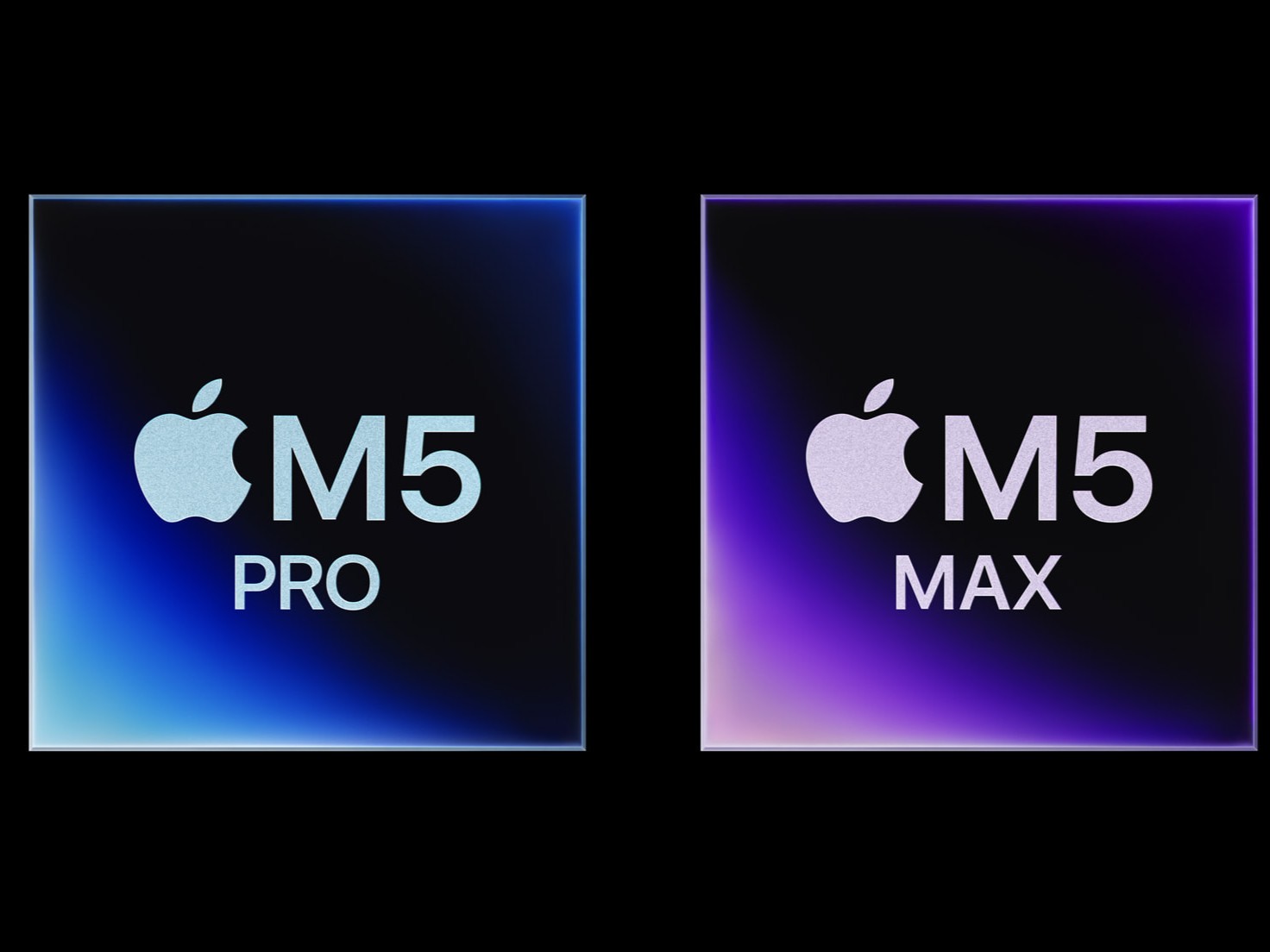
A fresh leak has surfaced with a deeper look at Apple’s new M5 Pro and M5 Max chips, outlining the core configuration, clocks, cache, graphics details, and memory support. While Apple recently introduced these processors alongside new MacBook Pro models, early official details only told part of the story. This latest report fills in many of the missing specs and gives a clearer idea of what to expect for performance and efficiency.
According to the leaked information, both the Apple M5 Pro and Apple M5 Max use Apple’s updated “Super” and “Medium” CPU cores. The Super cores are said to reach boost speeds up to 4.61 GHz, while the Medium cores reportedly boost up to 4.38 GHz. In other words, Apple appears to be pushing higher peak clocks while keeping a hybrid-style layout aimed at balancing speed and power use across different workloads.
Here are the specifications listed in the leak.
Apple M5 Pro specs (leaked)
– CPU: 6 Super cores (up to 4.61 GHz boost) with 16 MB L3 cache
– CPU: 12 Medium cores (up to 4.38 GHz boost) with 16 MB L3 cache
– GPU boost clock: up to 1.62 GHz
– Memory cache: 24 MB
– Unified memory support: up to 64 GB LPDDR5x-9600
Apple M5 Max specs (leaked)
– CPU: 6 Super cores (up to 4.61 GHz boost) with 16 MB L3 cache
– CPU: 12 Medium cores (up to 4.38 GHz boost) with 16 MB L3 cache
– GPU boost clock: up to 1.62 GHz
– Memory cache: 48 MB
– Unified memory support: up to 128 GB LPDDR5x-9600
A key difference between the two is the memory setup. The M5 Max doubles the listed memory cache compared to the M5 Pro (48 MB vs. 24 MB) and goes much higher on maximum unified memory capacity, topping out at 128 GB. For creators who work with large video timelines, complex 3D scenes, big codebases, or heavy on-device AI workloads, that extra memory headroom can matter as much as raw CPU speed.
The leak also points to Apple using what it calls a Fusion architecture for these chips. This approach is described as a packaging design that links a CPU tile and a GPU tile through a high-speed interconnect, aiming to improve bandwidth and keep latency low. The idea is to help the CPU and GPU work more efficiently together, which can benefit everything from pro apps to graphics-heavy workflows.
In terms of expected performance, the M5 Pro and M5 Max are rumored to deliver up to about a 10% uplift in single-threaded tasks, up to around 20% in multi-threaded workloads, and roughly a 25% improvement in GPU performance. Those gains suggest noticeable improvements for sustained professional work—think photo exports, software builds, music production projects, rendering, and GPU-accelerated creative apps—rather than just small benchmark wins.
Power consumption is expected to remain broadly similar to the previous generation during lighter, single-threaded usage. However, with more CPU resources available, the chips could draw more power when every core is pushed hard for extended periods. That means peak performance under heavy load may come with higher overall power use, even if day-to-day efficiency stays in the same ballpark.
As always with early leaks, final real-world results will depend on shipping hardware, thermal design, and how macOS and pro apps take advantage of the new core design and packaging. Still, if these specifications hold up, the Apple M5 Pro and M5 Max look positioned as meaningful upgrades for MacBook Pro buyers looking for faster CPU performance, stronger graphics, and much higher memory ceilings—especially on the M5 Max.