Apple has increasingly been a strong competitor in the global smartphone market, and recently it achieved a significant milestone by shipping more iPhones in one year than Samsung. This turning of the tides is particularly notable in South Korea, where Apple’s market share has reportedly hit a historical high, causing concern for homegrown tech giant Samsung.
New insights from Counterpoint Research reveal that for the first time ever, Apple’s market share in South Korea has passed the 25% threshold. The research indicates that there has been a steady growth of 1% point each year since 2020, with a notable increase of 3% points in 2023 alone. This trend demonstrates a dramatic spike in Apple’s presence within the Korean market, while Samsung has experienced a decline, with its market share dropping by 2% points last year. Despite the downturn, Samsung remains dominant in its local market, holding onto a 73% share.
The trend towards Apple products in South Korea is largely driven by the younger generation, specifically the MX Generation which consists of individuals in their 20s and 30s. Reports highlight that 80% of the pre-orders for the iPhone 15 came from this age bracket. This contrasts with the Galaxy S24 series, where the majority of pre-orders were made by those in their 30s and 40s. Notably, even with the iPhone 15 Pro Max being priced at KRW 2.5 million ($1,864) – which is KRW 400,000 ($300) more expensive than the Galaxy S24 Ultra – the iPhones are seeing faster sales rates.
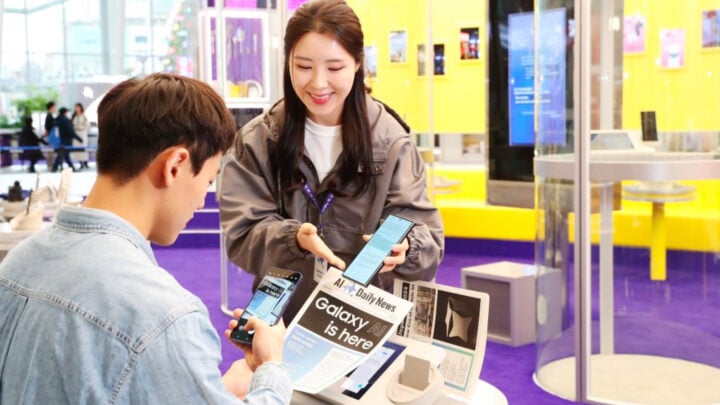
In a move that expands its physical presence, Apple has been investing in retail within South Korea. Just last year, Apple inaugurated its Apple Gangnam store in the upscale district, followed by the opening of Apple Hanam. More recently, they continued their expansion with the launch of Apple Hongdae. At the same time, Samsung opened its own flagship store, Samsung Gangnam, in close proximity to Apple Gangnam. However, industry experts and insiders have expressed skepticism about the success of Samsung’s flagship store amidst the rising popularity of Apple’s offerings in the region.
The current shift in the smartphone marketplace in South Korea signifies an intriguing development as Apple makes inroads into a territory once firmly held by Samsung. With the younger, tech-savvy generations leaning towards the iPhone, it raises questions about future market dynamics and the strategies Samsung may need to employ to recapture its declining share.