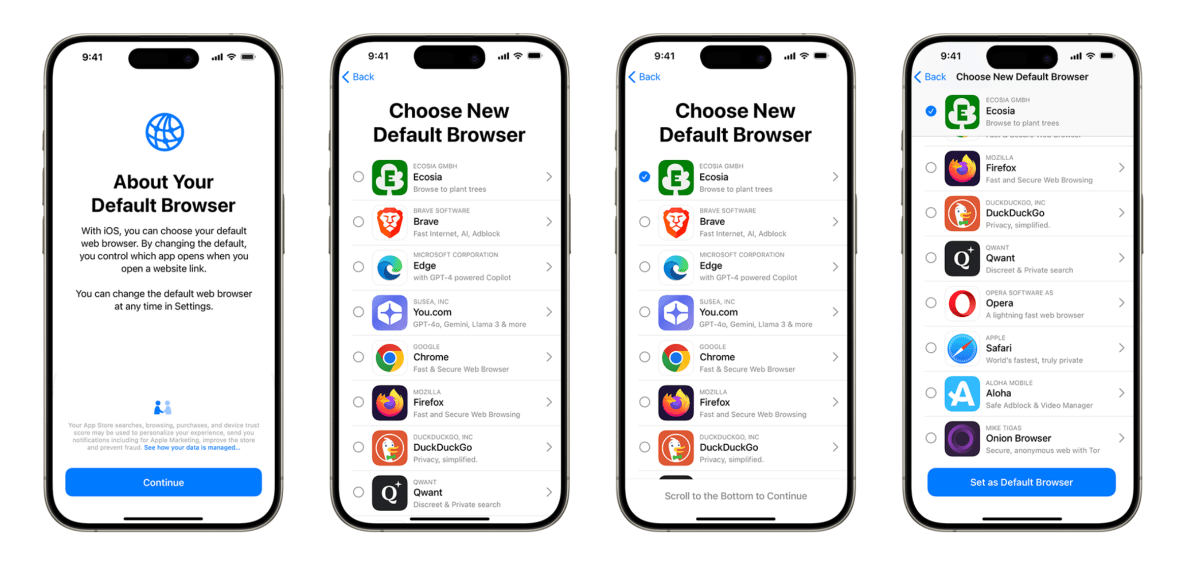
Apple is adapting its software to align with the European Union’s Digital Markets Act (DMA). The company recently unveiled a series of revisions to iOS and iPadOS, including redesigned browser choice screens expected to be part of their 18th version releases later this year.
The updated browser choice screens are now designed with a user-friendly toolbar on the left side, allowing users to quickly select and pin their preferred browser to the top of the list while scrolling through other options. To ensure fair visibility, the top 12 browsers available in the user’s country will appear in a randomized order, with additional details from the App Store product page presented for each.
When a user selects a browser, the transition is immediate—if the chosen browser is already installed on their device, it opens at once, with a notification confirming the new default status. Should the browser be absent from the device, it will start downloading immediately upon selection, opening automatically once the installation is complete.
Additionally, the revised screens will appear frequently, displaying each time a user with Safari as the default browser updates to iOS 18, migrates to a new device, or performs certain actions.
Moreover, Apple is extending the range of default app settings available to EU users. A centralized settings menu will now offer options for default apps managing functions such as phone dialing, messaging, translation, navigation, password management, keyboards, and call spam filtering. Notably, navigation and translation app defaults are expected to join the list by Spring 2025.
In a significant move to foster user autonomy, Apple is also planning to allow EU users to delete more of the default apps later this year, including the App Store, Messages, Photos, Camera, and Safari. Users will have the option to reinstall any removed default apps via the App Store or app installation settings.
These adjustments respond to scrutiny over Apple’s adherence to DMA requirements. As a designated gatekeeper, Apple must promote competition and consumer choice within its mobile ecosystem or face penalties that could reach up to 10% of its global annual turnover.
The European Commission, which spearheads DMA enforcement, started investigating Apple’s compliance in March. The focus included Apple’s browser choice design and the broader implications for user choice. While preliminary findings on another investigation related to the App Store have been issued, there hasn’t been a conclusive statement on the choice obligation probe.
Apple is optimistic that these updated measures will satisfy the EU’s regulations without leading to a determination of non-compliance or a substantial fine. The DMA offers the Commission the possibility to endorse gatekeeper-proposed remedies without resorting to extreme enforcement measures, aiming for expedient and effective regulation.
When discussions began in March about Apple’s DMA compliance, the Commission expressed its concerns openly, particularly regarding users’ ability to easily uninstall apps, change default settings on iOS, and genuinely exercise service choices within the Apple ecosystem.
Since then, iPadOS has also been labeled as a “core platform service” under the DMA, necessitating that these changes apply to both of Apple’s mobile platforms. As Apple continues its dialogue on compliance and integrates feedback from stakeholders, the EU remains diligent, with its investigation still underway. The collaboration between gatekeepers and the European Commission seeks to develop compliance solutions without having to resort to the full extent of the DMA’s enforcement tools.