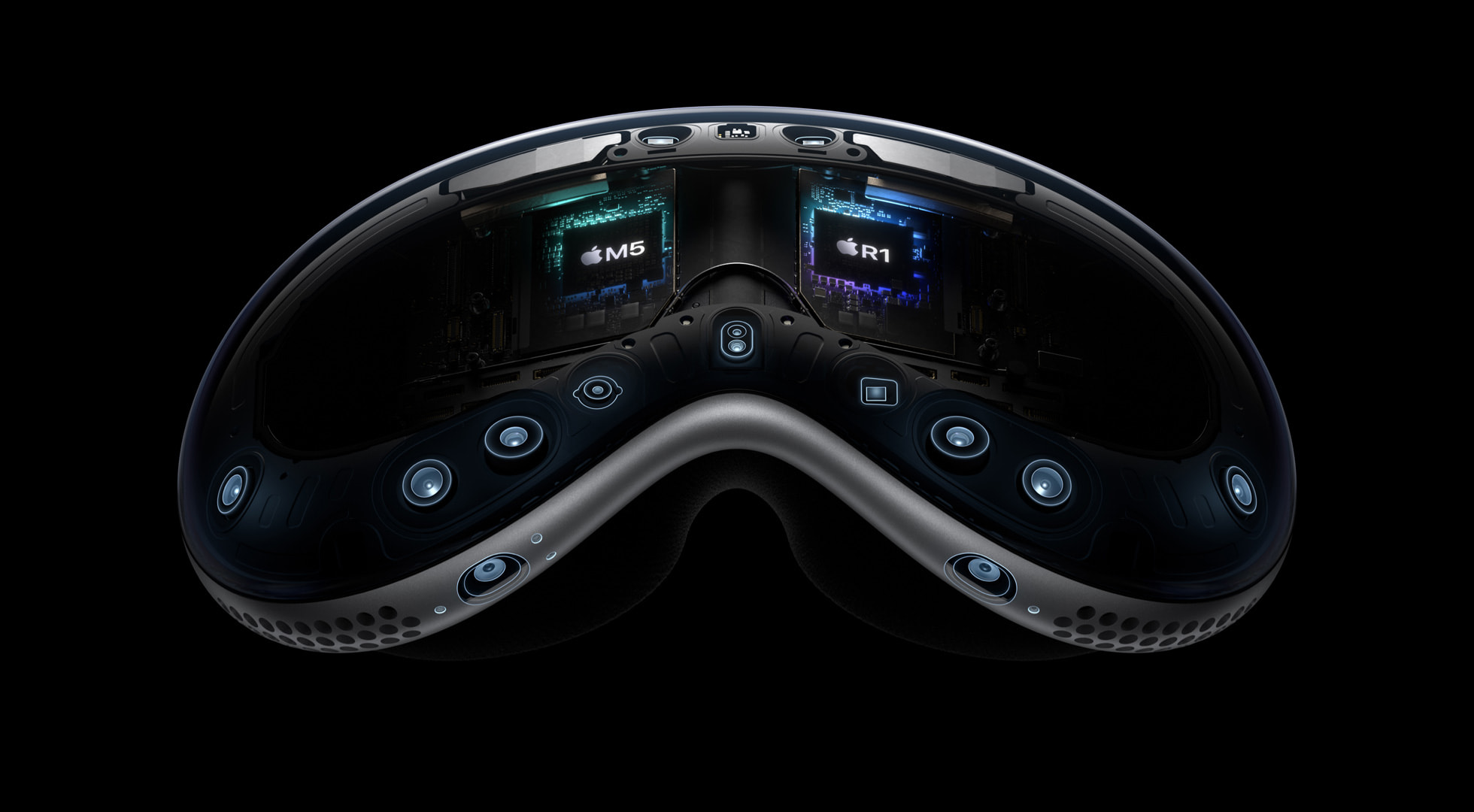
Apple’s trade-in program has long helped users upgrade with confidence, reinforcing the idea that Apple products hold their value over time. That’s why the company’s quiet decision to leave the original M2 Vision Pro out of its trade-in lineup stands out. For a device positioned as the future of spatial computing, the lack of an official trade-in path is a notable shift—and it raises important questions for current owners and would-be buyers alike.
Why the M2 Vision Pro might be excluded
Unlike an iPhone or Mac, the M2 Vision Pro is a first-generation headset filled with intricate components: high-resolution displays, advanced sensors, and custom-fit parts. Refurbishing and reselling a device like that isn’t as straightforward as wiping a phone and replacing a battery. The cost and complexity of ensuring a safe, hygienic, and properly fitted refurbished unit could make a trade-in program difficult to sustain.
There’s also timing. With the M5 Vision Pro arriving with major performance changes, Apple may want to avoid confusion around model differences and condition standards while it refines its strategy for spatial computing hardware. In short, the company doesn’t seem to be treating Vision Pro like the rest of its lineup—at least not yet.
What this means for Apple’s spatial computing roadmap
The decision inevitably sparks debate about long-term support. If Apple’s priciest headset isn’t eligible for trade-in, how firmly is the company committing to a classic upgrade cycle for this category? Early adopters often shoulder the most risk, and the M2 Vision Pro was always an ambitious, niche product compared to mainstream devices like the iPhone. The move underscores that reality.
Impact on early buyers
For those who paid the full $3,499, the exclusion stings. Many assumed Apple would give Vision Pro the same trade-in treatment as Macs and iPads, helping smooth the path to newer models. Without that option, owners looking to upgrade will likely need to sell the device themselves through private resale, where condition, accessories, and demand will determine the final price.
What the M5 Vision Pro changes
The upcoming M5 Vision Pro isn’t just a spec bump. Alongside improved overall performance, its Neural Accelerators are designed to handle more AI workloads locally. That paves the way for richer, on-device intelligence, lower latency for complex tasks, and fewer privacy trade-offs. It also signals a broader push to deepen AI features across Apple’s platform—potentially including a more capable Siri experience tailored to spatial computing.
Should you buy knowing there may be no trade-in later?
It comes down to how you value cutting-edge tech versus predictable upgrade paths. Consider these factors:
– Your use case: If you depend on the Vision Pro for work, development, or creative workflows, the M5 model’s AI and performance improvements may be worth it regardless of trade-in uncertainty.
– Resale strategy: Be prepared to handle private resale. Keeping the device in excellent condition, retaining original packaging, and including all accessories can help preserve value.
– Upgrade cadence: If you prefer upgrading every generation, the lack of an official trade-in program could make ownership more expensive over time.
– Long-term confidence: Apple’s hardware and software ecosystem is strong, but first-generation categories often evolve quickly, and policies may shift as the product line matures.
Bottom line
Excluding the M2 Vision Pro from trade-ins is a clear signal that Apple’s headset still sits outside the company’s usual upgrade playbook. It’s a reminder that bleeding-edge products carry different rules—and different risks. The M5 Vision Pro promises meaningful gains in speed and on-device AI, but buyers may need to think more like collectors and less like routine upgraders.
Would you still invest in the next Vision Pro if it may not qualify for trade-in later, or does the performance leap and enhanced AI outweigh that uncertainty?


