Apple’s M5 Pro and M5 Max arrived earlier this month, and now all eyes are on the last and most powerful chip in the family: the M5 Ultra. With its expected debut in the first half of the year, Apple is quickly running out of runway to reveal its next workstation-class silicon. But the bigger shift isn’t just about a new chip—it’s about what Apple plans to do with the hardware that traditionally showcased its fastest performance.
A new report suggests Apple has effectively decided to move on from the Mac Pro as we’ve known it, signaling the end of the iconic tower workstation in Apple’s lineup. That decision clears the path for a future where Apple’s highest-end performance lives in smaller, more compact machines rather than large, modular desktops.
According to the report, the information was confirmed to 9to5Mac, and Apple has reportedly removed Mac Pro-related content from its official website, leaving the Mac Studio as the only workstation-class Mac currently available to buy. While Apple hasn’t made a big public announcement framing it as the “end of the Mac Pro tower,” the company’s recent product choices have been pointing in this direction for a while.
One of the biggest clues was how Apple handled its top-tier chip configuration in the previous generation. The M3 Ultra was introduced as a Mac Studio exclusive, while the Mac Pro topped out at the M2 Ultra. That kind of split makes the Mac Studio feel like the primary home for Apple’s most powerful silicon—especially if the M5 Ultra follows a similar path.
There’s also a straightforward practical reason the Mac Pro has been losing relevance in the Apple Silicon era: performance parity and pricing. When both machines can be configured with the same high-end chip, the Mac Studio becomes the obvious pick for many buyers. The report notes that when the Mac Studio and Mac Pro are both equipped with the M2 Ultra, the price difference can be around $3,000, with the Mac Studio offering substantially better value. For many professionals, the trade-off comes down to sacrificing a couple of ports and some expansion options in exchange for a far lower cost, a smaller footprint, and similar real-world performance.
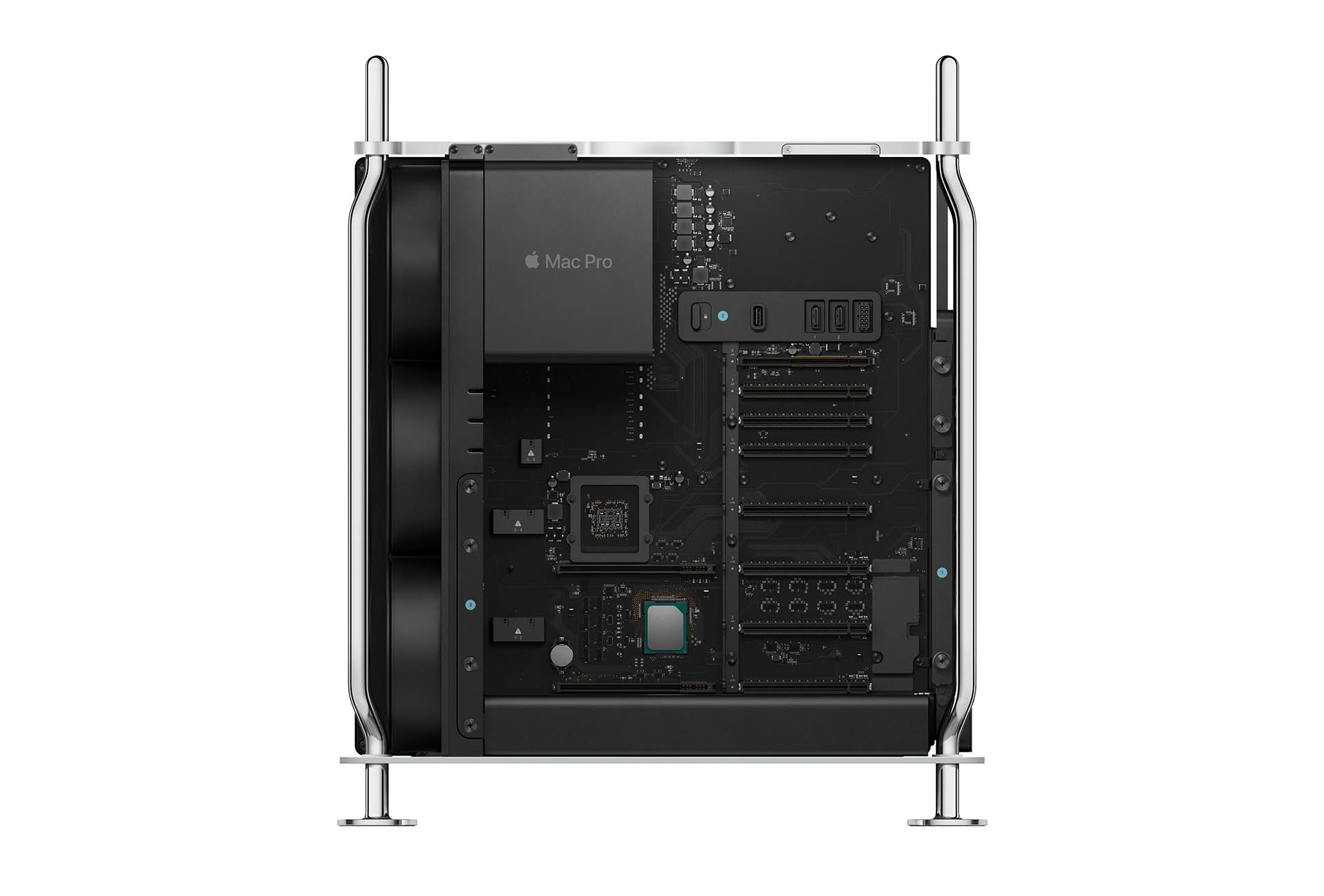
That shift becomes even more pronounced because Apple Silicon systems aren’t built around the kind of user-upgradeability that once justified the Mac Pro’s existence. Unified memory and soldered storage mean you’re largely locked into the configuration you buy on day one. In the Intel Xeon era, the Mac Pro had a stronger argument: you could upgrade RAM later, expand storage through PCIe cards, and keep evolving the system over time. That modular, long-life workstation model is much harder to defend now, especially when Apple’s current approach emphasizes tightly integrated hardware designed around its own chips.
And realistically, Apple isn’t going back. The company has fully committed to Apple Silicon, so there’s little reason to expect a return to Intel workstation-class Xeon processors or AMD’s high-end alternatives. If Apple believes the Mac Studio can deliver the performance pros need—especially when paired with a flagship chip like the M5 Ultra—then the large tower format becomes harder to justify in a lineup optimized for compact power.
If this report reflects Apple’s final direction, it marks a major turning point for Mac workstations. The Mac Studio appears positioned to become the single destination for Apple’s highest-performance desktop computing, while the Mac Pro tower fades into history as Apple reshapes “pro” hardware around smaller, more efficient designs. The upcoming M5 Ultra launch may not just be a chip release—it may be the moment Apple fully closes the chapter on its most iconic expandable workstation.