Apple A20 Pro Leak Points to a Major 2nm Upgrade for iPhone 18 Pro and iPhone Fold
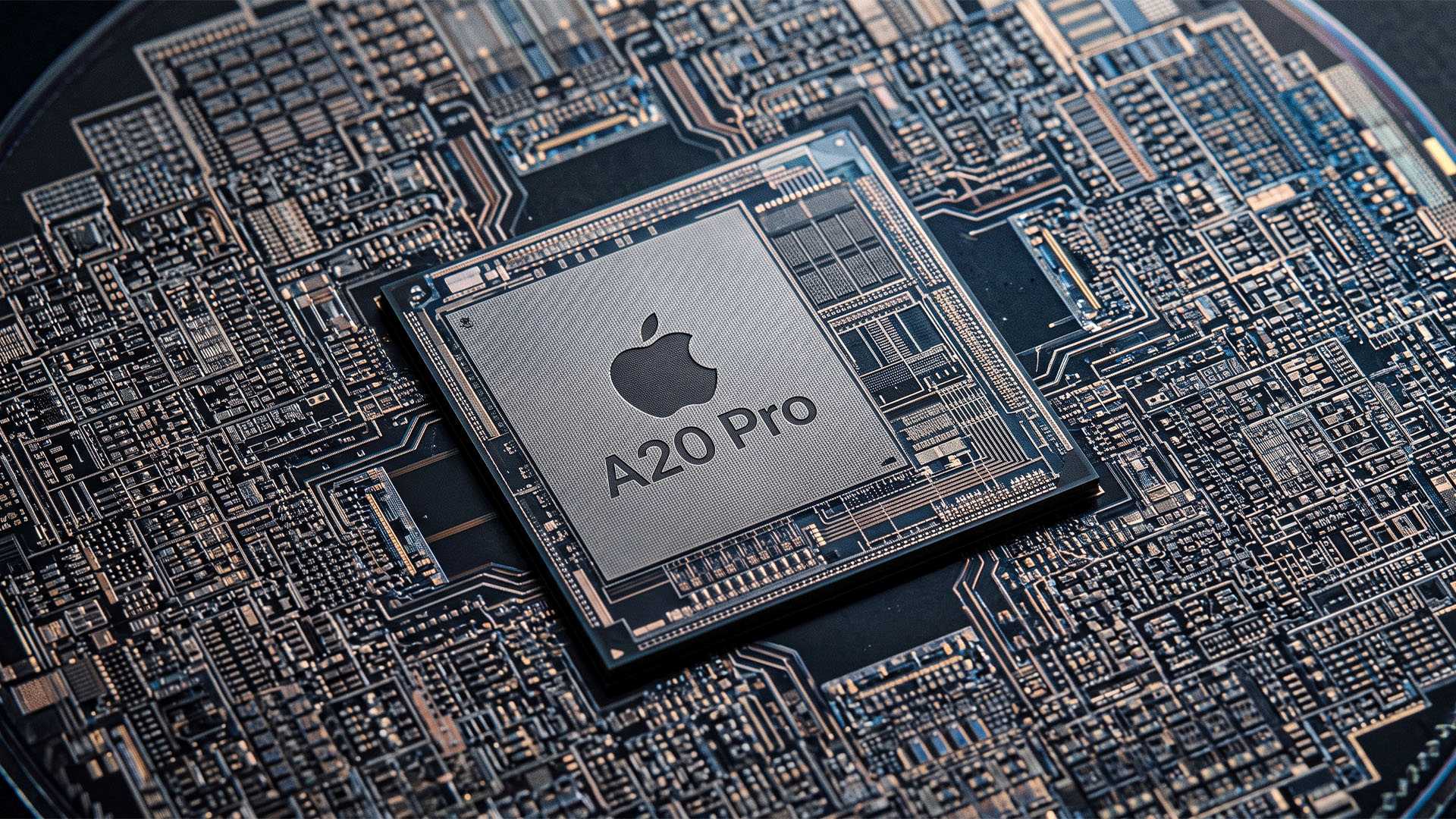
Apple’s September 9 “Surprise and Shine” event is expected to bring one of the company’s biggest mobile chip upgrades yet: the A20 Pro. This next-generation iPhone processor is rumored to be Apple’s first 2nm chipset, and a newly surfaced front-side die image suggests several important changes beneath the surface.
The A20 Pro is expected to power the iPhone 18 Pro, iPhone 18 Pro Max, and Apple’s long-rumored first foldable iPhone, often referred to as the iPhone Fold. While Apple has not confirmed the chip’s specifications, early leaks suggest the company is focusing on better graphics performance, improved memory bandwidth, and stronger AI processing.
One of the most interesting changes is Apple’s reported move to WMCM, or Wafer-Level Multi-Chip Module packaging. This would replace the older InFO_PoP approach used in previous iPhone chips. The shift may sound technical, but it could have a meaningful impact on performance. With the new packaging design, memory dies can sit beside the main chip instead of being stacked above it, giving Apple more room to improve bandwidth and overall chip layout.
According to the latest die shot details, the A20 Pro may feature a 7-core GPU, which would make it the first iPhone chip to reach that graphics core count. If accurate, this could deliver a noticeable boost in gaming, video editing, augmented reality, and other graphics-heavy tasks. For users who rely on the iPhone Pro models for high-performance mobile workloads, this could be one of the A20 Pro’s most important upgrades.
The CPU layout, however, appears to remain familiar. The A20 Pro is expected to use two performance cores and four efficiency cores, similar to the A19 Pro. Apple has often proven that it does not need to increase CPU core counts to deliver stronger performance. Instead, the company typically improves architecture, clock behavior, cache, and power efficiency to gain speed without sacrificing battery life.
The performance cores are said to retain 16MB of L2 cache each, matching the A19 Pro. The efficiency cores may receive a more meaningful improvement, with L2 cache reportedly increasing from 6MB to 8MB. That could help everyday tasks feel faster while keeping power usage under control, especially during background activity, multitasking, and lighter workloads.
Memory bandwidth may also see a significant upgrade. The A20 Pro is rumored to move to a 96-bit memory bus while continuing to use LPDDR5X memory. That is notable because Apple may be able to increase bandwidth without jumping to the more expensive LPDDR6 standard. More bandwidth can help the GPU, Neural Engine, and other chip components move data faster, improving performance in games, AI features, camera processing, and pro-level apps.
There are still several unknowns. The leaked die image does not clearly label the Neural Engine or image signal processor blocks, so details about AI performance and camera processing remain limited. Previous information suggested the A20 Pro may include a larger Neural Engine than the A19 Pro, which would make sense as Apple continues to expand on-device AI features across iPhone, iPad, and other products.
Efficiency will be one of the biggest questions. A 2nm manufacturing process should theoretically offer better performance per watt, but real-world battery life depends on many factors, including chip design, thermal management, display technology, modem behavior, and software optimization. The first benchmarks and battery tests will be needed before drawing firm conclusions.
If these leaks are accurate, the A20 Pro could become one of Apple’s most important iPhone chips in years. A 2nm process, new packaging technology, a possible 7-core GPU, wider memory bus, and increased cache for efficiency cores all point to a processor designed for the next phase of mobile computing.
With the September 9 event approaching, Apple fans may not have to wait long to learn whether the A20 Pro lives up to the early excitement. If the rumors hold true, the iPhone 18 Pro, iPhone 18 Pro Max, and iPhone Fold could arrive with a major performance advantage built directly into the silicon.