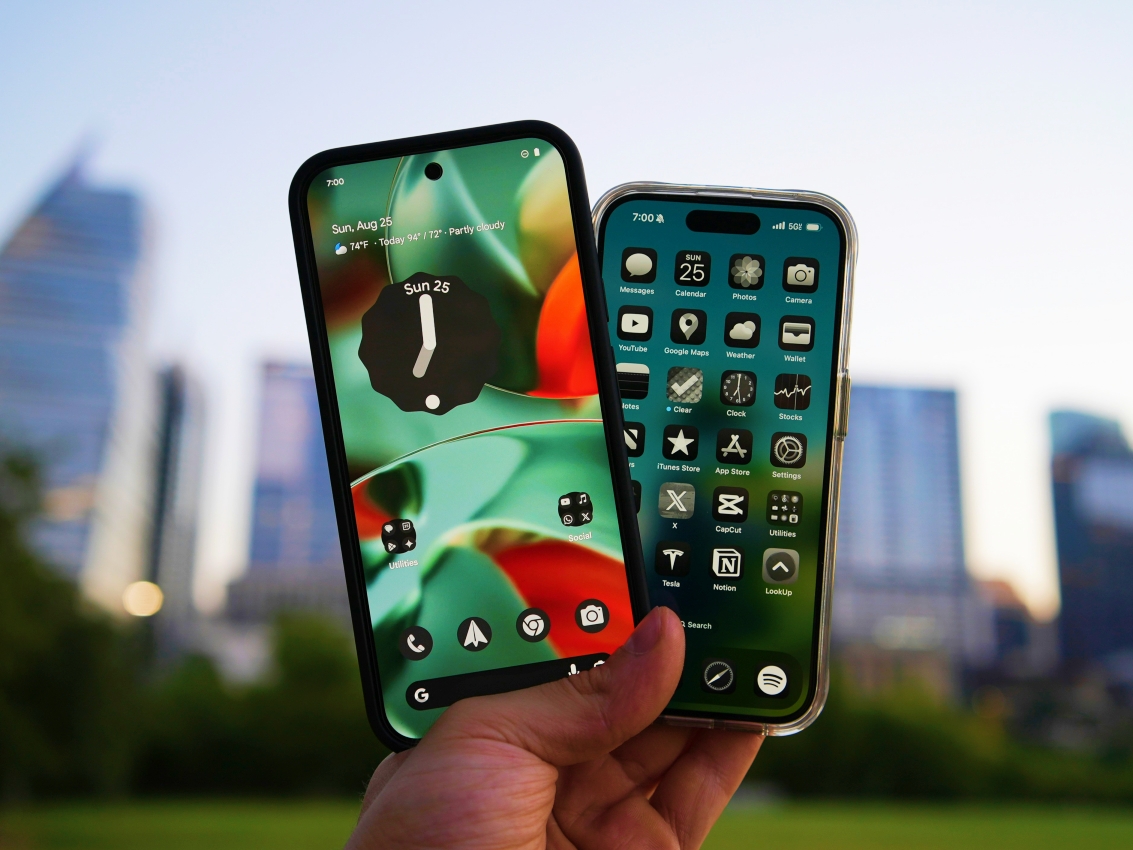
Google is making a bold new claim: Android phones can now browse the web faster than the iPhone. According to the latest update shared on the Chromium Blog, a wave of behind-the-scenes performance tuning has helped Android flagships pull ahead in key browser speed tests, with Google saying Android now has a measurable advantage in real-world browsing responsiveness.
The company points to improvements in two major benchmarks used to gauge everyday web performance: Speedometer 3.1 and LoadLine.
Speedometer 3.1 is designed to reflect how “snappy” a browser feels during common tasks people do constantly, such as tapping buttons while navigating sites, moving through pages, and scrolling. It’s notably not a one-company project—Speedometer is built as a joint effort involving multiple major browser stakeholders, and it’s widely used as a reference point for mobile browsing performance. In the results Google highlighted, unnamed Android flagship devices scored higher than the newest phones from a competing platform, strongly implying iOS.
Google also highlighted LoadLine, a newer benchmark created with partners to focus on a behavior that matters to nearly everyone: how quickly pages respond after you click a link. Here, Google’s claim is even more attention-grabbing, suggesting top-tier Android phones can be up to 47% faster at opening links compared with non-Android competitors, based on LoadLine results.
So what changed? Google attributes the gains to tighter software-and-hardware coordination, often described as “vertical integration.” In practical terms, Google says it has been working more closely with chip and phone manufacturers to better align three layers that directly affect browsing speed: the Chrome browser engine, the Android operating system, and the underlying hardware—especially the processors found in flagship devices. Part of the optimization reportedly includes tuning how Chrome and Android interact with the Android kernel so the system can make more efficient use of the device’s resources during web browsing.
There is an important catch, though. Even if benchmarks show dramatic year-over-year jumps—Google mentions a 20% to 60% improvement in benchmark scores—those numbers don’t translate one-to-one into what you’ll feel day to day. Google tempers expectations by saying typical users should expect something closer to about 5% faster page loads and up to 9% smoother interactions in regular use.
In other words, the headline may sound like a major changing-of-the-guard moment for mobile web browsing, but the practical difference will likely feel like a steady polish rather than a night-and-day transformation—especially depending on your phone model, the sites you visit, and your network conditions. Still, Google’s message is clear: on modern flagship hardware, Android web browsing performance is improving fast, and the company believes it has crossed an important milestone against its biggest rival.