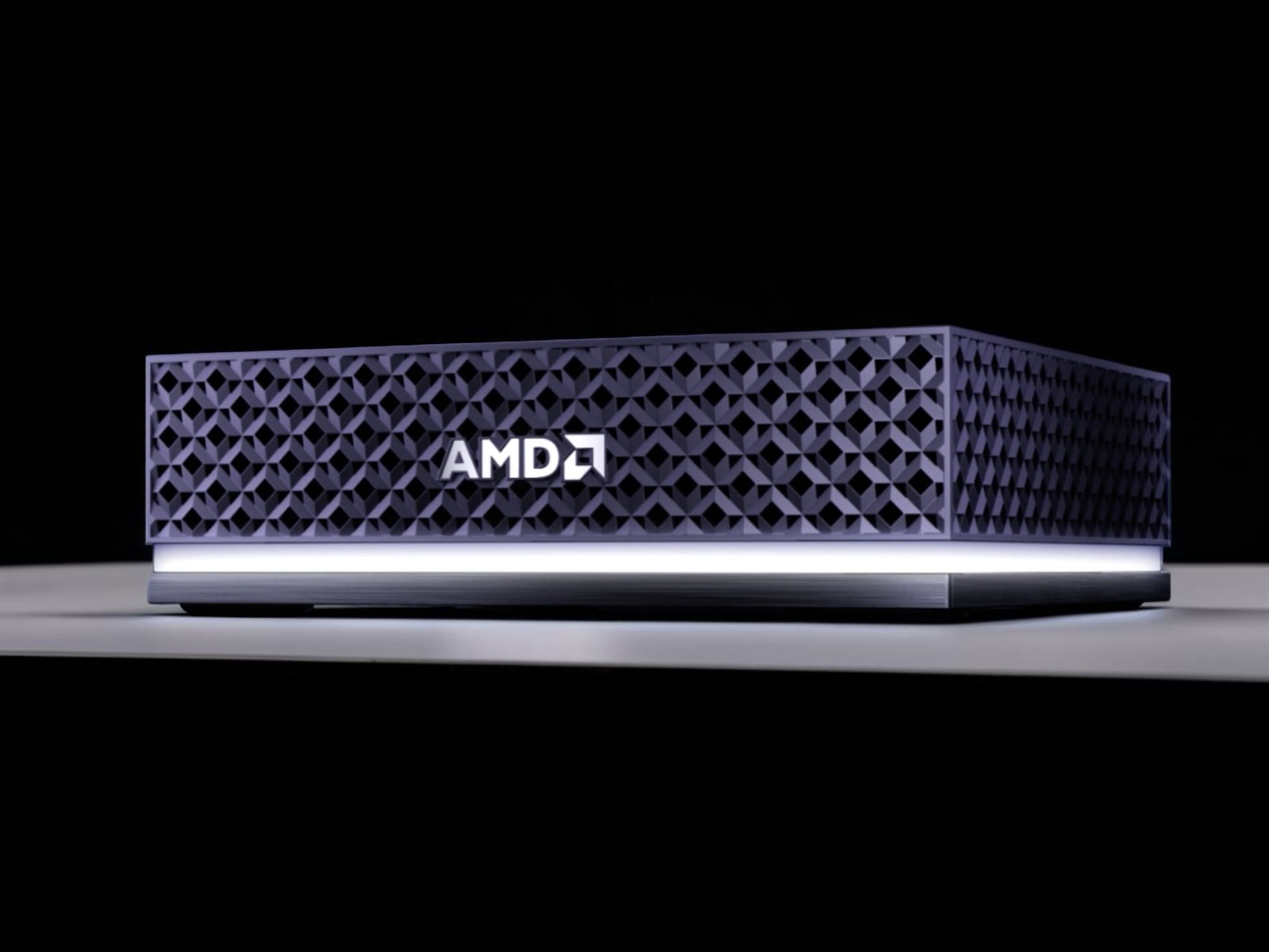
AMD Ryzen AI Halo Mini PC Arrives July 10 With Ryzen AI Max+ 395 and Radeon 8060S Power
AMD’s long-teased Ryzen AI Halo mini PC is finally close to launch, and it looks ready to make a serious statement in the compact gaming and local AI market. The system has appeared on Micro Center’s online store with a listed release date of July 10 and a premium price of $3,999.
At the heart of the machine is AMD’s Ryzen AI Max+ 395 APU, part of the powerful Strix Halo lineup. This chip combines high-end CPU performance with a Radeon 8060S integrated GPU, making the mini PC far more capable than a typical compact desktop. AMD has positioned the device as a strong option for gamers, creators, developers, and users who want to run local AI models without relying entirely on cloud services.
One of the biggest highlights is the Radeon 8060S iGPU. Unlike standard integrated graphics, this GPU features 40 compute units and can tap into a massive pool of shared memory. AMD has previously promoted the system with up to 128 GB of shared VRAM, giving it the kind of memory flexibility that could be especially useful for large language models and demanding creative workloads.
The Ryzen AI Max+ 395 has already shown up in other premium mini PCs, including systems aimed at both gaming and AI development. Performance results from similar hardware suggest that the CPU side can compete with powerful laptop-class processors such as the Ryzen 9 7945HX, while the Radeon 8060S graphics can challenge laptop GPUs in the RTX 4070 class. That makes AMD’s new mini PC especially interesting for users who want strong performance in a small form factor without adding a separate graphics card.
Gaming performance should also be a major selling point. The Radeon 8060S is expected to deliver smooth results in many modern titles, particularly at optimized settings. For buyers looking for a compact gaming PC that can sit on a desk, in a living room, or in a small studio setup, this could be one of the most powerful integrated-graphics systems available.
AI performance is another key focus. AMD claims the Ryzen AI Halo mini PC can handle large local models, including massive 120B-class models such as GPT OSS and Qwen 3.5, along with smaller models like GLM 4.7 Flash and Qwen 3.6 35B. For developers, researchers, and AI enthusiasts, the appeal is clear: running local LLMs on a compact Windows or Linux machine could provide more flexibility and privacy than cloud-based tools.
AMD has also compared the Ryzen AI Halo mini PC against Nvidia’s DGX Spark, claiming a performance advantage of around 4% to 14% in select workloads. Both machines sit in a similar premium price range, but AMD’s system may have a practical advantage for some users because it supports both Windows and Linux. Nvidia’s competing option is more narrowly focused on Linux.
However, AMD’s machine does give up one major feature found in Nvidia’s offering: ultra-fast 200 GbE networking. Instead, the Ryzen AI Halo mini PC appears to include a 10G networking solution. For most users, that will still be fast, but professionals working with large-scale AI clusters or high-speed networked storage may notice the difference.
At $3,999, this is clearly not a budget mini PC. It is aimed at buyers who want cutting-edge compact performance for gaming, AI development, content creation, and workstation-style tasks. The price also places it above some other Ryzen AI Max+ 395 mini PCs already on the market, including alternatives that cost several hundred dollars less.
Still, AMD’s official Ryzen AI Halo mini PC could attract plenty of attention when it becomes available on July 10. With its Strix Halo APU, Radeon 8060S graphics, large shared memory potential, local AI capabilities, and support for both Windows and Linux, it has the ingredients to become one of the most powerful mini PCs of 2026.