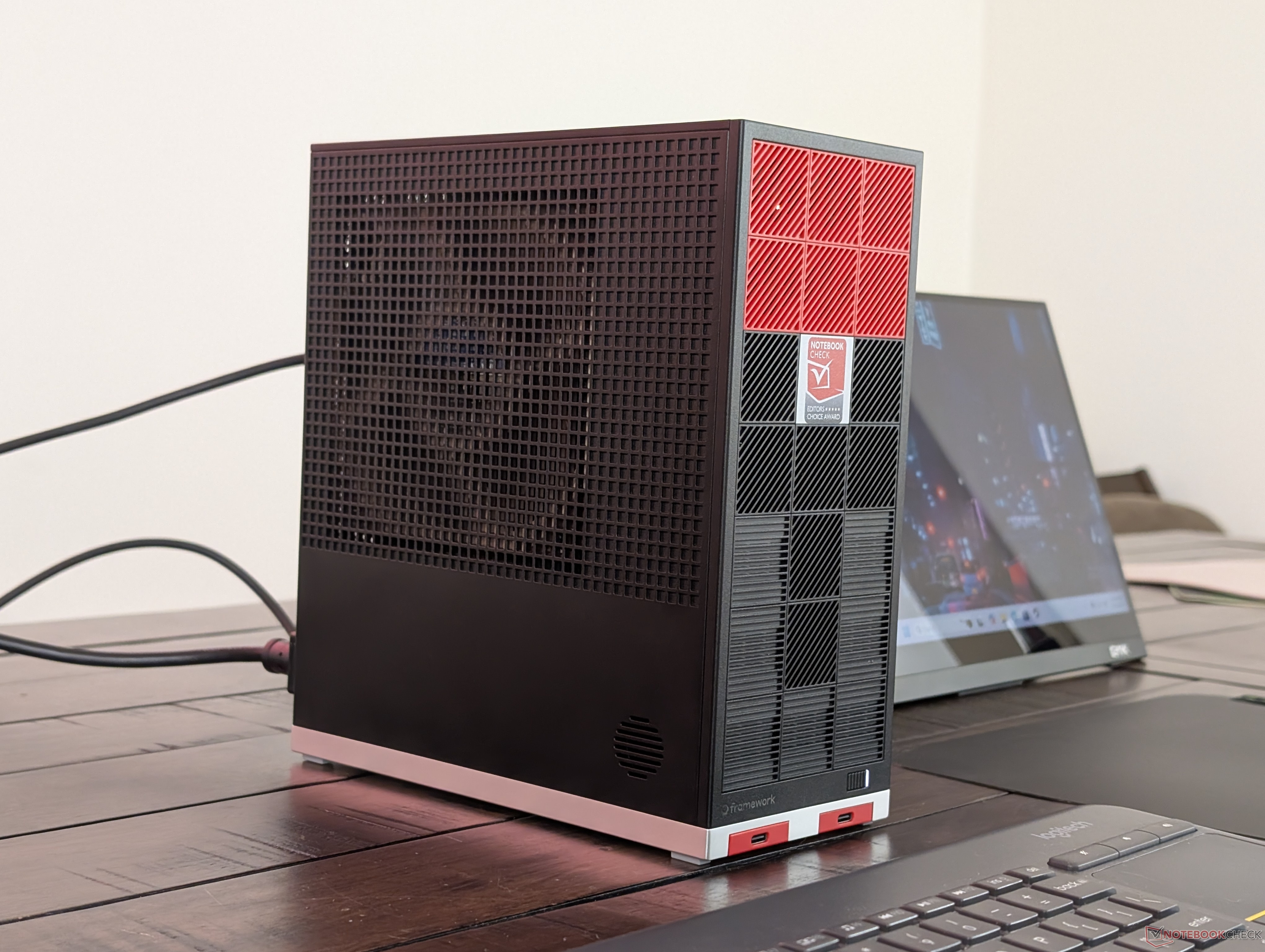
Ryzen AI Max 395 is starting to show up in compact PCs, and early comparisons suggest its Radeon 8060S integrated graphics are reshaping what’s possible without a dedicated GPU. We compiled results across a range of small-form-factor systems to see how AMD’s latest stacks up against machines powered by the GeForce RTX 4070 Laptop GPU, as well as popular integrated options like the Radeon 890M, Radeon 780M, Intel Iris Xe, and older Vega-class graphics.
Key takeaways
– Discrete GPU still rules the top: Systems with the GeForce RTX 4070 Laptop GPU take the performance crown in graphics-heavy tasks, as expected.
– Ryzen AI Max 395 with Radeon 8060S is the new iGPU bar: In stacked results, the 8060S consistently slots just behind RTX 4070 machines and ahead of prior-gen integrated graphics. It shows meaningful gains over 890M and 780M in several runs, signaling a strong generational leap for integrated performance.
– Clear performance tiers emerge: After the RTX 4070 units, the Radeon 8060S leads the iGPU pack, followed by the Radeon 890M, then the widely used Radeon 780M. Intel’s Iris Xe and older Vega 7 trail, with entry iGPUs like Radeon 610M bringing up the rear.
– Real-world variance matters: The numbers span a range because compact PCs use different power limits and cooling designs. Expect tighter thermals to pull scores down and larger, better-cooled builds to unlock higher results.
Average Radeon 8060S results across our test groups
– 39,596 to 49,668 (n=6)
– 25,992 to 31,461 (n=6)
– 10,224 to 11,601 (n=6)
– 10,303 to 11,248 (n=6)
– 5,739 to 5,867 (n=4)
– 1,343 to 2,033 (n=6)
What this means if you’re shopping
– Want maximum frames in modern games and heavy creative workloads? Mini PCs with the GeForce RTX 4070 Laptop GPU remain the fastest option.
– Prefer a sleek, quiet, power‑efficient setup without a discrete GPU? Systems built around Ryzen AI Max 395 and the Radeon 8060S deliver a big jump in integrated graphics performance and are well-suited for 1080p esports, lighter AAA titles with tuned settings, and accelerated everyday creation.
– On a tighter budget? Machines with the Radeon 780M still offer solid value, while Iris Xe and Vega 7 are best for basic gaming and media duties.
Bottom line
The Ryzen AI Max 395 with Radeon 8060S is the standout integrated solution in today’s mini PC landscape, narrowing the gap to midrange discrete GPUs and pushing compact desktops further than previous-gen iGPUs. If you’ve been waiting for a small PC that can play, create, and multitask without a dedicated graphics card, this generation finally delivers.