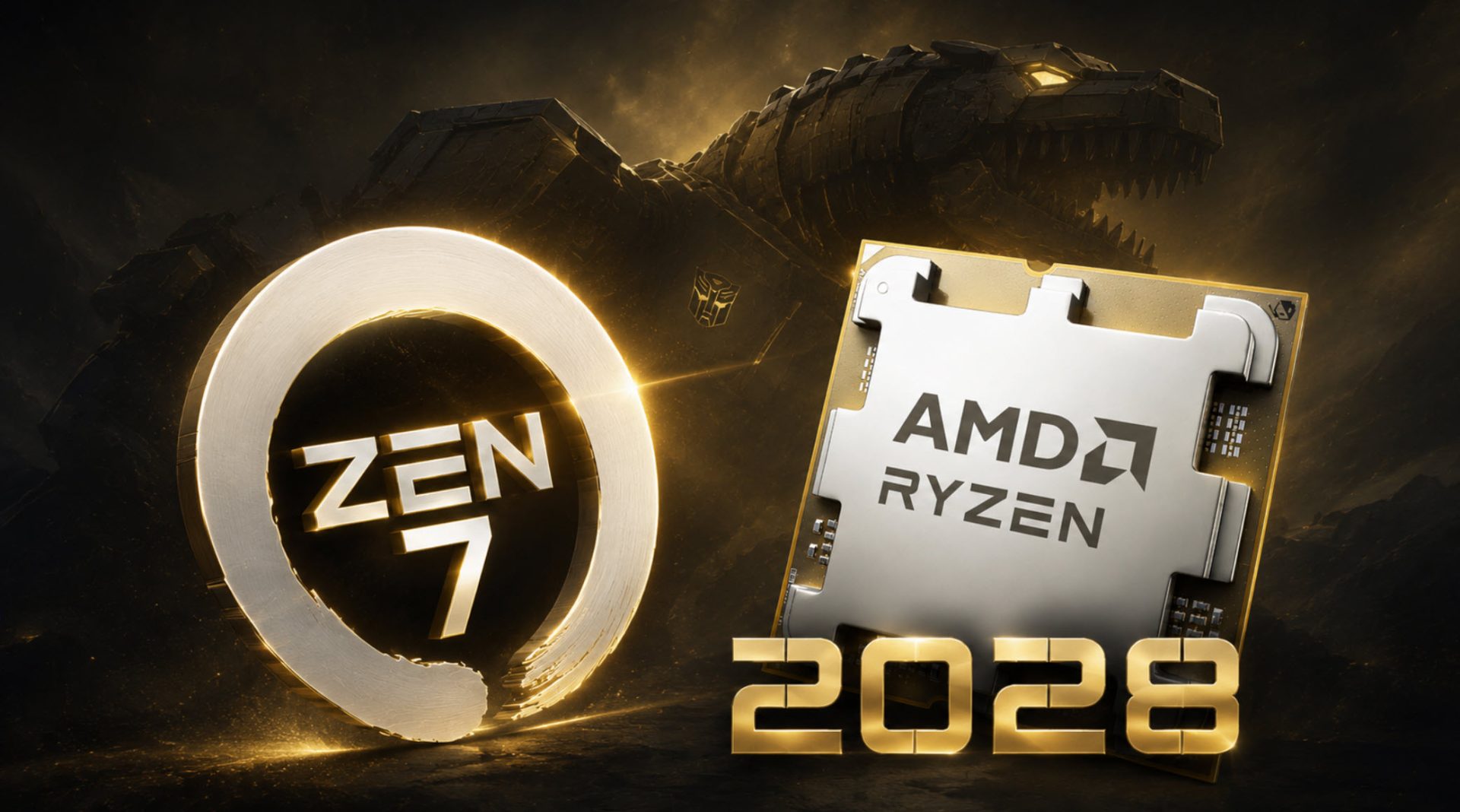
AMD Zen 7 “Grimlock” CPUs Could Use TSMC’s 1.4nm A14 Process and Advanced Packaging
AMD’s future CPU roadmap is already drawing attention, even before Zen 6 has officially reached mainstream consumer and server platforms. New industry rumors suggest that AMD is preparing its supply chain for Zen 7, a next-generation x86 CPU architecture reportedly codenamed “Grimlock.”
According to supply chain reports from Taiwan, AMD’s Zen 7 processors may be built using TSMC’s A14 process technology, commonly described as a 1.4nm-class node. If accurate, this would place Zen 7 among the most advanced CPU designs expected later this decade, with a possible launch window around 2028.
The move would come as TSMC continues pushing beyond its 2nm manufacturing technology. Trial production for the A14 node is expected to begin around 2027, with mass production potentially following in 2028. That timeline lines up closely with the rumored arrival of AMD’s Zen 7 platform.
Zen 7 “Grimlock” may be a major leap for AMD CPUs
While Zen 6 has not yet made its full debut, AMD appears to be planning well ahead for the competitive CPU market of the late 2020s. Zen 7 is expected to bring a redesigned core complex die, also known as a CCD, with reports pointing to as many as 16 cores per CCD.
That would be a meaningful jump for AMD’s chiplet-based CPU strategy. A higher core count per CCD could improve performance density, making future Ryzen, Threadripper, and EPYC processors more powerful and efficient depending on how AMD chooses to segment the lineup.
Another major rumored upgrade is next-generation 3D V-Cache. Current AMD processors with 3D V-Cache are already popular among gamers and performance-focused users because the extra cache can significantly improve certain workloads. With Zen 7, reports suggest AMD could raise total L3 cache capacity dramatically, with up to 224 MB of L3 cache on a single 3D V-Cache CCD.
If that happens, Zen 7 could deliver strong gains in gaming, data center workloads, simulation, AI-related processing, and other cache-sensitive applications.
AMD may use advanced FOPLP packaging
Beyond the process node itself, packaging technology may play a major role in AMD’s Zen 7 plans. AMD is reportedly evaluating Fan-Out Panel-Level Packaging, also known as FOPLP, from Powertech.
Advanced packaging has become increasingly important as chipmakers look for ways to improve performance, reduce power consumption, and connect multiple chiplets more efficiently. Since AMD’s modern CPU strategy relies heavily on chiplets, any improvement in packaging could help boost bandwidth, reduce latency, and improve overall platform efficiency.
AMD CEO Dr. Lisa Su reportedly visited Taiwan recently and met with several supply chain partners, including Powertech. The visit is believed to be connected to future packaging allocation and preparation for upcoming high-performance processors.
TSMC A14 versus Intel 14A could shape the next CPU battle
The rumored use of TSMC’s A14 process for AMD Zen 7 is especially important because it may arrive in the same timeframe as Intel’s 14A process. Both technologies are expected to compete in the advanced semiconductor market around 2028.
This could create a major showdown in next-generation CPU manufacturing. AMD has long relied on TSMC for its most advanced chiplet production, while Intel is aggressively expanding its foundry ambitions with future process nodes. By the time Zen 7 arrives, the CPU market could be shaped not only by architecture, but also by which company has access to the best manufacturing and packaging technologies.
Zen 7 could strengthen AMD’s data center push
Although future Ryzen desktop CPUs will likely get plenty of attention, the data center may be the biggest target for Zen 7. AMD’s EPYC processors have become increasingly important in servers, cloud computing, and high-performance computing environments. With AI workloads continuing to grow, demand for powerful CPUs remains strong alongside GPUs and accelerators.
Zen 7 server processors are rumored to include updated MATRIX engine capabilities and expanded support for AI data formats. That suggests AMD is preparing its CPUs to play a larger role in AI infrastructure, not just as companion processors for GPUs, but as critical compute engines in their own right.
As AI companies continue building larger data centers, CPU demand is expected to remain intense. AMD, Intel, and Arm-based server chip designers are all competing for a massive market opportunity, and Zen 7 could become one of AMD’s key weapons in that fight.
Expected timeline for AMD Zen 7
Based on current rumors, AMD Zen 7 “Grimlock” CPUs may arrive around 2028. TSMC’s A14 process is also expected to move toward mass production around that time, which makes the timeline plausible.
However, these details remain unofficial. AMD has not formally announced Zen 7 specifications, core counts, cache sizes, packaging choices, or launch dates. As with any early roadmap information, plans can change before products enter mass production.
Still, the rumored direction is clear: AMD is preparing for a major next-generation CPU platform that could combine TSMC’s 1.4nm-class A14 node, a redesigned CCD, expanded 3D V-Cache, advanced packaging, and stronger AI-focused server features.
If these reports prove accurate, Zen 7 could be one of AMD’s most ambitious CPU generations yet, setting the stage for a fierce performance and manufacturing battle in 2028.