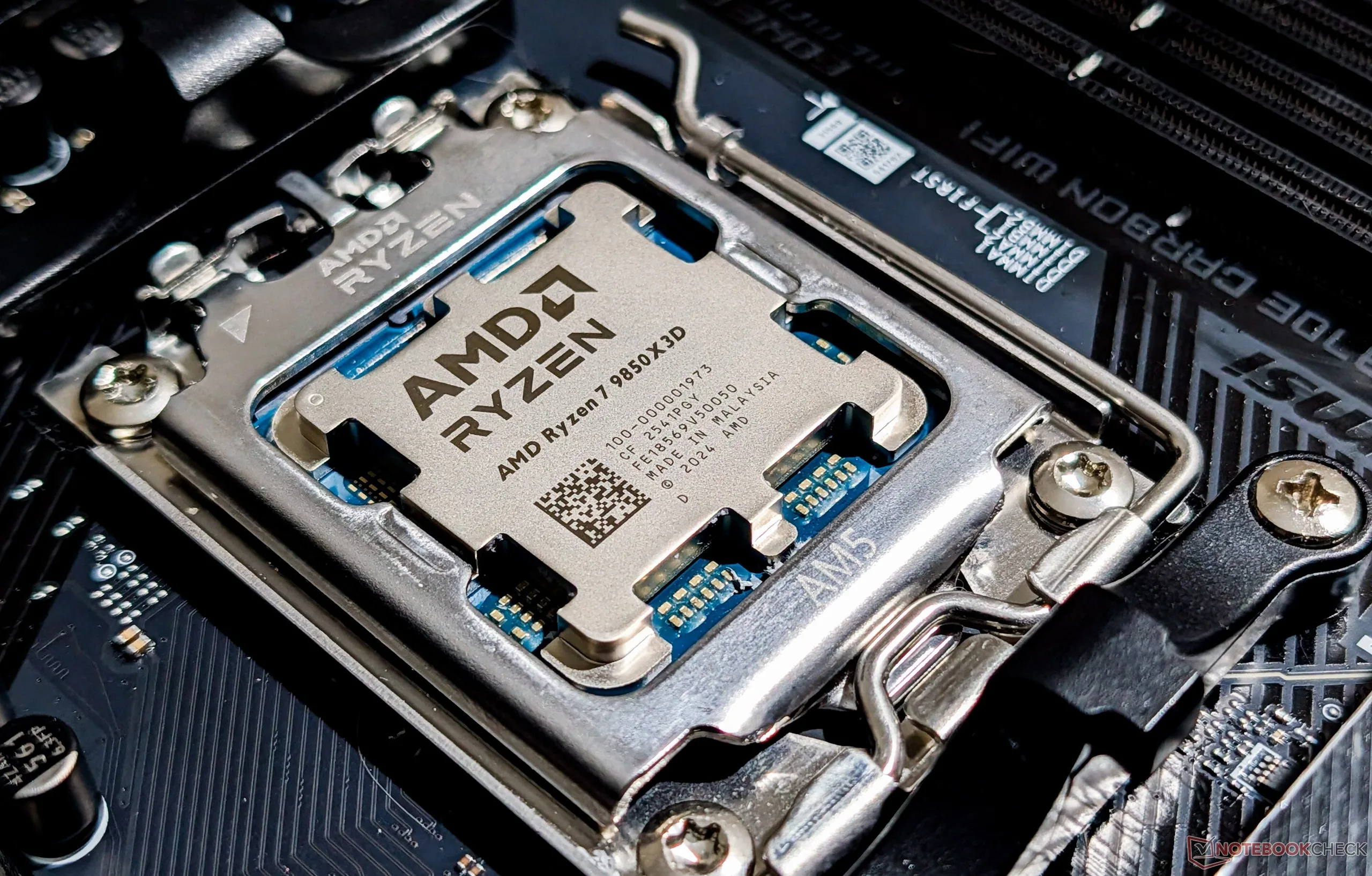
AMD Zen 6 could bring 24-core Ryzen CPUs and more powerful X3D gaming chips
AMD’s next-generation Zen 6 architecture could mark a major step forward for Ryzen desktop processors, especially for gamers and power users who want more cores, more cache, and stronger performance per clock.
Based on AMD’s latest technical details for its upcoming server processors, Zen 6 is designed to support up to 12 full-performance CPU cores per chiplet. That is a notable jump from Zen 5, which uses up to eight cores per chiplet. If AMD brings this same design to consumer Ryzen processors, future desktop chips could offer up to 24 cores using two chiplets.
That change could have an even bigger impact on Ryzen X3D gaming CPUs. Today, many 12-core Ryzen chips rely on two separate chiplets, which can introduce latency when games or applications spread workloads across both. With Zen 6, AMD could potentially build a 12-core Ryzen processor using a single chiplet, allowing all 12 cores to access the same shared L3 cache more efficiently.
For gaming, that matters. Lower latency and better cache access can help improve frame rates, smoothness, and overall responsiveness, especially in CPU-heavy titles.
Zen 6 also increases the amount of L3 cache per chiplet. Each core complex die is expected to include 48 MB of shared L3 cache, compared with 32 MB on Zen 5. Since the core count also rises from eight to 12, the cache per core remains at 4 MB, but the overall chiplet becomes much more capable.
The most exciting possibility is what this could mean for future Ryzen X3D processors. AMD has already shown a server-focused design that combines 48 MB of built-in L3 cache with 96 MB of stacked 3D V-Cache. That creates a total of 144 MB of L3 cache per 12-core chiplet.
If a similar approach arrives on consumer Ryzen X3D gaming CPUs, AMD could offer chips with significantly more cache than current models. Current X3D processors provide up to 96 MB of total L3 cache per chiplet, so a move to 144 MB would be a major increase.
A single-chiplet 12-core Ryzen X3D CPU could also simplify how games use the processor. Current dual-chiplet X3D models require scheduling logic to make sure games run on the cores with access to the extra 3D V-Cache. A future Zen 6 X3D chip with 12 cores and a large shared cache on one chiplet could reduce that complexity and deliver more consistent gaming performance.
Zen 6 is not just about adding more cores and cache. AMD has also made architectural improvements designed to increase instructions per clock, commonly known as IPC. These include improved branch prediction, faster recovery from incorrect predictions, expanded execution resources, and a larger operation cache.
The operation cache has reportedly grown to around 6,750 entries, while the front end can deliver up to 18 operations per cycle. These improvements could help Zen 6 perform better even in games and applications that do not fully use all available cores.
AMD has shown that the denser Zen 6c variant can deliver up to 27% higher geometric-mean IPC than Zen 5 in certain AI and server workloads. However, that figure should not be taken as a direct prediction for gaming performance or standard Zen 6 desktop Ryzen CPUs. Consumer chips may behave differently depending on clock speeds, power limits, cache configuration, and workload type.
Even so, the direction is clear. Zen 6 gives AMD room to build Ryzen processors with more cores per chiplet, larger caches, and improved per-core performance. That combination could make future Ryzen CPUs especially strong for gaming, streaming, content creation, and heavy multitasking.
There are still many unanswered questions. AMD has not officially announced consumer Ryzen processors based on Zen 6, and details such as launch timing, clock speeds, power consumption, motherboard support, and final product names remain unknown.
Still, if AMD brings these Zen 6 improvements to the desktop market, the next generation of Ryzen processors could be a major upgrade. A 24-core Ryzen CPU would appeal to creators and professionals, while a 12-core Ryzen X3D chip with a massive shared cache could become one of the most exciting gaming processors AMD has ever produced.